
Frozen Shoulder: How Long Does It Last and Which Treatment Should You Choose?
Frozen shoulder (adhesive capsulitis) progresses through three distinct phases that can last one to three years. Learn the realistic timelines, risk factors, and treatment options from physiotherapy to surgery.

Frozen shoulder, medically known as adhesive capsulitis, is one of the most frustrating and misunderstood conditions affecting the shoulder. It is characterized by progressive stiffness and pain that can turn simple tasks like getting dressed, reaching for a shelf, or sleeping on one side into genuine daily struggles. Unlike a rotator cuff injury or bursitis, frozen shoulder involves a tightening and thickening of the joint capsule itself, which limits movement in nearly every direction, both actively and passively.
At Réhabital in Côte Saint-Luc, we regularly meet patients who feel confused by this condition because it develops slowly, over months or even years, and does not always respond to the usual treatments for shoulder pain in the way they expect. This article aims to clarify realistic timelines, risk factors, and the treatment options available, whether conservative or medical.
Understanding Frozen Shoulder: What Happens Inside the Joint?
The shoulder is a ball-and-socket joint surrounded by a fibrous capsule filled with synovial fluid that allows smooth movement in nearly every direction. In adhesive capsulitis, this capsule becomes inflamed and then progressively thickened and scarred, forming adhesions that literally stick the joint surfaces together. The result is a marked decrease in range of motion, often accompanied by a deep, dull ache that worsens at night.
This condition affects roughly 2 to 5 percent of the general population, with a higher prevalence among women aged 40 to 60. In many cases, no clear cause is identified, referred to as primary or idiopathic frozen shoulder. In other cases, it develops following a period of immobilization, called secondary frozen shoulder.
The Three Phases of Frozen Shoulder
Understanding the phases of this condition enormously helps in managing expectations and guiding appropriate treatment at each stage.
Phase 1: Freezing
This first phase typically lasts two to nine months. It is characterized by increasing pain, often diffuse and hard to pinpoint, that intensifies with movement and can disrupt sleep. Range of motion begins to progressively decrease, but pain is often the dominant symptom at this stage. Many patients initially mistake this phase for simple tendinitis or ordinary shoulder pain.
Phase 2: Frozen
This phase can last four to twelve months. Pain generally begins to lessen, but stiffness becomes the primary symptom. Shoulder movements, particularly external rotation and elevation, are severely restricted. Everyday tasks such as reaching behind the back to fasten a bra, combing hair, or lifting an arm to grab something overhead become very difficult, if not impossible.
Phase 3: Thawing
The final phase, the longest one, can span five months to two years. During this period, range of motion gradually returns as the capsule loosens and adhesions resolve. The pace of recovery varies enormously from person to person, and some patients never regain full range of motion without active intervention.
Overall, an untreated frozen shoulder can therefore last one to three years. This is precisely why early intervention through physiotherapy is so valuable: it can significantly reduce this duration and improve final functional outcomes.
Risk Factors to Know
Certain populations are notably more susceptible to developing frozen shoulder. Knowing them allows for early detection and proactive management.
Diabetes
People with diabetes have a risk of developing frozen shoulder that is two to four times higher than the general population. It is believed that chronic hyperglycemia promotes abnormal cross-linking of collagen fibers in the joint capsule, making it stiffer and less elastic. In addition, frozen shoulder cases among diabetics tend to be longer lasting and more resistant to conservative treatment.
Thyroid Disorders
Both hypothyroidism and hyperthyroidism are associated with an increased risk of adhesive capsulitis. The exact mechanism remains uncertain, but metabolic and inflammatory changes related to thyroid function are thought to influence connective tissue health.
Post-Immobilization
Any prolonged period during which the shoulder is immobilized, whether following surgery, an arm fracture, cardiac intervention, or even a stroke, increases the risk of secondary frozen shoulder. Lack of movement promotes the formation of adhesions in an already vulnerable joint. This is why early, safe remobilization guided by a professional is essential after any prolonged immobilization.
Other Factors
Age (particularly between 40 and 60), being female, cardiovascular disease, Parkinson's disease, and certain histories of breast surgery are also associated with increased risk.
What Can Physiotherapy Do?
Physiotherapy remains the first-line conservative treatment for frozen shoulder, but the approach must adapt to the phase of the condition. During the freezing phase, the focus is on pain management, very gentle mobilizations, and patient education to avoid movements that exacerbate inflammation. During the frozen phase, the physiotherapist introduces more sustained joint mobilization techniques, progressive capsular stretching, and active work within tolerated limits. During the thawing phase, muscle strengthening becomes a priority to restore full function and prevent compensations that may have developed in the neck and shoulder blade area.
Our physiotherapists at Réhabital carefully evaluate each patient to determine the exact phase of their condition before establishing a personalized treatment plan. To learn more about our approach, visit our physiotherapy in Côte Saint-Luc page or our Montreal physiotherapy clinic.
The Complementary Role of Osteopathy
Living with a painful, stiff shoulder for months inevitably leads to postural compensations. Patients tend to hike the shoulder, limit trunk rotation, and overuse the opposite side, which can create tension in the neck, upper back, and rib cage. Osteopathy focuses on these broader repercussions on the whole body rather than just the affected joint.
Through gentle manual techniques, an osteopath can help release muscular and fascial tension that developed as compensation, improve mobility of the rib cage and cervical spine, and promote better circulation in the region. This approach complements physiotherapy well without replacing it. To understand the differences and complementarities between these two approaches, check our osteopathy versus physiotherapy comparison or our osteopathy in Côte Saint-Luc page.
Injections and Surgery: Medical Options
When pain is particularly intense, especially during the freezing phase, a physician may recommend a corticosteroid injection directly into the shoulder joint. This intervention can provide significant relief and allow the patient to participate more actively and comfortably in physical rehabilitation. These injections are administered by a physician or specialist, not at our clinic.
For resistant cases that do not respond after several months of well-conducted conservative treatment, an orthopedic surgeon may consider manipulation under anesthesia, where the shoulder is forcibly mobilized to break up adhesions, or arthroscopic capsular release, a minimally invasive surgery aimed at surgically cutting the stiffest portions of the capsule. These interventions are always followed by an intensive postoperative physiotherapy program to maintain the range of motion gains achieved.
Home Exercises: Precautions and Guidance
Certain gentle exercises can be practiced at home to complement professional treatment, including pendulum swings (letting the arm hang and making small circles), towel stretches behind the back, and finger walking along a wall to progressively encourage arm elevation. However, it is essential that these exercises first be demonstrated and adjusted by a physiotherapist, as progressing too quickly or using inadequate technique can further irritate the already inflamed capsule and delay healing.
Red Flags to Watch For
While frozen shoulder is generally a progressive, non-urgent condition, certain signs should prompt urgent medical consultation: sudden trauma with intense pain and visible deformity, fever accompanied by redness and swelling of the joint, numbness, tingling, or marked weakness in the arm or hand, or a sudden, complete loss of mobility. These symptoms do not fit the typical picture of adhesive capsulitis and could indicate a fracture, infection, or nerve involvement requiring urgent care.
Insurance and Practical Considerations
Frozen shoulder treatment can span several months, so understanding your coverage matters. Most private group insurance plans cover physiotherapy and osteopathy sessions, often with an annual maximum per discipline — check your policy for exact details. We also accept SAAQ claims when the condition follows a motor vehicle accident involving shoulder immobilization or trauma. Please note that our clinic does not accept CNESST claims. Feel free to contact our front desk before your first visit if you have questions about your specific coverage.
Serving Côte Saint-Luc and Surrounding Areas
Our clinic is conveniently located for residents of Côte Saint-Luc, Hampstead, Montréal-Ouest, Snowdon, Westmount, and NDG, with easy access by car or public transit. We are open Monday to Friday from 10 a.m. to 8 p.m., and Sunday from 10 a.m. to 4 p.m.; we are closed on Saturdays, so you can fit appointments around your work or family schedule even during a lengthy recovery process. Given that frozen shoulder can take many months to resolve, having a clinic close to home with flexible hours makes it much easier to stay consistent with your treatment plan and home exercise program.
Consult Our Team in Côte Saint-Luc
If you are experiencing progressive shoulder stiffness accompanied by pain, do not delay in seeking care. Early management can significantly reduce the total duration of this condition and improve your functional outcomes. Our multidisciplinary team, including physiotherapists and osteopaths, will develop a personalized treatment plan based on the exact phase of your condition. Discover our team of professionals or explore our blog for more articles on musculoskeletal health. We accept most private insurance plans as well as SAAQ claims; please note that we do not accept CNESST claims. For more details on our policies, visit our policies page. Our hours are Monday to Friday from 10 a.m. to 8 p.m., and Sunday from 10 a.m. to 4 p.m.; we are closed on Saturdays.
Book your appointment today with our Côte Saint-Luc team for a comprehensive shoulder assessment and a treatment plan tailored to your situation.
This article is provided for informational purposes only and does not replace medical consultation or professional evaluation. No diagnosis can be made online. If you are experiencing concerning symptoms, please consult a qualified healthcare professional.
Frequently asked questions
Go deeper with our dedicated physiotherapy pages
Physiotherapy pages with Colin Teghen Tamuton (OPPQ) in Côte Saint-Luc:
Related articles
Frozen Shoulder: Physiotherapy and Massage Therapy to Restore Full Mobility
Stuck, painful shoulder? Discover the combined physiotherapy + massage protocol at Réhabital in Côte Saint-Luc to beat frozen shoulder.
Physiotherapy vs Acupuncture: Which One Should You Choose for Pain in Côte Saint-Luc?
Detailed comparison between physiotherapy and acupuncture for chronic pain, sports injuries and recovery in Côte Saint-Luc, Hampstead, NDG, Westmount and across Montreal.
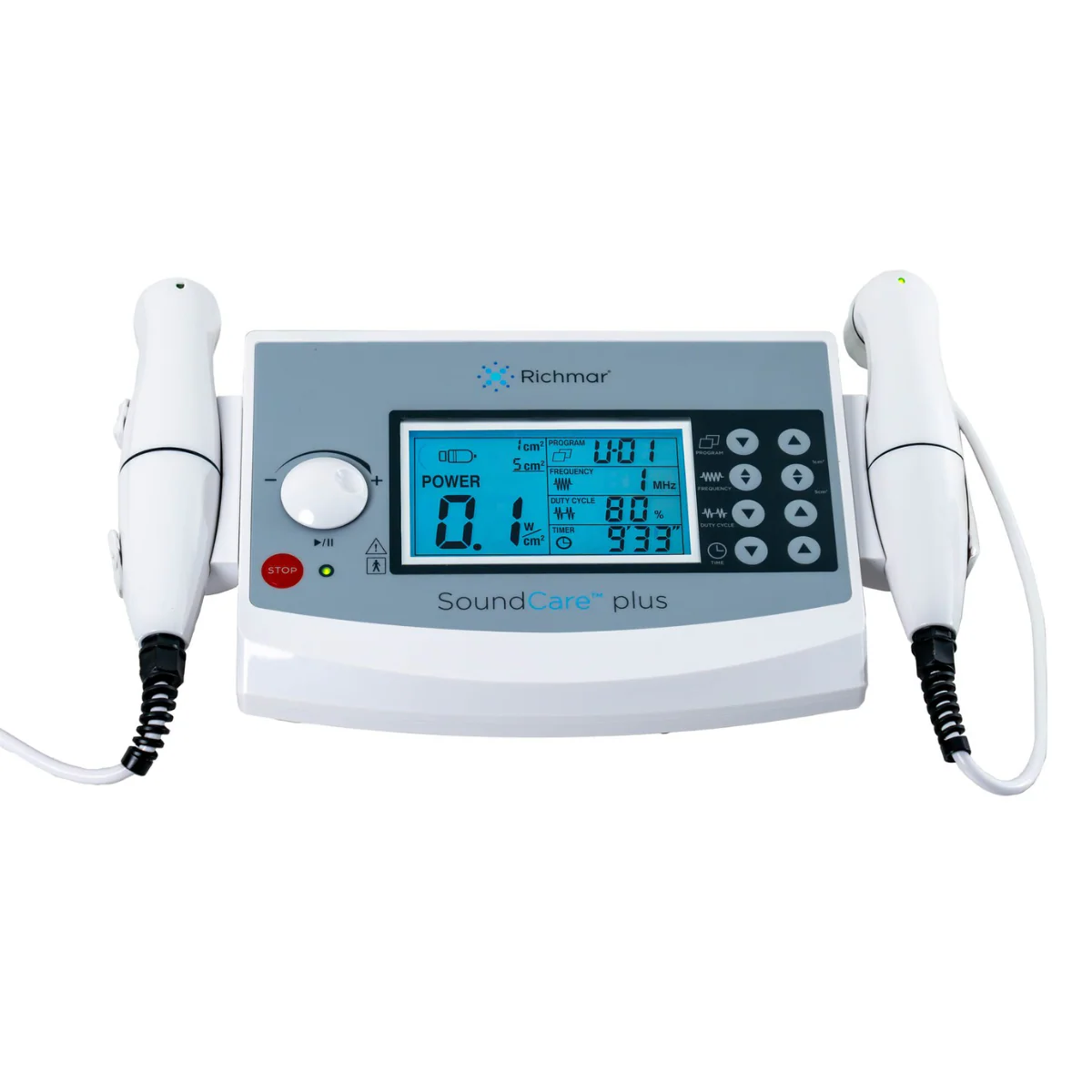
SoundCare Plus Therapeutic Ultrasound: How This Physiotherapy Device Speeds Up Healing in Côte Saint-Luc
Discover how the SoundCare Plus therapeutic ultrasound unit used at Réhabital in Côte Saint-Luc reduces pain, dissolves adhesions and speeds up tissue healing — a complete patient guide.
Shoulder Pain: How Physiotherapy Treats Rotator Cuff Injuries and Frozen Shoulder
A shoulder that hurts at night, catches when you lift your arm, or loses range month after month is almost never simple unavoidable wear. Here is how a structured physiotherapy plan restores strength and range in Côte Saint-Luc.
Osteopathy vs Physiotherapy: Which Approach Should You Choose in Côte Saint-Luc?
Complete comparison between osteopathy and physiotherapy: differences, indications, training, insurance reimbursement and how to choose based on your condition in Côte Saint-Luc, Hampstead, NDG and across Montreal.

Sciatica in Montreal: Osteopathy or Physiotherapy — Which Should You Choose?
Pain shooting down your leg? Discover how osteopathy and physiotherapy treat sciatica, and which approach fits your specific situation.