
Shoulder Pain: How Physiotherapy Treats Rotator Cuff Injuries and Frozen Shoulder
A shoulder that hurts at night, catches when you lift your arm, or loses range month after month is almost never simple unavoidable wear. Here is how a structured physiotherapy plan restores strength and range in Côte Saint-Luc.

Shoulder pain is one of the most common reasons people book physiotherapy at our Côte Saint-Luc clinic, and it is also one of the most misunderstood. Patients arrive convinced that they have simply worn out a joint, that the pain is a normal part of aging, or that nothing can be done short of surgery. In reality, the shoulder is a highly adaptable joint with an enormous capacity to recover — provided the right structure is loaded, in the right way, in the right order.
This guide explains how physiotherapy assesses and treats the two conditions that dominate shoulder clinics: rotator cuff disorders and adhesive capsulitis, better known as frozen shoulder. If you would like the clinical overview of the condition itself, our dedicated shoulder pain treatment page covers causes and treatment options, while our frozen shoulder and rotator cuff injury pages go deeper into each diagnosis.
1. Why the shoulder is different from every other joint
The glenohumeral joint trades stability for range. The humeral head is roughly three times larger than the shallow glenoid surface it sits against, which is often compared to a golf ball resting on a tee. That geometry allows the arm to reach in almost any direction, but it means stability is supplied almost entirely by soft tissue: the capsule, the labrum, the ligaments and above all the four rotator cuff muscles — supraspinatus, infraspinatus, teres minor and subscapularis.
Those four muscles do not primarily lift the arm. Their job is to compress and centre the humeral head while the much larger deltoid and pectoral muscles generate movement. When the cuff loses even a small amount of its timing or capacity, the head of the humerus drifts upward by a few millimetres during elevation, and the tissues in the subacromial space are compressed thousands of times a day. Pain, in other words, is often a control problem before it is a structural one.
Add the scapula. The shoulder blade must rotate upward, tilt posteriorly and glide outward for the arm to elevate fully. It is anchored to the ribcage only by muscle, which means thoracic stiffness, poor breathing mechanics and prolonged desk posture directly alter how much room the tendons have to work in. This is why a good physiotherapy assessment never stops at the shoulder itself.
2. Rotator cuff pain: what is actually happening
The old model said a bony spur pinched the tendon. Modern evidence tells a more useful story: in most cases the tendon has been asked to tolerate more load than its current capacity allows, and it responds with a reactive, painful state. This can be triggered by a sudden increase in activity — painting a ceiling, a weekend of gardening, starting overhead pressing at the gym — or by a slow accumulation of demand in a shoulder that has quietly lost strength over years.
Typical presentation: pain on the outer upper arm rather than deep in the joint, a painful arc between roughly 60 and 120 degrees of elevation, pain reaching behind the back or into a coat sleeve, weakness with resisted external rotation or abduction, and night pain when lying on the affected side. Crucially, passive range is usually close to normal — someone else can move your arm through range even if you cannot lift it comfortably yourself. That single finding is what separates a cuff problem from a frozen shoulder.
Degenerative partial tears are extremely common with age and are found on imaging in a large proportion of completely pain-free shoulders. This is why we treat the person and their function, not the MRI report. A tendon with a partial tear can become strong, comfortable and fully functional without any change in its appearance on imaging.
3. Frozen shoulder: a different animal entirely
Adhesive capsulitis is a genuine inflammatory and fibrotic process of the joint capsule. The capsule thickens and contracts, particularly at the coracohumeral ligament and the rotator interval, and the joint physically loses volume. The hallmark sign is loss of passive external rotation: even fully relaxed, with someone else moving your arm, the rotation is not there. No amount of strength work will restore it until the capsule changes.
It classically progresses in three stages. The freezing stage, lasting roughly two to nine months, is dominated by intense pain, especially at night, with range progressively shrinking. The frozen stage, four to twelve months, is characterised by marked stiffness with less severe pain. The thawing stage, five to twenty-four months, brings gradual return of range. Risk factors include diabetes, thyroid disease, a period of immobilisation, and prior shoulder surgery — and the condition is most common between ages 40 and 60.
The most damaging thing a person can do is assume it is a cuff problem and attack it with aggressive stretching during the freezing stage. That increases capsular irritability and can prolong the painful phase. Correct staging is the single most important clinical decision in a stiff shoulder.
4. What a physiotherapy assessment involves
A first session at Réhabital lasts long enough to reach an actual working diagnosis. Your physiotherapist takes a history focused on onset, aggravating positions, night pain, occupational and sporting demands and previous episodes. Then comes objective testing: active and passive range measured in flexion, abduction, external and internal rotation; strength testing of each cuff component and the scapular stabilisers; palpation; validated special tests interpreted as a cluster rather than individually; and a screen of the cervical spine, thoracic spine and first rib, because referred pain from the neck is a frequent imitator.
We also watch how you actually move. Does the scapula shrug early during elevation? Does the movement collapse when you are fatigued? Can you breathe into the lower ribcage, or does every inhale recruit the neck? Those observations shape the exercise prescription far more than any single test result.
5. Phase one: calming an irritable shoulder
When a shoulder is highly reactive — night pain, pain at rest, pain with minimal movement — the first goal is to lower irritability without losing conditioning. That means relative rest from the specific provocative positions rather than complete rest, isometric holds of the cuff at comfortable angles which frequently produce immediate short-term analgesia, gentle joint mobilisation and soft tissue work, scapular and thoracic mobility work, and sleep positioning advice that alone can transform a patient's week.
Practical sleep advice matters more than people expect: lie on the unaffected side with a pillow supporting the painful arm in front of you, or sleep semi-reclined, and avoid the affected-side-down position entirely for a few weeks. Therapeutic ultrasound and other modalities may be used as adjuncts in this phase, but they support the plan rather than being the plan.
6. Phase two: rebuilding capacity
This is the phase that actually resolves rotator cuff pain, and it is the phase most often skipped. Tendons adapt to progressive load. The program moves from isometrics to slow, heavy, controlled work through the range the shoulder tolerates, then to faster and more variable loading, then to position-specific demands like overhead work or throwing patterns.
Typical progressions include banded and dumbbell external rotation at increasing loads, scapular rows and lower trapezius work, serratus-focused protraction drills, incline pressing before flat or overhead pressing, and eventually loaded carries and overhead lifts. Two to three quality sessions per week produce results; daily light band work does not. Some discomfort during and shortly after loading is acceptable and expected, as long as it settles within 24 hours and does not increase night pain.
Patients are frequently surprised at how much strength work is involved. That is the point: pain relief that is not accompanied by increased capacity tends not to last, which is why passive-only treatment so often produces a shoulder that feels better for two days and then returns.
7. Treating frozen shoulder specifically
In the freezing stage, the priorities are pain control, protecting available range, and preventing the neck, elbow and thoracic compensations that build up when an arm stops moving. We use gentle glenohumeral mobilisation, pendulum and assisted range work inside the pain-tolerable zone, scapulothoracic mobility, and often a discussion with your physician about whether a corticosteroid injection would open a useful window.
In the frozen stage, sustained low-load stretching becomes the main tool: long-duration end-range holds, several times daily, with mobilisation with movement techniques, plus strengthening in the range you have so that the arm is ready to use as range returns. In the thawing stage, the focus shifts fully to restoring strength and function, because a shoulder that regains range but not strength continues to feel unreliable.
Realistic expectation setting is part of the treatment. Patients who understand the stages cope dramatically better than those who believe every stiff week is a treatment failure.
8. The neck, thorax and breathing connection
A shoulder does not work in isolation. Thoracic extension is required for full overhead elevation; a stiff mid-back mechanically limits the arm and forces the cuff to work in a compressed space. Chronic upper-chest breathing keeps the scalenes and upper trapezius in constant low-grade contraction, changes resting scapular position, and contributes to the neck and shoulder tension pattern most desk workers recognise instantly.
This overlap is why shoulder patients at Réhabital are often screened for cervical involvement and why osteopathy and physiotherapy pair so well here. If you want to understand the fascial and structural side of that relationship, our article on visceral osteopathy and neck pain explains how tension below the shoulder keeps reloading the structures above it.
9. What you can start doing this week
Three habits change most shoulders within a fortnight. First, stop the provocative position rather than the activity: change the shelf height, switch to a lighter watering can, press at an incline instead of overhead. Second, add two short strength sessions per week focused on external rotation and rowing, at a load that feels like a genuine effort by the last few repetitions. Third, fix your sleep position — this single change resolves more night pain than any modality we have.
Avoid the two classic errors: complete rest, which deconditions the cuff and delays recovery, and repeated aggressive stretching of a joint that is inflamed rather than merely tight.
10. Booking physiotherapy at Réhabital in Côte Saint-Luc
Réhabital is located at D4-5800 Cavendish Boulevard, Côte Saint-Luc, inside Cavendish Mall, with free indoor parking, a bilingual team and evening availability. We welcome patients from Côte Saint-Luc, Hampstead, NDG, Snowdon, Westmount, Montreal West and Saint-Laurent. We accept private insurance plans and SAAQ files; we do not accept CNESST files.
Book online 24/7 through Jane App or call 438-842-3550. Learn more on our physiotherapy service page, and continue reading with our guides on knee pain rehabilitation and fascia and back stiffness. Related conditions we treat include tendinitis, bursitis and postural syndrome.
This article is educational and does not replace an individual assessment. Sudden loss of shoulder movement after trauma, fever, or unexplained weight loss requires prompt medical evaluation.
Frequently asked questions
Go deeper with our dedicated physiotherapy pages
Physiotherapy pages with Colin Teghen Tamuton (OPPQ) in Côte Saint-Luc:
Related articles
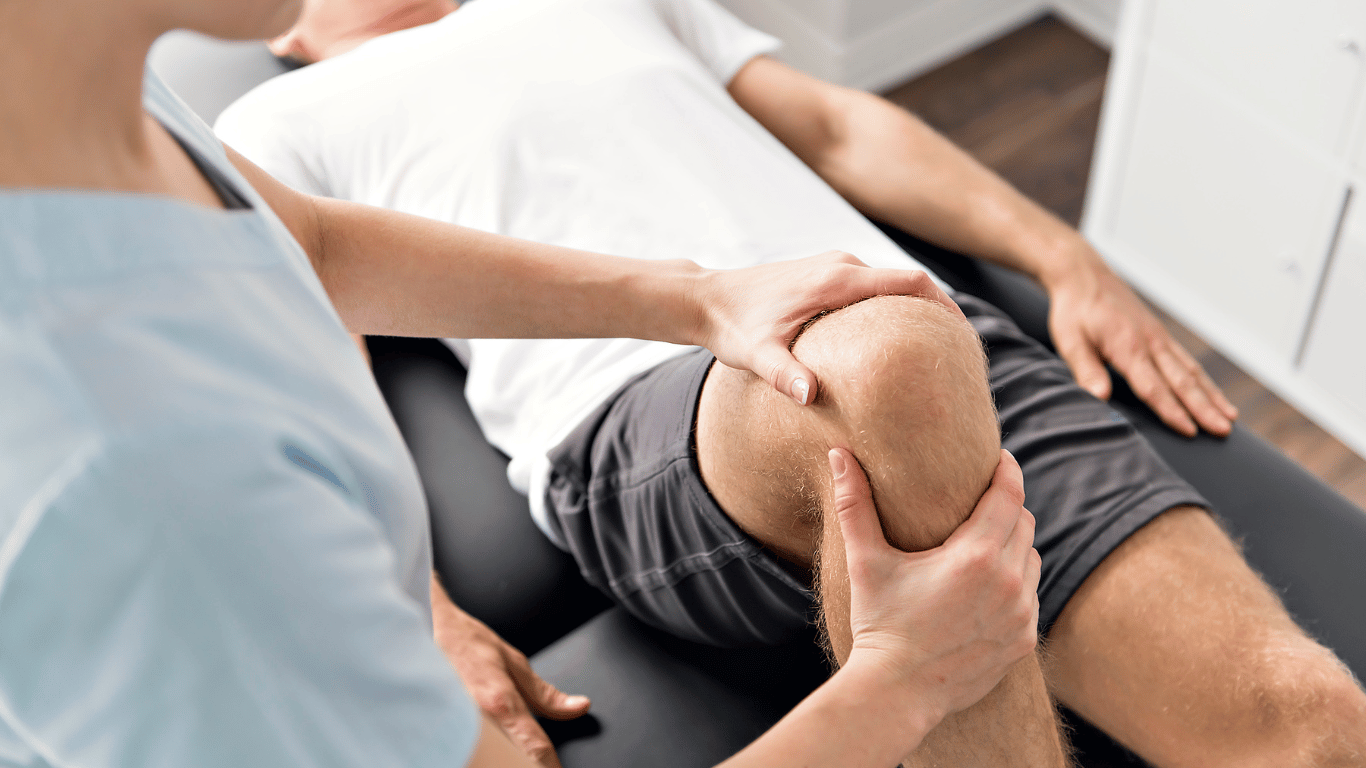
Knee Pain: How Osteopathy and Physiotherapy Treat It in Côte Saint-Luc
Knee that clicks, burns, locks or gives way? Learn how Réhabital's osteopaths and physiotherapists assess and treat knee pain — from osteoarthritis and patellofemoral syndrome to ligament sprains and tendinopathies.
Frozen Shoulder: Physiotherapy and Massage Therapy to Restore Full Mobility
Stuck, painful shoulder? Discover the combined physiotherapy + massage protocol at Réhabital in Côte Saint-Luc to beat frozen shoulder.

Physiotherapy for Knee Pain, Sports Injuries & Post-Surgery Recovery in Montreal
How physiotherapy treats knee pain, ACL injuries, frozen shoulder and post-surgical recovery. Evidence-based rehabilitation protocols at our Montreal clinic.
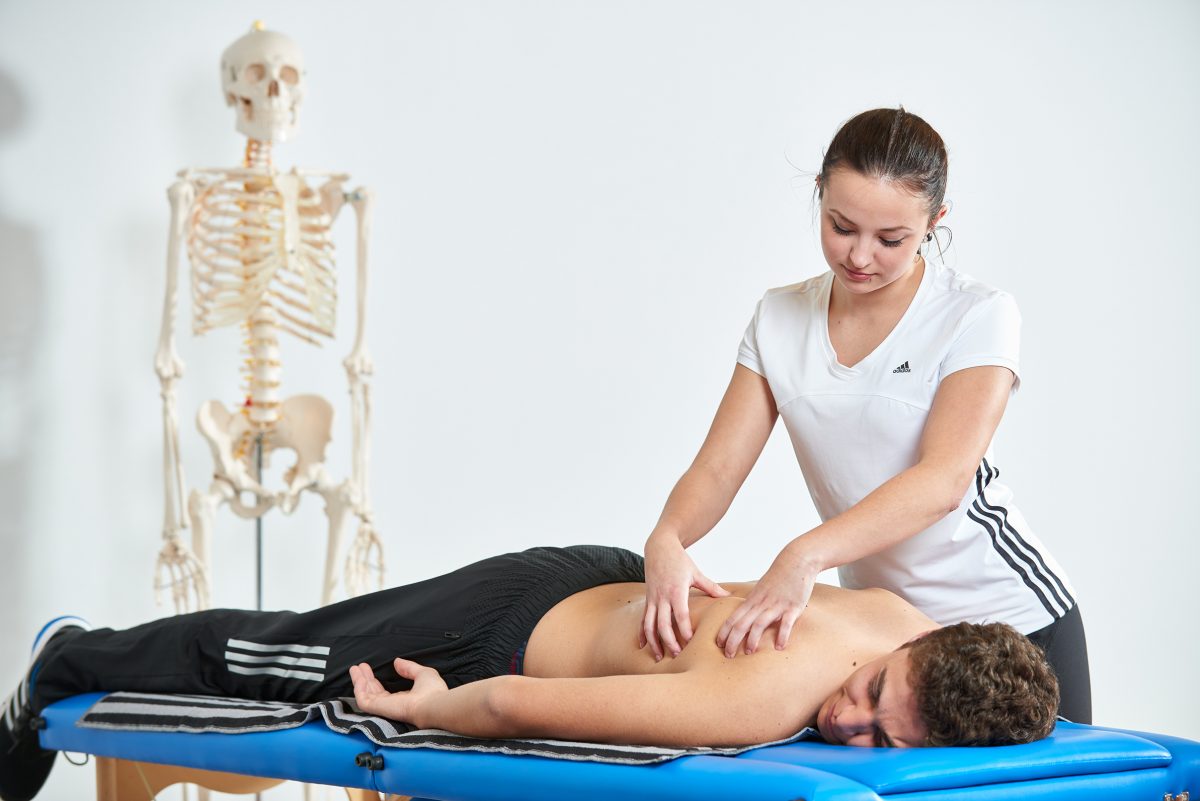
Physiotherapy and Osteopathy Combined: Why Réhabital Integrates Both in Every Treatment Plan
In Côte Saint-Luc, our difference is not simply offering physiotherapy and osteopathy side by side — we combine them inside one personalized treatment plan. Here is how this integration accelerates recovery and who benefits the most.
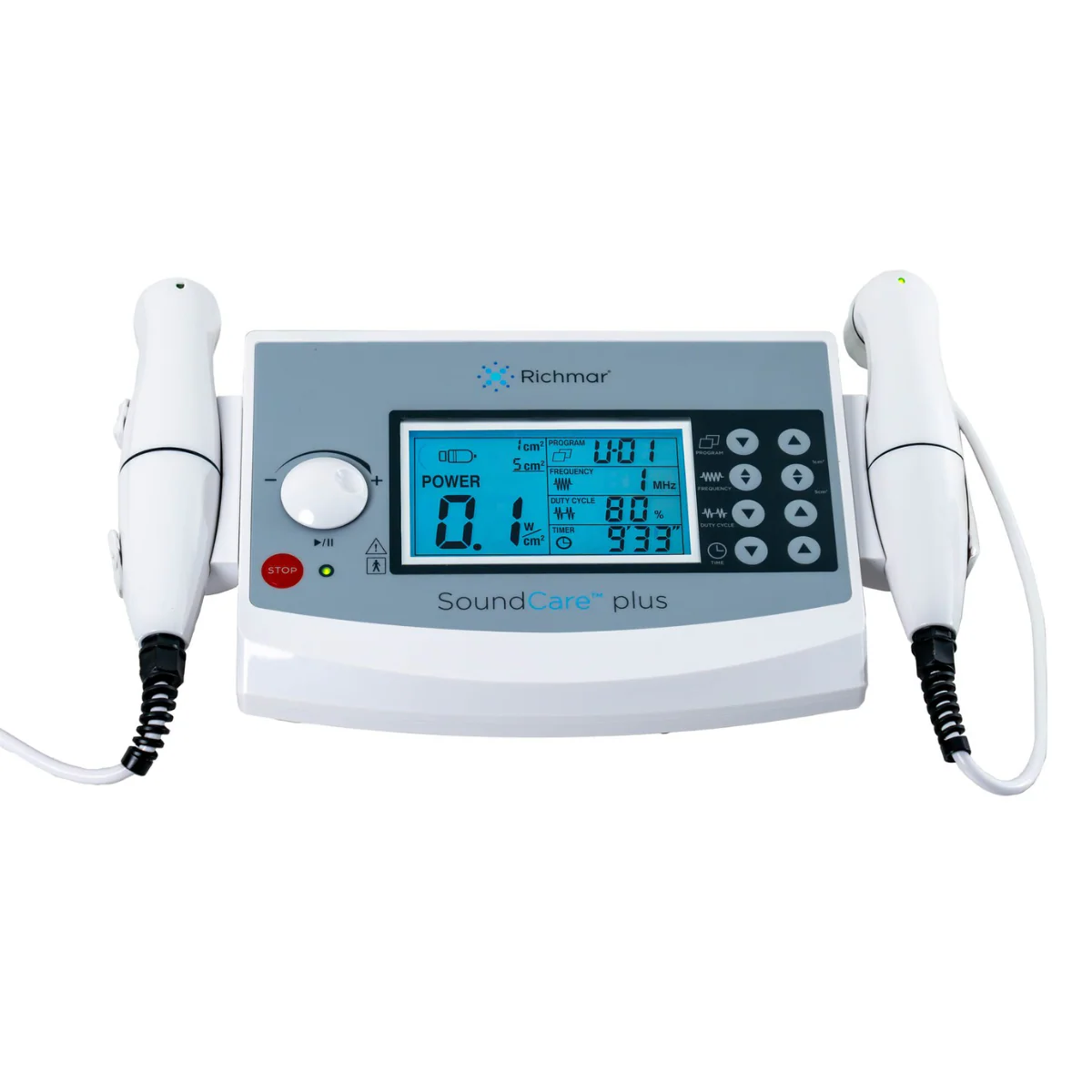
SoundCare Plus Therapeutic Ultrasound: How This Physiotherapy Device Speeds Up Healing in Côte Saint-Luc
Discover how the SoundCare Plus therapeutic ultrasound unit used at Réhabital in Côte Saint-Luc reduces pain, dissolves adhesions and speeds up tissue healing — a complete patient guide.
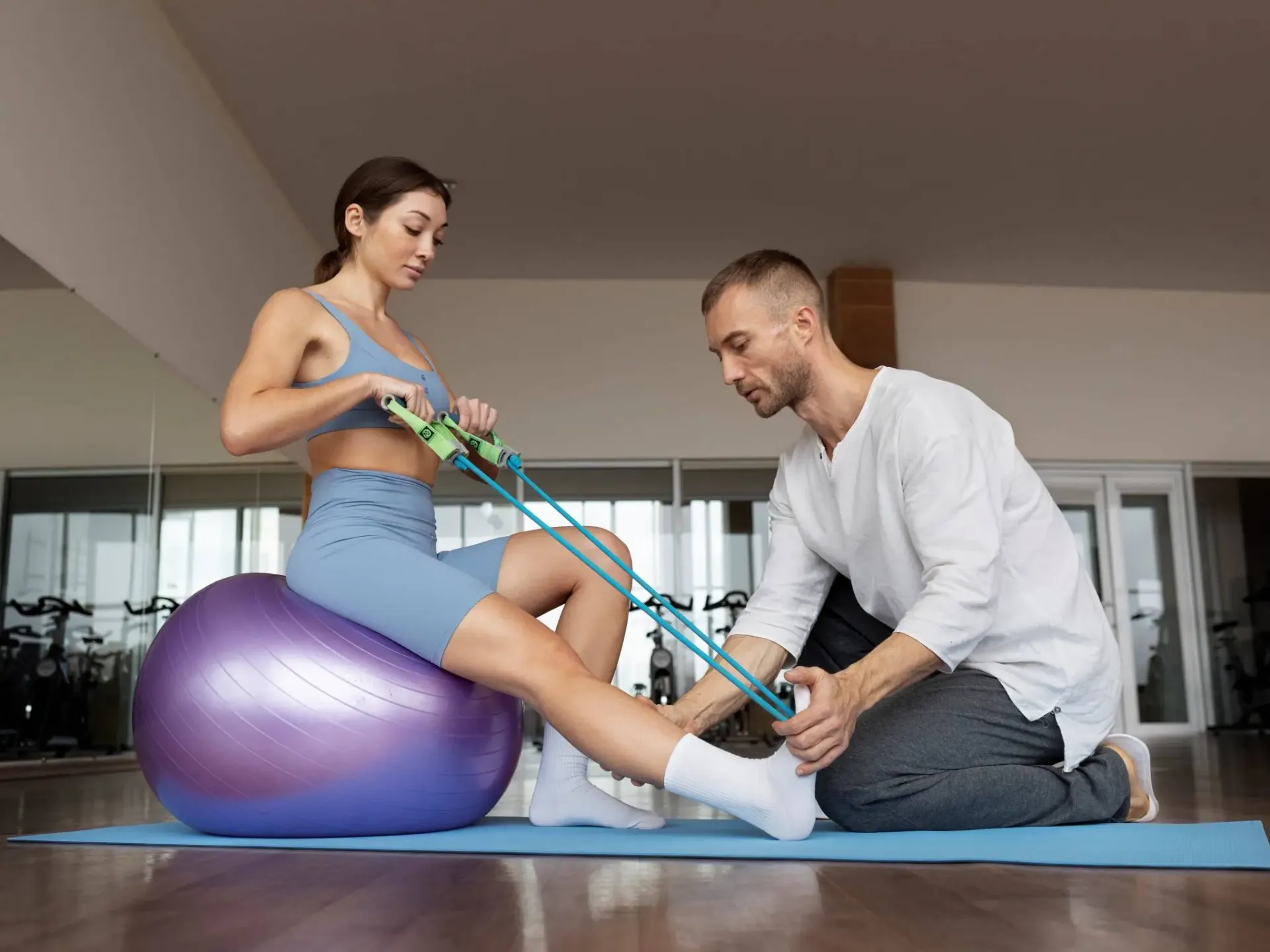
Physiotherapy in Côte Saint-Luc: regain mobility, strength and quality of life
How a structured physiotherapy plan — assessment, manual therapy, targeted exercises and education — accelerates recovery at Réhabital in Côte Saint-Luc.