
Sciatica at Night: Why Pain Worsens After Dark and How Osteopathy Helps You Sleep Again
Tossing, turning, woken up by a burning leg at 3 a.m.? Discover why sciatica intensifies at night and how our osteopaths in Côte Saint-Luc help patients sleep deeply again.
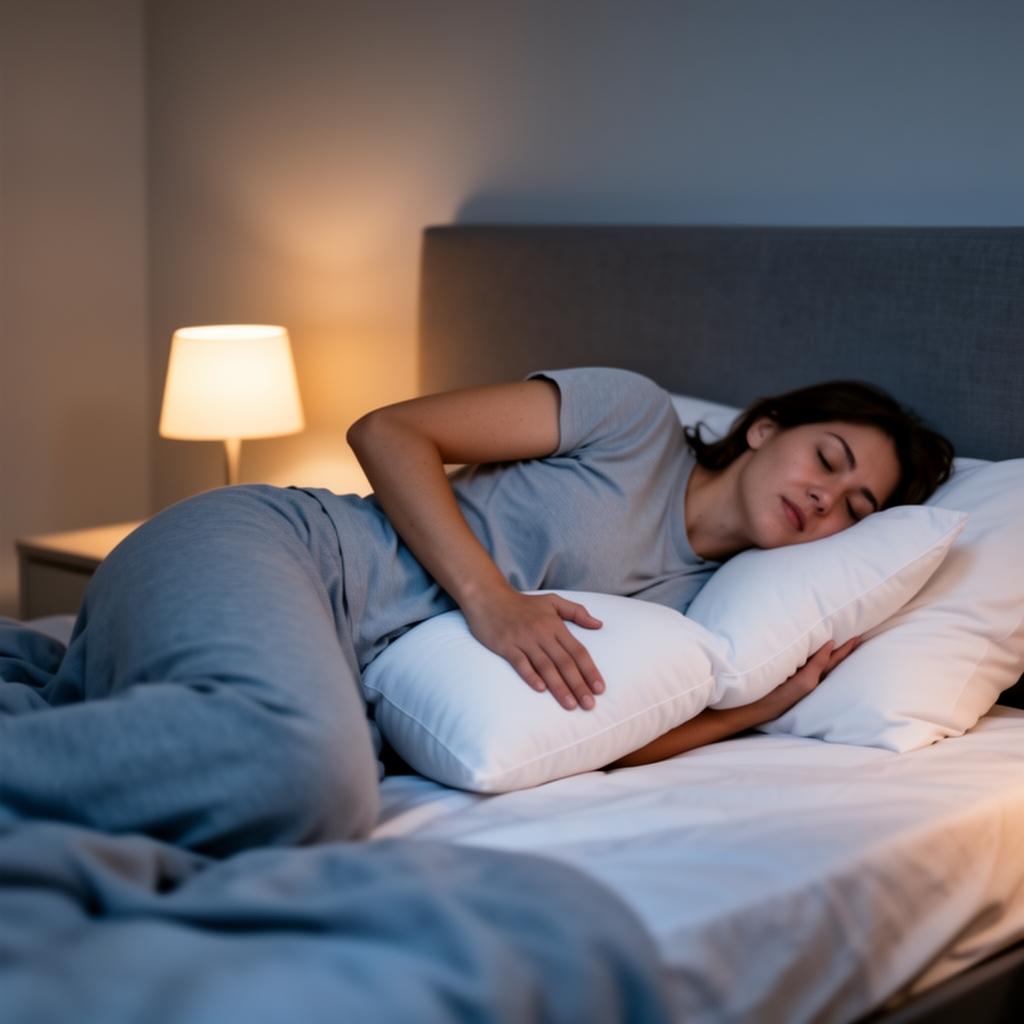
Why Sciatica Feels So Much Worse at Night
If you have lived with sciatica for more than a few days, you have probably noticed a frustrating pattern: the pain that was tolerable during the day suddenly becomes sharp, burning, or relentless the moment you lie down. Many of our patients in Côte Saint-Luc tell us the same story — they spend the whole day moving, working and pushing through, only to be ambushed by their sciatica when their head hits the pillow.
This is not in your imagination and it is not a sign that your condition is getting worse. Night-time sciatica has very specific mechanical, neurological and hormonal explanations. Understanding them is the first step toward fixing the problem at the source — which is exactly what an osteopathy program at Réhabital is designed to do.
In this in-depth guide, we will walk you through every reason your sciatica spikes after dark, the sleep positions that help (and the ones that wreck your recovery), the specific osteopathic techniques we use to calm the nerve before bedtime and a complete 18-step toolkit you can apply tonight to start sleeping again. Throughout, you will see how our osteopaths in Côte Saint-Luc combine hands-on care, education and gentle home strategies to give you back your nights.
The Anatomy of Night-Time Sciatica
The sciatic nerve is the longest and thickest nerve in your body. It originates from five nerve roots in your lower spine (L4 to S3), merges into a thick trunk in the buttock, slips beneath (or sometimes through) the piriformis muscle and travels all the way down to the foot. During the day, gravity, posture and movement constantly change the pressure on this nerve. At night, when you lie still for hours, three things happen at once:
- Tissues swell slightly — Inflammatory fluid that was being “pumped away” by daytime movement accumulates around the irritated nerve root.
- Discs rehydrate and expand — Lumbar discs absorb water overnight, increasing their height by 1 to 2 cm. In a healthy spine this is wonderful; with an irritated disc, it can briefly increase pressure on the nerve.
- The nervous system becomes more sensitive — Pain inhibition drops at night, anti-inflammatory cortisol falls between midnight and 4 a.m. and there are fewer external distractions to compete with the pain signal.
Add to this the fact that most people unconsciously sleep in positions that pull on the sciatic nerve — flat on the back without knee support, on the stomach, or curled tightly to one side — and you have a perfect storm for night-time flare-ups.
The 8 Most Common Reasons Sciatica Worsens at Night
- 1. Reduced cortisol production — Your natural anti-inflammatory hormone bottoms out in the early hours of the morning, so any inflammation around the nerve becomes more painful.
- 2. Loss of “distraction” — During the day, work, conversation and movement compete for your brain's attention. At night, the pain has the stage to itself.
- 3. Sustained spinal position — Staying still for hours allows mechanical pressure to build up at a single point along the nerve.
- 4. Sleeping on the stomach — This increases lumbar extension and tightens the facet joints around the nerve root.
- 5. A mattress that is too soft — Your hips sink, your pelvis tilts and the nerve is stretched all night long.
- 6. A mattress that is too hard — Pressure points form under the buttock and irritate the piriformis muscle directly over the sciatic nerve.
- 7. Curling tightly in fetal position — Excessive hip and knee flexion can shorten the piriformis and tension the nerve sheath.
- 8. Eating late or drinking alcohol before bed — Both increase systemic inflammation and disrupt deep sleep, where most tissue healing happens.
The Vicious Circle: Sciatica → Poor Sleep → Worse Sciatica
Sleep is when your body repairs irritated nerve tissue, rebuilds disc cells and recalibrates pain perception. When sciatica steals your sleep, every one of these recovery mechanisms is impaired:
- Reduced growth hormone means slower healing of micro-injured discs and ligaments.
- Lower pain threshold — Even one bad night drops your pain tolerance the next day by up to 15%.
- Increased muscle guarding — Fatigued muscles around the spine and pelvis stay contracted, perpetuating nerve compression.
- Heightened central sensitization — The nervous system “learns” the pain and starts firing more easily, even with smaller triggers.
This is why night-time sciatica is more than a comfort issue — it actively drives the condition toward chronicity. Breaking the cycle quickly is one of the most important things you can do and osteopathy is uniquely positioned to help because it works directly on the mechanical drivers that flare up when you lie down.
The Best Sleep Positions for Sciatica
There is no single “perfect” position — the right one depends on which structure is irritating your sciatic nerve. Here is what we recommend to patients at Réhabital based on the most common patterns:
- Side-lying with a pillow between the knees — Universally helpful. Keeps the pelvis neutral, prevents the upper leg from collapsing forward and reduces tension on the piriformis. Sleep on the side opposite to the pain when possible.
- On your back with a pillow under the knees — Ideal for disc-related sciatica. The slight knee flexion reduces tension on the nerve roots and flattens the lumbar curve gently.
- Modified fetal position — Works well for stenosis-related sciatica (pain worse when standing). Knees drawn up slightly, NOT tightly compressed against the chest.
- Reclined position on a wedge pillow — Excellent for acute flare-ups; the slight upper-body elevation reduces venous congestion around the inflamed nerve.
What to avoid: sleeping flat on your stomach (compresses the lumbar facets), sleeping with the painful leg straight down underneath the other (puts maximum tension on the nerve) and sleeping on a sagging mattress that drops your hips below shoulder level.
How Osteopathy Quiets Night-Time Sciatica
Our osteopathic approach for night-time sciatica is built on one simple principle: release the mechanical compression, calm the nervous system and restore healthy nerve gliding so it stops being irritated when you lie still. A typical program in Côte Saint-Luc includes:
- Detailed assessment of your night pattern — When exactly does the pain wake you? Which position relieves it? Which makes it worse? The answers immediately narrow down the source.
- Pelvic and sacral balancing — Gentle techniques restore symmetry to the structures that cradle the sciatic nerve at its origin.
- Piriformis and deep gluteal release — Soft tissue work and muscle energy techniques relax the muscle most likely to compress the nerve in side-lying.
- Lumbar mobilization — Gentle, non-thrust techniques to free restricted vertebral segments without aggravating disc tissue.
- Neural mobilization (“nerve gliding”) — Specific movements that restore the nerve's ability to slide freely within its sheath — a key reason pain spikes when you stay still.
- Diaphragm and visceral techniques — Tension in the diaphragm and abdominal organs can pull on the lumbar spine and pelvis. Releasing them often unlocks night-time relief that no stretch could achieve.
- Education on bedtime routines — Specific stretches to do 30 minutes before bed, breathing exercises to calm the nervous system and posture corrections for the last hour of the day.
An 18-Step Toolkit to Sleep Tonight
Patients ask us all the time: "What can I do tonight to actually sleep?“ Here is our most-recommended evening protocol. Pick the ones that fit your schedule — even three of them, done consistently, can change your nights within a week.
- 1. Apply moist heat to the lower back and buttock for 15 minutes after dinner.
- 2. Walk gently for 10 to 15 minutes around your home — movement clears inflammatory fluid.
- 3. Do a slow piriformis stretch (figure-4) for 60 seconds per side.
- 4. Add a gentle hamstring stretch — never to the point of pain.
- 5. Try the “knees to chest” stretch, holding 30 seconds, three times.
- 6. Perform 8 to 10 slow pelvic tilts to mobilize the lumbar spine.
- 7. Add 6 nerve glides (sciatic nerve flossing) — done gently, never aggressively.
- 8. Avoid heavy meals after 8 p.m.
- 9. Skip alcohol — it disrupts deep sleep and increases inflammation.
- 10. Dim the lights one hour before bed to support melatonin release.
- 11. Take a warm (not hot) bath with Epsom salts for 15 minutes.
- 12. Place a pillow between your knees if side-lying.
- 13. Place a pillow under your knees if back-lying.
- 14. Use a small rolled towel under your lower back for extra lumbar support if needed.
- 15. Practice 5 minutes of slow diaphragmatic breathing in bed.
- 16. Keep the bedroom cool — ideal temperature 18 to 20 °C.
- 17. If you wake up, do NOT scroll — get up, walk gently for 2 minutes, then return to bed.
- 18. Track which strategies helped — patterns appear quickly within a week or two.
Hidden Triggers of Night-Time Sciatica
Sometimes patients in Côte Saint-Luc come in saying “I've tried every pillow on the market and nothing works.” When standard advice fails, we look for less obvious drivers:
- An old ankle sprain that altered your gait years ago and now pulls your pelvis off-axis.
- Chronic abdominal tension from stress, IBS, or scar tissue from past surgery (C-section, appendectomy, hysterectomy).
- Dental occlusion problems — yes, the jaw influences spinal posture through fascial chains.
- A sagging mattress older than 8 to 10 years that no one has noticed.
- Tight hip flexors from sitting all day that pull the pelvis forward when you lie down.
- Sleeping with a pet on the painful side, forcing you to maintain an awkward position.
- Hidden anxiety that elevates the night-time nervous system and amplifies pain signals.
Identifying and addressing these hidden triggers is one of the things that sets osteopathic care apart. We do not just treat the symptom — we look for the entire mechanical and lifestyle pattern that keeps the pain alive.
What Recovery Looks Like at Réhabital
Here is what most patients with night-time sciatica experience during a structured osteopathy program:
- Week 1 — Falling asleep becomes easier; the number of night-time wake-ups drops noticeably.
- Week 2 — Less pain on rolling over and on first getting out of bed.
- Week 3-4 — Most patients sleep through the night again. Morning stiffness reduces significantly.
- Week 5-6 — Return to regular sleeping positions. We introduce gentle strengthening for long-term protection.
- Maintenance — One session every 4 to 6 weeks is usually enough to keep night-time pain from returning.
Pregnancy, Sciatica and Sleep
Sciatic-type pain during pregnancy is incredibly common — and almost always worse at night. The hormone relaxin loosens pelvic ligaments, the growing baby shifts the center of gravity and lying down concentrates pressure on already-irritated SI joints and piriformis muscles. Osteopathy is one of the safest options during pregnancy and can dramatically improve night-time comfort without any medication. We use specially adapted side-lying techniques with pregnancy pillows and gentle pelvic balancing throughout all three trimesters.
The Science: Why Manual Therapy Works for Night-Time Sciatica
- Studies show that manual therapy and nerve gliding reduce pain intensity and improve sleep quality scores within 3 to 5 sessions in mechanical sciatica.
- NICE guidelines (UK) and the American College of Physicians recommend manual therapy as first-line care for sciatica before opioids or imaging.
- Research on the autonomic nervous system shows that gentle osteopathic techniques shift the body into a parasympathetic (“rest and digest”) state — the exact state needed for deep, restorative sleep.
- Patients receiving osteopathic care for low back pain consistently report better sleep quality, fewer night-time awakenings and lower use of sleep medications.
Why Patients in Côte Saint-Luc Choose Réhabital for Night-Time Sciatica
- Experienced osteopaths trained in advanced manual therapy and neural mobilization techniques specific to sciatica.
- Structured diagnostic approach that identifies the true mechanical driver behind your night-time pain.
- Calm, modern clinic environment in the heart of Côte Saint-Luc, easily accessible from Hampstead, NDG, Snowdon and Westmount.
- Coverage by most private insurance plans in Quebec, with official receipts issued after every session.
- Multilingual team — French, English, Persian, Spanish, Russian and more.
- Clear treatment milestones and honest re-evaluations: if you do not feel meaningful change within 3 to 4 sessions, we revisit the diagnosis instead of extending care unnecessarily.
When to See an Osteopath — and When Night Pain Is a Red Flag
Book an osteopathy session early if your sciatica is waking you up more than twice a week, if it lasts longer than two weeks, or if it began after a fall, accident, or new exercise routine. Early treatment is faster, gentler and prevents the nervous system from becoming sensitized.
Go directly to the emergency room if you experience any of the following: loss of bladder or bowel control, numbness in the saddle area (inner thighs, genitals, buttocks), progressive leg weakness, or a sudden inability to lift your foot. These are rare but serious red flags for cauda equina syndrome and require immediate medical evaluation.
Serving Côte Saint-Luc and the Greater Montreal Area
Réhabital is conveniently located in Côte Saint-Luc, minutes from Hampstead, Snowdon, NDG, Westmount and downtown Montreal. Our osteopaths treat patients of all ages — from new parents whose backs gave up after months of sleepless nights to seniors with chronic stenosis-related sciatica. Whatever the cause, our goal is the same: give you back your sleep, your mornings and your movement.
Frequently Asked Questions
1. Why does my sciatica feel fine all day and explode at night?
Daytime movement keeps inflammatory fluid moving and distracts the nervous system. At night, both protective mechanisms vanish and the underlying mechanical compression becomes obvious.
2. Is night-time sciatica more serious than daytime sciatica?
Not usually. It is a sign of unresolved mechanical compression, not necessarily a worse condition. Still, it deserves prompt attention because lost sleep slows healing.
3. Should I sleep with the painful leg up or down?
Sleep on the non-painful side with a pillow between the knees so the painful leg rests on top, supported in a neutral position.
4. Is a firm mattress always better for sciatica?
No. Medium-firm is usually best. Too soft causes the hips to sink; too hard creates pressure points on the piriformis.
5. Can I take a sleeping pill until osteopathy works?
That is a conversation for your physician. Short-term sleep aids may help, but they do not address the cause and can prolong recovery if used too long.
6. How quickly will osteopathy help my nights?
Most patients notice better sleep within 2 to 4 sessions. Some feel improvement after the very first visit.
7. Should I use heat or ice before bed?
Heat is almost always better at night — it relaxes muscles and prepares the body for sleep. Use ice only in the first 24 to 48 hours of an acute flare.
8. Can stretching before bed make sciatica worse?
Only if stretches are too aggressive or held too long. Gentle, short holds are protective; deep forward bends can irritate an inflamed nerve.
9. Why does the pain wake me at 3 a.m.?
Cortisol (your natural anti-inflammatory) hits its lowest level between 2 and 4 a.m., so any nerve inflammation peaks at that exact window.
10. Is it bad to sleep on the floor with sciatica?
For some patients with disc-related pain, a firm surface temporarily helps. For piriformis-related pain, the floor often makes things worse. Test cautiously.
11. Can stress alone trigger night-time sciatica?
Stress does not cause sciatica, but it amplifies it dramatically by increasing muscle tension and lowering the pain threshold.
12. Are anti-inflammatories enough?
They mask the pain but do not release the compression. They can be useful short term but should never replace addressing the cause.
13. How many osteopathy sessions will I need for night-time sciatica?
Acute cases: 2 to 4 sessions. Chronic or recurrent cases: 6 to 10 sessions, spaced progressively further apart.
14. Can I keep exercising if my sciatica wakes me up?
Yes — gentle walking and swimming help. Avoid heavy lifting, deep forward folds and intense running until the night pain settles.
15. Does osteopathy work if I already had back surgery?
Yes. Post-surgical patients often benefit from gentle techniques to address the surrounding compensations that drive ongoing nerve irritation.
16. Is it normal to feel tingling all night?
Tingling indicates ongoing nerve irritation. It usually resolves quickly once the mechanical compression is released.
17. Can a wedge or adjustable bed help?
Yes — a slight upper-body elevation can dramatically reduce pressure during acute flares.
18. Should I sleep with a heating pad on all night?
No. Use heat for 15 to 20 minutes before bed and remove it. All-night heat dehydrates tissues and can backfire.
19. Is osteopathy safe if I am pregnant and have night-time sciatica?
Yes, very safe and often life-changing. We use techniques specifically adapted to each trimester and pregnancy pillows for comfort.
20. Will I need to give up my favourite sleeping position forever?
No. Once the cause is addressed, most patients return to their usual position within a few weeks.
21. Do I need a referral from my doctor?
No. Osteopathy is a direct-access profession in Quebec. You can book directly with us.
22. Is osteopathy covered by insurance for sciatica?
Yes. Most private insurance plans in Quebec cover osteopathy. We provide official receipts after every session for reimbursement.
23. What is the single most effective thing I can do tonight?
Side-lying with a pillow between the knees, after a 15-minute warm bath, a gentle figure-4 stretch and 5 minutes of slow breathing. Simple, free and surprisingly powerful.
Book Your Sciatica Consultation at Réhabital
You do not have to spend another night battling your sciatic nerve. Our experienced osteopaths in Côte Saint-Luc help patients from Hampstead, Westmount, NDG, Snowdon and across Montreal sleep deeply again — without medication, without surgery and without endless trial and error. Learn more about our osteopathy services →
Frequently asked questions
Go deeper with our dedicated osteopathy pages
Osteopathy pages with Shahram Ghasemi, MD (Iran), DOMP in Côte Saint-Luc:
Related articles
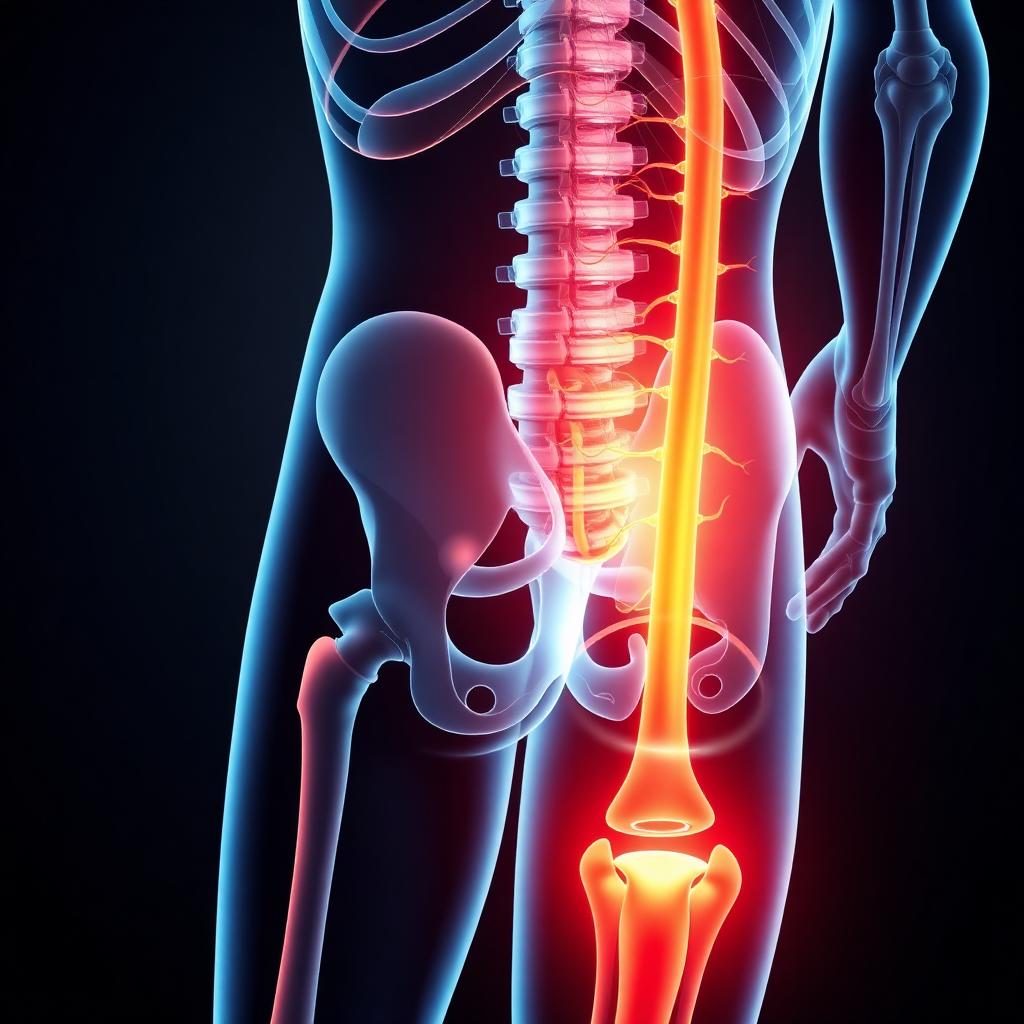
Sciatica Pain Explained: Causes, Symptoms and How Osteopathy Brings Lasting Relief
Sharp, burning pain shooting from your lower back down the leg? Discover the most common causes of sciatica and how our osteopaths in Côte Saint-Luc relieve it without medication or surgery.

Treating Sciatica with Osteopathy: Shahram Ghasemi's Approach in Côte Saint-Luc
Pain shooting down the leg, tingling, trouble sitting? Discover how osteopath Shahram Ghasemi approaches sciatica at Réhabital in Côte Saint-Luc — assessment, manual techniques and a realistic recovery plan.
Sciatica, Desk Posture and Bad Sleeping Positions: How Osteopathy Breaks the Cycle
Eight hours seated, then eight hours in a bad sleeping position: that is where most sciatica begins. Learn the exact mechanisms, the positions to correct, and how osteopathy in Côte Saint-Luc delivers lasting relief.
Osteopathy and sciatica: how to durably relieve sciatic nerve pain
How osteopathy identifies the mechanical cause of sciatica — disc, sacroiliac or piriformis — and relieves pain in a few sessions at Réhabital in Côte Saint-Luc.
Herniated Disc, Sciatica or Piriformis Syndrome: How to Tell Them Apart
Pain shooting down your leg? It is not always “sciatica.” Learn how to tell a herniated disc, a true radicular sciatica and a piriformis syndrome apart — and how osteopathy and physiotherapy at Réhabital in Côte Saint-Luc treat each one differently.
Common Causes of Sciatica: A Practical Guide to Lasting Relief Through Osteopathy
Why does sciatic pain keep coming back? Explore the everyday habits, postural patterns and structural imbalances behind sciatica — and how osteopathy at Réhabital corrects them at the source.