
Sciatica, Desk Posture and Bad Sleeping Positions: How Osteopathy Breaks the Cycle
Eight hours seated, then eight hours in a bad sleeping position: that is where most sciatica begins. Learn the exact mechanisms, the positions to correct, and how osteopathy in Côte Saint-Luc delivers lasting relief.
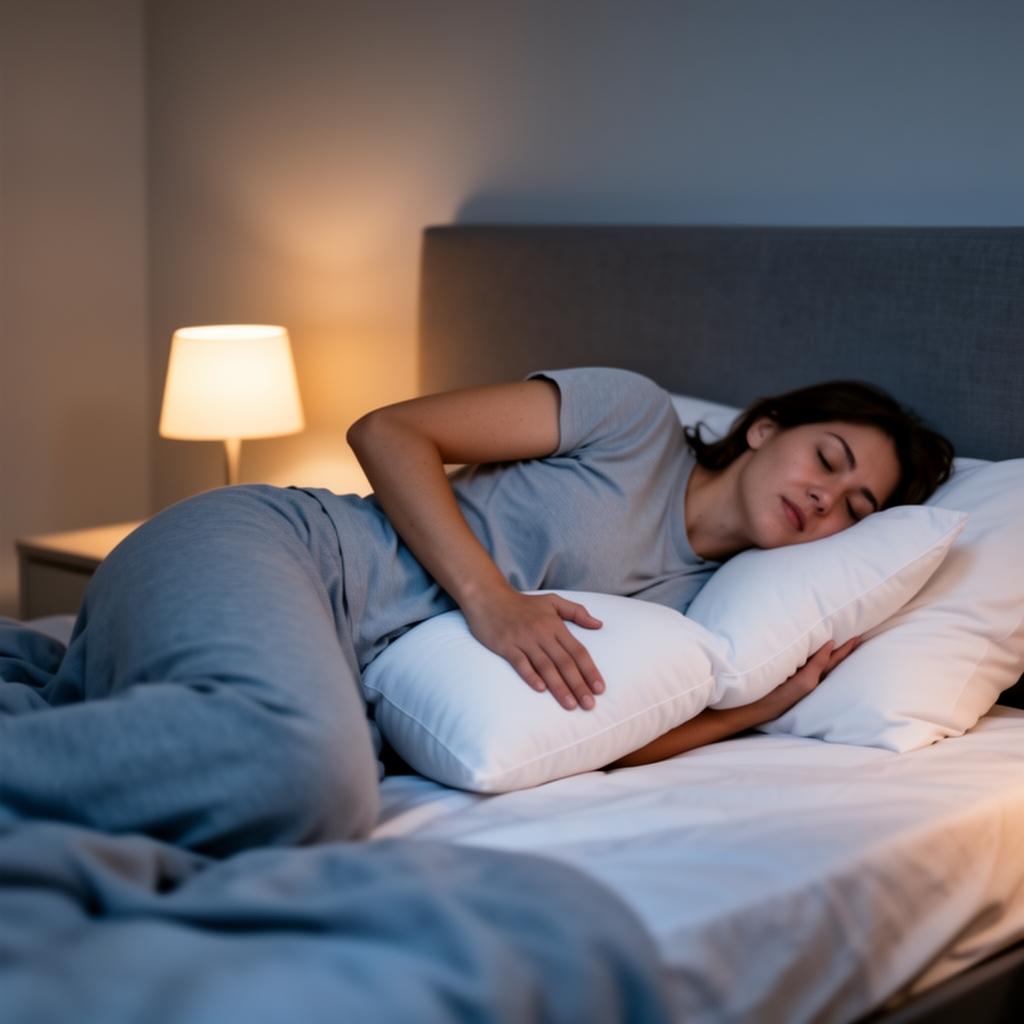
Most people assume sciatica arrives suddenly — one bad lift, one awkward twist, and the leg lights up. In clinical practice at Réhabital in Côte Saint-Luc, that is rarely the full story. The lift was simply the last straw. The real work was done over months by two ordinary activities that nobody thinks of as dangerous: sitting at a desk, and sleeping in a position your body never asked for.
If you spend eight hours a day seated and another seven or eight hours in a posture that twists your pelvis, your sciatic nerve is being loaded for around fifteen hours out of every twenty-four. This article explains exactly how that happens, which positions matter most, and how osteopathy in Côte Saint-Luc addresses the mechanical causes rather than just chasing the pain.
What sciatica actually is
Sciatica is not a diagnosis in itself. It is a description of symptoms produced when the sciatic nerve — or one of the nerve roots between L4 and S3 that form it — becomes irritated or compressed. The nerve is the thickest in the human body, about the diameter of your little finger where it leaves the pelvis, and it travels from the lower spine through the buttock, down the back of the thigh, and branches below the knee to the foot.
Typical symptoms include a sharp or burning pain that travels down one leg, pins and needles in the calf or foot, a dull deep ache in the buttock, weakness when pushing off the foot, and pain that worsens when sitting, coughing or sneezing. Crucially, true sciatica follows a line down the leg. Pain that stays in the lower back and spreads across both sides is more often facet joint or muscular in origin — a distinction your osteopath makes during assessment.
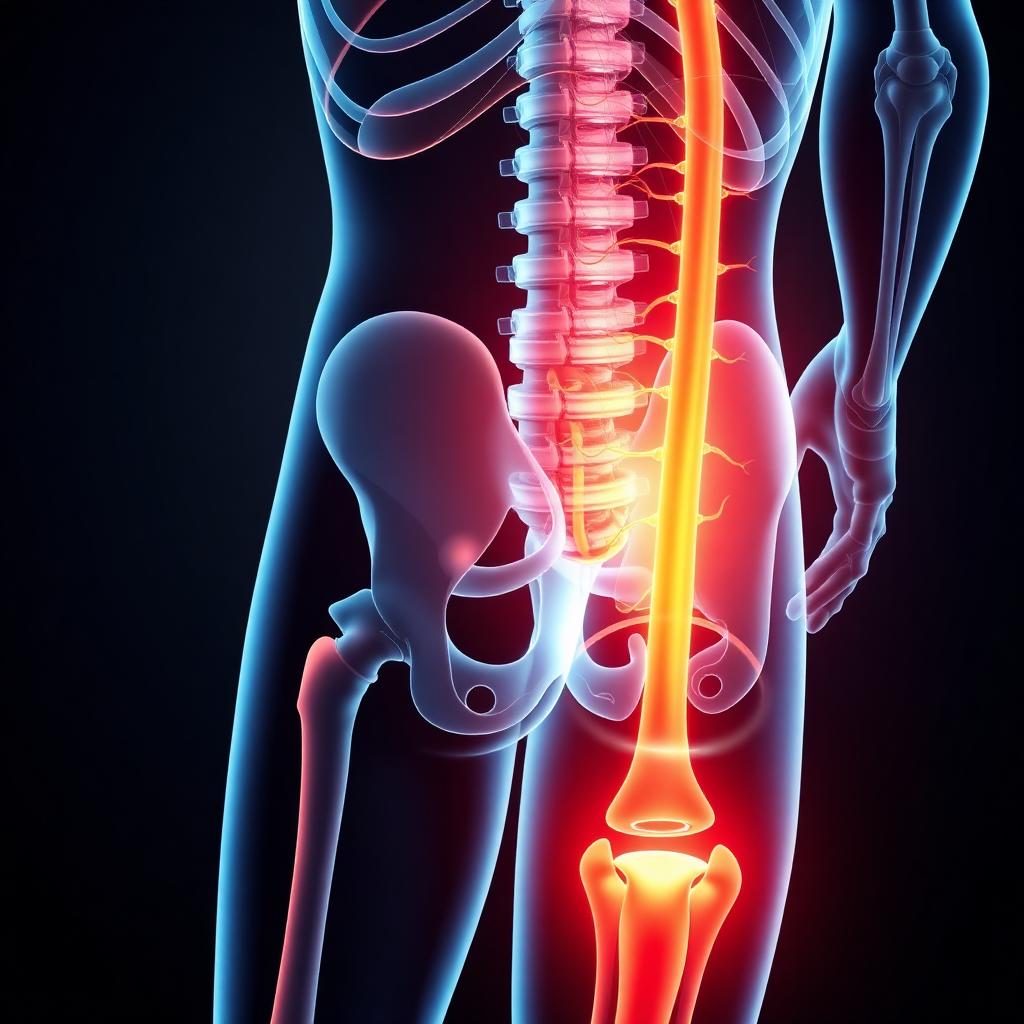
Why desk sitting is such a powerful trigger
Sitting looks passive. Mechanically, it is anything but. Four things happen the moment you sit down and stay down.
1. Disc pressure rises sharply
Classic intradiscal pressure research showed that pressure in the lumbar discs is markedly higher in unsupported sitting than in standing, and higher still when you lean forward toward a screen. A disc that is under sustained pressure loses fluid, becomes less able to distribute load, and its outer fibres are more easily irritated. When the posterior fibres bulge even slightly, the nerve root sitting immediately behind them becomes sensitized.
2. The hip flexors shorten
Your psoas attaches directly onto the lumbar vertebrae and discs. Kept in a shortened position for hours daily, it adapts to that length. When you finally stand, it pulls the lumbar spine into extension and compresses the facet joints — which is why so many desk workers feel their worst pain in the first few minutes after standing up, not while sitting.
3. The glutes stop working
Sitting on your gluteal muscles for hours does two things: it mechanically compresses the tissue in which the sciatic nerve is embedded, and it teaches the nervous system that the glutes are not needed. Weak glutes force the piriformis and deep rotators to take over stabilizing the hip. Those muscles sit directly on top of — and in around 15 percent of people, directly around — the sciatic nerve.
4. The pelvis rotates
Almost nobody sits symmetrically. Crossing the same leg, sitting on a wallet, angling toward a monitor that is off-centre, or reaching constantly for a mouse on one side creates a small persistent pelvic rotation. Held for thousands of hours, that rotation changes how load passes through the sacroiliac joints and the lumbosacral junction — the exact place the sciatic nerve roots exit.
Why sleeping posture matters just as much
Patients are often surprised that we spend as long asking about their bed as their chair. The reason is simple: sleep is the only time the body holds one position for hours without the micro-adjustments that protect tissue during the day. Five to seven hours in a compromised position is a genuine mechanical load.
Face-down sleeping
This is the position we most often ask patients to abandon. Lying prone forces the lumbar spine into sustained extension, closing down the intervertebral foramina where the nerve roots exit. It also requires the neck to be rotated roughly 90 degrees all night. Patients who sleep face down commonly describe the same pattern: pain and stiffness that peaks within minutes of waking and eases after twenty minutes of movement.
Collapsed side lying
Side sleeping is generally healthy, but the version most people default to is not. The top leg slides forward and down onto the mattress, dragging the pelvis into rotation and holding the piriformis and gluteus medius in a stretched position for hours. If you wake with buttock pain on the upper side, this is usually why. A firm pillow between the knees — not a thin cushion that flattens by 2 a.m. — solves it in most cases.
The wrong mattress
A mattress that is too soft allows the heaviest part of the body, the pelvis, to sink deeper than the ribcage and shoulders. The lumbar spine spends the night in a side bend. A mattress that is far too firm creates the opposite problem for side sleepers: the shoulder cannot sink, so the spine is bent the other way. Medium-firm suits the majority of people with sciatic symptoms.
The sofa nap
Falling asleep on a sofa, in a car seat or in a plane seat combines the worst of both worlds — a seated flexed lumbar spine with no possibility of position change. A single long sofa sleep is enough to flare quiet sciatica for several days.
The vicious cycle
Here is where the two halves meet. Daytime sitting shortens the hip flexors, deactivates the glutes and pressurizes the discs. Night-time positioning then holds the resulting asymmetry in place instead of unwinding it. You wake stiffer than you went to bed, so you move less during the day. Less movement means less fluid exchange in the discs and less blood flow to the nerve. The nerve becomes mechanically sensitive, so the brain reduces movement further to protect it. Six months later, a mild ache has become a leg you cannot straighten in the morning.
Breaking that cycle requires intervening at both ends — which is precisely how osteopathic treatment is structured.
How osteopathy treats posture-driven sciatica
Assessment first
Your first session at Réhabital lasts about 60 minutes. Before any treatment, your osteopath screens for red flags, tests neurological function (reflexes, myotome strength, dermatome sensation), performs a straight leg raise and slump test to confirm neural involvement, and then assesses how you actually load your body — standing posture, sitting posture, gait, hip mobility and breathing pattern. We frequently ask patients to reproduce their real desk position and their sleeping position on the table, because described posture and actual posture rarely match.
Manual treatment
Techniques are selected to match the driver identified in assessment:
- Lumbar articulation and decompression: restoring segmental movement at L4-L5 and L5-S1, where the majority of nerve root irritation originates, and creating space at the exit foramina.
- Sacroiliac and pelvic balancing: correcting the rotation built by asymmetrical sitting so that load transfers evenly through the pelvis again.
- Myofascial release of the deep hip rotators: direct, progressive work on the piriformis and the gluteal fascia to reduce mechanical pressure on the nerve as it exits the greater sciatic foramen.
- Psoas and diaphragm work: releasing the hip flexor and the diaphragm together, since both attach to the lumbar spine and both are shortened by hours of seated, shallow breathing.
- Neural mobilization: gentle gliding techniques that restore the nerve's ability to slide within its tissue sheath — critical when symptoms have been present for months.
Correcting the environment
Treatment that ignores the fifteen hours a day producing the problem will not hold. Every plan includes concrete changes: chair height so hips sit slightly above knees, feet flat, screen top at eye level, keyboard close enough that elbows stay by the ribs, and a position change every 30 to 45 minutes. For sleep, we prescribe the specific position and pillow setup for your presentation, not generic advice.
What recovery realistically looks like
Acute posture-driven sciatica of a few weeks' duration typically responds within 3 to 5 sessions. Chronic cases — a year or more of daily sitting with a nerve that has been sensitized for a long time — usually need 6 to 10 sessions over two to three months, with clear milestones: first, night pain settles; then morning stiffness shortens; then the leg symptoms retreat upward toward the buttock (a phenomenon called centralization and a reliable sign of progress); finally, sitting tolerance returns.
Progress is rarely linear. A flare after a long drive or a bad night does not undo treatment; it tells us which load your system still cannot tolerate, and it directs the next session.
Five things to change this week
- Set a 40-minute timer at your desk. Stand, walk to the window, and sit back down. That is enough.
- Stop crossing the same leg. If you must cross, alternate consciously every few minutes.
- Put a firm pillow between your knees tonight. Most patients notice a difference in morning symptoms within three nights.
- Stop sleeping face down. If you cannot, place a flat pillow under your pelvis to reduce lumbar extension while you transition to side lying.
- Walk ten minutes after work. Short and daily beats long and occasional.
When to seek care in Côte Saint-Luc
Book an assessment if leg pain has lasted more than two weeks, if you cannot sit through a meal or a commute, if symptoms wake you at night, or if the same episode keeps returning every few months. Recurrence is the clearest sign that the cause is postural and has never been addressed.
At Réhabital, osteopathy is often combined with physiotherapy for strengthening and with massage therapy for persistent muscular guarding. Our clinic in Côte Saint-Luc is easily reached from Hampstead, Notre-Dame-de-Grâce, Snowdon, Montreal West and Saint-Laurent, and we issue insurance receipts for every session.
Related reading
- Sciatica at night: why pain peaks in bed and how to sleep through it
- The most common causes of sciatica and how osteopathy treats each one
- Why you wake up with back pain every single morning
- Sciatica in Montreal: osteopathy or physiotherapy?
- Does osteopathy help with back pain? A complete Montreal guide
Frequently asked questions
Go deeper with our dedicated osteopathy pages
Osteopathy pages with Shahram Ghasemi, MD (Iran), DOMP in Côte Saint-Luc:
Related articles

Osteopathy and sciatica: how to durably relieve sciatic nerve pain
How osteopathy identifies the mechanical cause of sciatica — disc, sacroiliac or piriformis — and relieves pain in a few sessions at Réhabital in Côte Saint-Luc.
Treating Sciatica with Osteopathy: Shahram Ghasemi's Approach in Côte Saint-Luc
Pain shooting down the leg, tingling, trouble sitting? Discover how osteopath Shahram Ghasemi approaches sciatica at Réhabital in Côte Saint-Luc — assessment, manual techniques and a realistic recovery plan.
Sciatica at Night: Why Pain Worsens After Dark and How Osteopathy Helps You Sleep Again
Tossing, turning, woken up by a burning leg at 3 a.m.? Discover why sciatica intensifies at night and how our osteopaths in Côte Saint-Luc help patients sleep deeply again.
Sciatica Pain Explained: Causes, Symptoms and How Osteopathy Brings Lasting Relief
Sharp, burning pain shooting from your lower back down the leg? Discover the most common causes of sciatica and how our osteopaths in Côte Saint-Luc relieve it without medication or surgery.
Herniated Disc, Sciatica or Piriformis Syndrome: How to Tell Them Apart
Pain shooting down your leg? It is not always “sciatica.” Learn how to tell a herniated disc, a true radicular sciatica and a piriformis syndrome apart — and how osteopathy and physiotherapy at Réhabital in Côte Saint-Luc treat each one differently.

Pain from Prolonged Sitting: What Osteopathy Can Do
Back pain, stiff neck, tight hips and chronic fatigue after long office or remote work hours? Osteopathy is your best ally for lasting postural reorganisation.