
Sciatica Pain Explained: Causes, Symptoms and How Osteopathy Brings Lasting Relief
Sharp, burning pain shooting from your lower back down the leg? Discover the most common causes of sciatica and how our osteopaths in Côte Saint-Luc relieve it without medication or surgery.
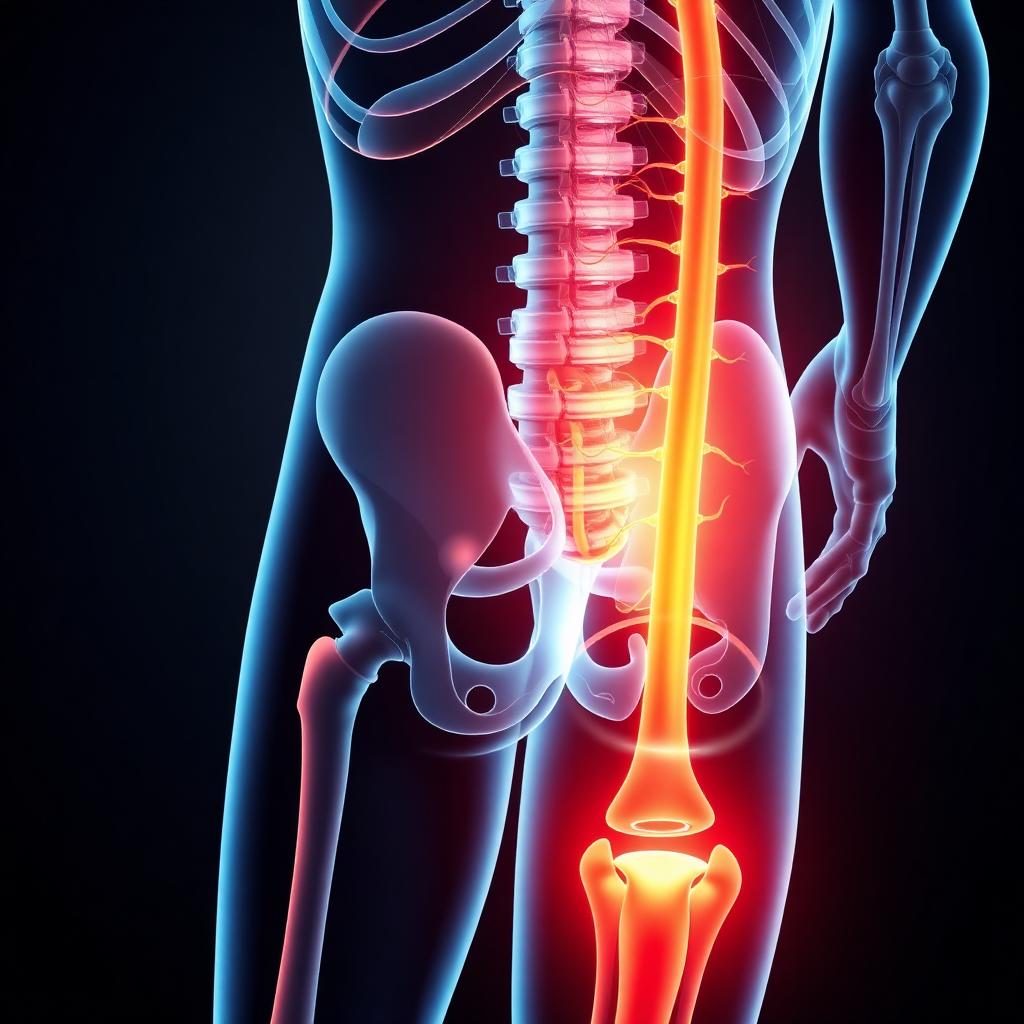
What Is Sciatica, Really?
Sciatica is not a diagnosis — it is a symptom. It describes pain that travels along the path of the sciatic nerve, the longest and thickest nerve in the human body. The sciatic nerve forms from nerve roots exiting the lower spine (L4 to S3), runs through the buttock and branches down the back of the thigh, calf and into the foot. Each leg has its own sciatic nerve, which is why sciatica is almost always one-sided.
When any structure along this pathway compresses, irritates, or inflames the nerve, the result is the unmistakable shooting, burning, or electric pain known as sciatica. At Réhabital in Côte Saint-Luc, sciatica is one of the most common reasons patients seek osteopathic care — and it is also one of the conditions that responds most reliably to a precise, hands-on approach.
Before reaching for medication or considering imaging, it is worth understanding what is really happening inside your body. Sciatica is a mechanical problem in over 90% of cases, which means it has a mechanical solution.
A Quick Anatomy Lesson: Why the Sciatic Nerve Is So Vulnerable
The sciatic nerve is roughly the diameter of your thumb where it exits the pelvis. It emerges from five separate nerve roots in the lower spine, merges into a single trunk, slips beneath (or sometimes through) the piriformis muscle deep in the buttock, then travels down the entire length of the leg. Along the way, it passes through narrow openings, beside major joints and underneath several powerful muscles.
This long route means there are at least seven anatomical “choke points” where the nerve can be compressed or irritated. A skilled osteopath knows exactly where these points are — and how to test each one to find the true source of your pain.
Typical Symptoms of Sciatica
- Radiating pain from the lower back or buttock down one leg (rarely both)
- Burning, tingling, or “pins and needles” sensations in the thigh, calf, or foot
- Sharp, electric pain triggered by coughing, sneezing, or prolonged sitting
- Muscle weakness in the affected leg or foot
- Difficulty standing up after sitting, or pain that worsens at night
- A sensation of “heaviness” in the leg, especially after walking or standing
- Reduced ankle reflex or difficulty lifting the foot (in more advanced cases)
Symptoms can range from a mild ache to debilitating pain that limits walking, sleeping and working. They may appear suddenly after a single movement, or build up gradually over weeks. Both patterns respond well to osteopathy, although the treatment plan differs.
The 7 Most Common Causes of Sciatica
Understanding the cause is the first step to lasting relief. Here are the mechanical and structural problems we most frequently identify at Réhabital:
- 1. Lumbar disc herniation — A bulging or ruptured disc presses directly on a nerve root. This is the most well-known cause but accounts for only about 15% of cases. Most disc herniations heal naturally over weeks to months; osteopathy speeds up the process by reducing surrounding muscle guarding and improving local circulation.
- 2. Piriformis syndrome — The piriformis muscle, deep in the buttock, becomes tight or spasmed and compresses the sciatic nerve as it passes underneath (or through) it. Extremely common in desk workers, drivers, runners and cyclists. Often mistaken for a disc problem because the symptoms are nearly identical.
- 3. Sacroiliac (SI) joint dysfunction — When the joint between the sacrum and pelvis loses normal mobility — whether stuck or hypermobile — it irritates surrounding nerve tissue and mimics sciatic pain. This is one of the most overlooked causes in conventional care, but one of the most rewarding to treat osteopathically.
- 4. Lumbar facet joint irritation — Restricted or inflamed facet joints in the lower spine can refer pain into the buttock and thigh. The pain is usually worse with backward bending and twisting.
- 5. Spinal stenosis — Narrowing of the spinal canal, often age-related, that gradually compresses the nerve roots. Typical signs include leg pain that worsens with walking and improves immediately when sitting or leaning forward.
- 6. Spondylolisthesis — A vertebra slips forward over the one below it, narrowing the space where the nerve exits. Common in adolescents involved in extension sports (gymnastics, dance) and in older adults with degenerative changes.
- 7. Pelvic and postural imbalances — Leg-length discrepancies, chronic asymmetric loading (always carrying a bag on the same side), or pregnancy-related pelvic shifts that progressively irritate the nerve. These are often the underlying drivers behind “recurrent” sciatica that keeps coming back despite other treatments.
Who Is Most at Risk?
Sciatica affects up to 40% of adults at some point in their lives, but certain groups are far more likely to develop it:
- Office workers sitting more than 6 hours a day
- Drivers and delivery workers exposed to long periods of seated vibration
- Pregnant women, especially in the second and third trimesters
- Athletes involved in repetitive lumbar loading (runners, cyclists, weightlifters)
- Manual workers who lift, twist and bend repeatedly
- Adults over 50 with age-related disc and joint changes
- Anyone with a previous lower back injury — past episodes are the single strongest predictor of future sciatica
Why Osteopathy Is One of the Best Approaches for Sciatica
Most sciatica is mechanical and reversible. Painkillers mask the signal but do nothing to release the compression. Cortisone injections offer temporary relief but rarely fix the cause. Surgery is rarely needed as a first option and has high recurrence rates when underlying mechanics are not addressed. Osteopathy works precisely where the problem is: in the joints, muscles, fascia and pelvis that surround and protect the nerve.
Our osteopaths at Réhabital follow a clear, evidence-based protocol:
- Find the true source — Sciatica that “feels” like a disc problem is often a piriformis or SI joint issue. A detailed osteopathic assessment identifies the actual driver instead of treating every patient the same way.
- Decompress the nerve — Gentle joint mobilization, muscle energy techniques and myofascial release reduce pressure on the irritated nerve root and restore normal sliding of the nerve within its sheath.
- Restore pelvic balance — Realigning the pelvis and sacrum removes the mechanical strain that perpetuates the pain.
- Calm the inflammation — Improving local blood and lymphatic flow accelerates the resolution of nerve irritation.
- Prevent recurrence — Personalized stretches, postural advice and ergonomic corrections keep the problem from returning.
What a Sciatica Osteopathy Session Looks Like at Réhabital
- In-depth history — Onset, triggers, sleep impact, daily activities, prior episodes and red-flag screening.
- Neurological screening — Reflexes, sensation and strength tests to confirm safety and rule out red flags.
- Orthopedic testing — Straight leg raise, slump test, FAIR test, SI joint provocation tests and others to localize the problem.
- Structural and mobility assessment — Lumbar spine, pelvis, hips, knees, ankles and even the cranial base are evaluated as one functional unit.
- Hands-on treatment — Soft tissue work on the piriformis and gluteal complex, gentle mobilization of the lumbar spine and SI joint, fascial release along the nerve pathway and visceral techniques when indicated.
- Self-care plan — Targeted stretches (piriformis, hamstrings, hip flexors), nerve gliding exercises, posture advice and ergonomic recommendations.
How Many Sessions to Feel Better?
- Acute sciatica (under 6 weeks) — Most patients notice clear relief in 2 to 4 sessions.
- Chronic or recurrent sciatica — Typically 6 to 10 sessions, spaced progressively further apart.
- Post-surgical sciatica — Longer programs of 10 to 15 sessions, integrated with physiotherapy.
- Maintenance — One session every 4 to 6 weeks is often enough to prevent flare-ups.
We always set clear milestones: if you do not feel significant change within 3 to 4 sessions, we re-evaluate the diagnosis rather than continuing the same plan.
What You Can Do at Home Right Now
- Avoid prolonged sitting — stand and walk every 30 minutes.
- Apply heat to the lower back and buttock for 15 minutes, 2 to 3 times a day.
- Gently stretch the piriformis (figure-4 stretch) and hamstrings daily.
- Sleep on your side with a pillow between the knees, or on your back with a pillow under the knees.
- Do not stay in bed for days — gentle movement helps recovery far more than complete rest.
- Hydrate well: intervertebral discs need water to maintain their height and shock-absorbing capacity.
- Use a small lumbar support cushion when driving or working at a desk.
What to Avoid During a Sciatic Flare
- Heavy lifting, especially with rotation
- Long car rides without breaks
- Deep forward-bending stretches (toe touches) that tension an already irritated nerve
- Aggressive self-cracking of the lower back
- Sleeping on your stomach — it increases lumbar extension and nerve compression
- Sitting on soft, low couches that flatten the lumbar curve
The Science Behind Osteopathy for Sciatica
Multiple peer-reviewed studies support manual therapy for sciatic pain:
- A 2020 systematic review in the European Spine Journal concluded that manual therapy reduces pain intensity and improves function in mechanical sciatica.
- NICE guidelines (UK) and the American College of Physicians both recommend manual therapy as first-line care for low back pain with leg symptoms, before imaging or opioids.
- Research on neural mobilization (nerve gliding) shows reduced pain and improved straight leg raise within 3 to 5 sessions in piriformis syndrome and disc-related sciatica.
- A 2017 study in the Journal of the American Osteopathic Association reported that patients receiving osteopathic manipulative treatment used significantly fewer pain medications during recovery.
When to See an Osteopath Quickly — And When to Go to the ER
Book an osteopathy session as soon as pain radiates into the leg, especially if it has lasted more than a few days. Early treatment is faster, easier and prevents the central nervous system from becoming “sensitized” — a phenomenon that turns acute pain into chronic pain.
Go directly to the emergency room if you experience loss of bladder or bowel control, progressive leg weakness, numbness in the saddle area, or sudden inability to lift your foot. These are rare but serious red flags for cauda equina syndrome and require immediate medical evaluation.
Sciatica and Pregnancy: A Special Consideration
Sciatic-type pain during pregnancy is common and almost always related to pelvic biomechanics rather than disc problems. Hormonal changes loosen pelvic ligaments while the growing baby shifts the center of gravity, putting unusual loads on the SI joints and piriformis. Osteopathy is one of the safest and most effective options during pregnancy — gentle techniques can dramatically reduce pain without any medication.
Why Patients in Côte Saint-Luc Choose Réhabital
- Experienced osteopaths trained in advanced manual therapy and neural mobilization
- A precise, structured diagnostic approach that identifies the true cause
- Calm, modern clinic environment in the heart of Côte Saint-Luc
- Coverage by most private insurance plans in Quebec
- Multilingual team serving patients from Hampstead, Westmount, NDG, Snowdon and across Montreal
- Clear treatment milestones and honest re-evaluations — we do not extend care unnecessarily
What Recovery Feels Like, Week by Week
Patients often ask what to realistically expect during an osteopathic program for sciatica. While every body responds at its own pace, here is the typical timeline we observe at Réhabital:
- Week 1 — Pain intensity drops, the leg feels less “electric.” Sleep usually improves first.
- Week 2 — Walking becomes easier, sitting tolerance increases, morning stiffness reduces noticeably.
- Week 3-4 — Range of motion in the lower back and hip returns. Most daily activities feel comfortable again.
- Week 5-6 — We progressively introduce strengthening and gradual return to sport or heavier physical work.
- Beyond — Maintenance and prevention. Patients leave with a personalized “sciatica toolbox” they can use for life.
Serving Côte Saint-Luc and the Greater Montreal Area
Réhabital is conveniently located in Côte Saint-Luc, just minutes from Hampstead, Snowdon, NDG, Westmount and downtown Montreal. Our team treats patients of all ages — from young athletes to seniors — using techniques tailored to each life stage. Whether your sciatica started after a car accident, a workplace injury, a pregnancy, or simply years of office work, we have a structured pathway to get you moving again.
Frequently Asked Questions
1. Can osteopathy really fix sciatica without medication?
In the vast majority of mechanical sciatica cases, yes. By releasing the structures that compress the nerve, osteopathy addresses the cause directly, often eliminating the need for ongoing painkillers.
2. Is osteopathy safe if I have a herniated disc?
Yes, when performed by a qualified osteopath. We use gentle, non-thrust techniques specifically adapted to disc-related pain, with no aggressive manipulation.
3. Will the pain come back?
Not if the underlying cause is corrected and you follow the personalized prevention plan. Most patients remain pain-free long-term.
4. How is sciatica different from regular back pain?
Back pain stays in the back. Sciatica involves the sciatic nerve and radiates into the buttock, leg, or foot, often with tingling, burning, or weakness.
5. Can sciatica heal on its own?
Mild cases sometimes resolve within a few weeks, but recurrence is very high without proper treatment. Osteopathy speeds recovery and dramatically reduces the chance of relapse.
6. Do I need an MRI before starting osteopathy?
Usually not. Imaging is reserved for red-flag situations or when conservative care fails after several weeks.
7. Can I exercise with sciatica?
Yes — gentle walking, swimming and specific mobility work help recovery. Heavy lifting, intense running and deep forward bends should wait until pain settles.
8. How long does each session last?
An initial consultation lasts about 60 minutes; follow-up sessions are typically 45 to 60 minutes.
9. Is osteopathy painful?
No. Most techniques are gentle and comfortable. Mild soreness for 24 to 48 hours after treatment is normal as tissues adjust.
10. Can I drive after a session?
Yes, in almost all cases. We will warn you if your specific treatment requires a short rest period.
11. Does osteopathy work for chronic sciatica that has lasted months?
Yes. Chronic cases simply require more sessions and a more comprehensive plan addressing posture, ergonomics and core stability.
12. Should I use ice or heat for sciatica?
Heat is usually more effective because it relaxes the muscles compressing the nerve. Ice can help in the first 24 to 48 hours if there is acute inflammation.
13. Can a misaligned pelvis really cause leg pain?
Absolutely. The sciatic nerve passes directly through the pelvic region — any pelvic asymmetry can compress or irritate it.
14. Will I need to keep coming forever?
No. Most patients reach a point where they only need occasional maintenance sessions, much like dental check-ups.
15. Can osteopathy replace surgery for a herniated disc?
In many cases, yes. Surgery is reserved for severe neurological signs or failure of conservative care after several months. Most disc-related sciatica responds well to osteopathy.
16. Is osteopathy safe during pregnancy?
Yes and it is particularly effective for pregnancy-related sciatic pain. We use techniques specifically adapted to each trimester.
17. Can I combine osteopathy with physiotherapy or massage?
Absolutely. These approaches complement each other beautifully — all are available under one roof at Réhabital.
18. Is osteopathy covered by insurance in Quebec?
Yes, most private insurance plans cover osteopathy. We provide official receipts for reimbursement after every session.
Book Your Sciatica Consultation at Réhabital
You do not have to live with sciatic pain. Our experienced osteopaths in Côte Saint-Luc help patients from Hampstead, Westmount, NDG, Snowdon and across Montreal recover full, pain-free movement. Learn more about our osteopathy services →
Frequently asked questions
Go deeper with our dedicated osteopathy pages
Osteopathy pages with Shahram Ghasemi, MD (Iran), DOMP in Côte Saint-Luc:
Related articles
Common Causes of Sciatica: A Practical Guide to Lasting Relief Through Osteopathy
Why does sciatic pain keep coming back? Explore the everyday habits, postural patterns and structural imbalances behind sciatica — and how osteopathy at Réhabital corrects them at the source.
Herniated Disc, Sciatica or Piriformis Syndrome: How to Tell Them Apart
Pain shooting down your leg? It is not always “sciatica.” Learn how to tell a herniated disc, a true radicular sciatica and a piriformis syndrome apart — and how osteopathy and physiotherapy at Réhabital in Côte Saint-Luc treat each one differently.
Osteopathy and sciatica: how to durably relieve sciatic nerve pain
How osteopathy identifies the mechanical cause of sciatica — disc, sacroiliac or piriformis — and relieves pain in a few sessions at Réhabital in Côte Saint-Luc.

Sciatica at Night: Why Pain Worsens After Dark and How Osteopathy Helps You Sleep Again
Tossing, turning, woken up by a burning leg at 3 a.m.? Discover why sciatica intensifies at night and how our osteopaths in Côte Saint-Luc help patients sleep deeply again.
Treating Sciatica with Osteopathy: Shahram Ghasemi's Approach in Côte Saint-Luc
Pain shooting down the leg, tingling, trouble sitting? Discover how osteopath Shahram Ghasemi approaches sciatica at Réhabital in Côte Saint-Luc — assessment, manual techniques and a realistic recovery plan.
Sciatica in Montreal: Osteopathy or Physiotherapy — Which Should You Choose?
Pain shooting down your leg? Discover how osteopathy and physiotherapy treat sciatica, and which approach fits your specific situation.