
Herniated Disc, Sciatica or Piriformis Syndrome: How to Tell Them Apart
Pain shooting down your leg? It is not always “sciatica.” Learn how to tell a herniated disc, a true radicular sciatica and a piriformis syndrome apart — and how osteopathy and physiotherapy at Réhabital in Côte Saint-Luc treat each one differently.
The Same Pain — Three Very Different Causes
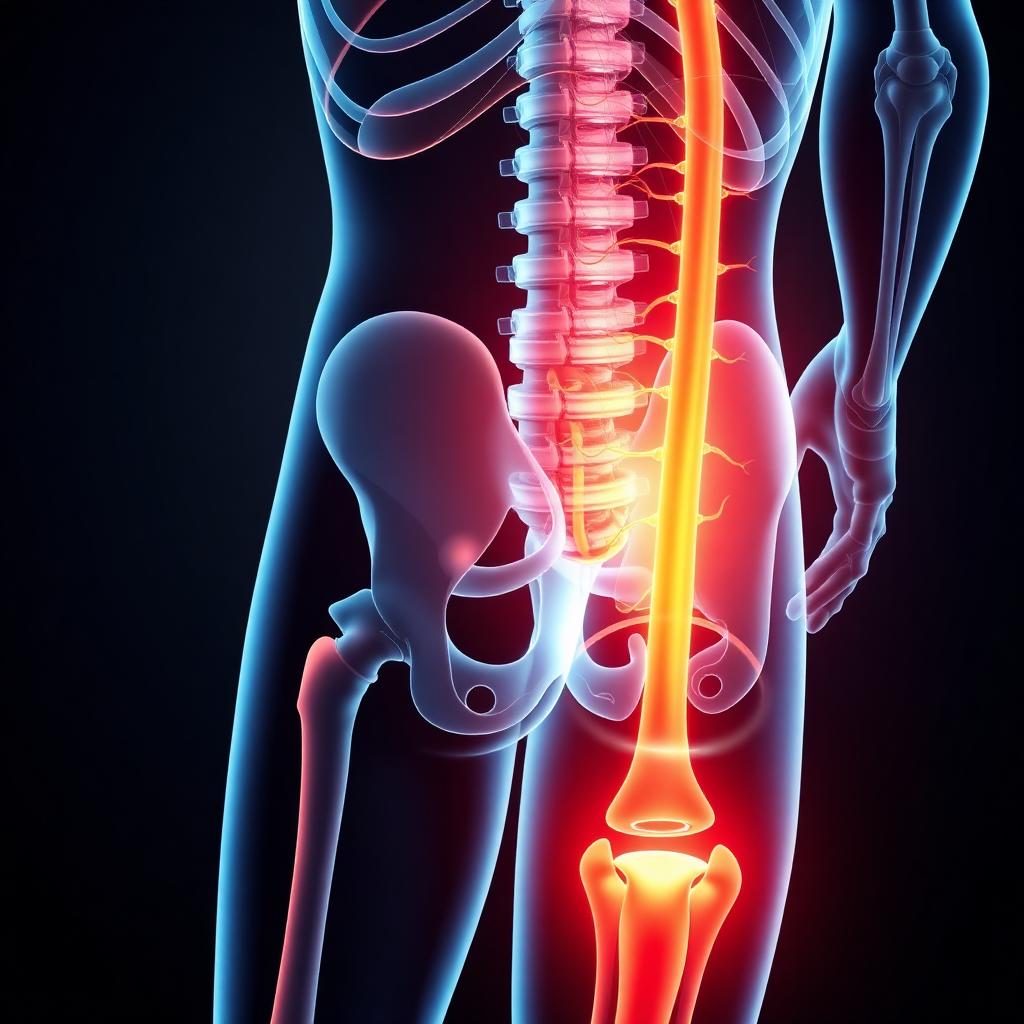
Every week at our Côte Saint-Luc clinic, patients arrive convinced they have “sciatica.” The truth is more nuanced. A shooting pain from the lower back or buttock down into the leg can come from a herniated lumbar disc, from a true radicular sciatica (any irritation of the L4, L5 or S1 nerve root), or from a piriformis syndrome — a deep gluteal muscle that can compress the sciatic nerve as it exits the pelvis. Getting the diagnosis right matters because the three conditions respond to very different treatments, exercises and progressions.
This guide walks you through the anatomy, the tell-tale signs of each condition, the tests we use to differentiate them, and the specific way osteopathy and physiotherapy at Réhabital treat each pattern. Reading it should help you understand your own pain — and know when to come in and when to seek urgent care.
Quick Anatomy: What the Sciatic Nerve Actually Is
The sciatic nerve is the largest nerve in the body. It is formed by the nerve roots of L4, L5, S1, S2 and S3, which exit the lumbar spine, join together in the pelvis, pass under (and sometimes through) the piriformis muscle, and travel down the back of the thigh to divide behind the knee into the tibial and common peroneal nerves. Anywhere along this path, the nerve can be irritated, compressed or inflamed. The location of the compression largely determines what the pain feels like — and how it should be treated.
1. Herniated Lumbar Disc
A lumbar disc herniation happens when the soft inner nucleus of a disc pushes through the outer annulus and touches a nerve root, most often L4-L5 or L5-S1. It is the classic cause of “true” sciatica.
Typical signs of a disc herniation
- Pain that shoots below the knee along a specific dermatome (outside of the leg, top of the foot, back of the calf into the heel).
- Numbness or tingling in the foot or toes.
- Weakness — for example, difficulty raising the big toe (L5) or standing on tiptoes (S1).
- Pain worsens with sitting, leaning forward, coughing, sneezing or straining.
- Positive straight-leg-raise test — lifting the straight leg while lying down reproduces leg pain before 60°.
What actually happens in the tissue
The herniated fragment triggers both mechanical compression and a strong chemical inflammatory reaction. The good news is that the body reabsorbs a significant portion of many herniations within weeks or months. This is why 60-90% of disc herniations improve with well-conducted conservative care.
2. True Radicular Sciatica (Beyond the Disc)
Not every radicular sciatica comes from a disc. Other causes include:
- Lumbar spinal stenosis — narrowing of the spinal canal, common after 55-60. Leg pain and heaviness typically appear when walking or standing and are relieved by sitting or bending forward.
- Facet joint arthrosis — the small joints at the back of the spine can inflame and irritate the nerve as it exits.
- Spondylolisthesis — a vertebra sliding forward on another, sometimes narrowing the space where the nerve exits.
- Post-surgical scar tissue or a synovial cyst.
In all these cases, the pain follows a nerve pathway, but the trigger is not the disc itself. Osteopathy and physiotherapy still play a central role — the plan simply shifts.
3. Piriformis Syndrome (The Great Imitator)
The piriformis is a small, deep muscle in the buttock that helps rotate the hip outward. In about 15% of people, the sciatic nerve passes through part of the piriformis instead of underneath it, making them anatomically vulnerable. When the piriformis becomes tight, spasms or hypertrophies, it can compress the sciatic nerve in the deep gluteal space — a condition known as piriformis syndrome or, in more recent literature, deep gluteal syndrome.
Typical signs of piriformis syndrome
- Deep, aching pain centered in the buttock, sometimes radiating to the back of the thigh but rarely below the knee.
- Pain that worsens with prolonged sitting, especially on a hard chair, car seat or bicycle saddle.
- Discomfort climbing stairs or getting out of a low car.
- No true weakness, no clear dermatomal numbness.
- Very tender point deep in the buttock when the therapist presses along the piriformis.
- Positive FAIR test (Flexion-Adduction-Internal Rotation) reproduces the pain.
The Overlap: Why Patients (and Even Doctors) Get Confused
These three conditions can look very similar for three reasons: (1) they all involve the sciatic nerve pathway; (2) many patients have more than one problem at the same time — for example, a mild L5-S1 disc bulge and a tight piriformis; and (3) MRI reveals disc changes in 30% of pain-free adults, which makes imaging alone an unreliable guide. This is why hands-on clinical assessment remains the most accurate way to identify the true pain generator.
The Réhabital Assessment: How We Tell Them Apart
Your first appointment includes:
- Detailed history — onset, timeline, aggravating and relieving positions, work posture, past episodes, red flags.
- Neurological screen — reflexes, dermatomal sensation, myotome strength testing.
- Orthopedic tests — Straight-Leg Raise, Slump test, Bragard, FAIR test, sacroiliac provocation tests.
- Global movement assessment — flexion, extension, side-bending, hip mobility, gait analysis.
- Palpation of the lumbar segments, sacroiliac joints, gluteal group and piriformis.
The combination of these tests, together with your story, usually points clearly to one dominant pattern — sometimes with a secondary contributor. Only then do we build the treatment plan.
How Osteopathy Treats Each Pattern
For a herniated disc
Osteopathic work focuses on unloading the affected segment: gentle articular mobilization of the segments above and below the hernia, decompression of the pelvis and sacrum, myofascial release of the psoas, quadratus lumborum and thoracolumbar fascia, diaphragmatic release to improve intra-abdominal pressure balance, and cranial techniques to calm the central nervous system's pain response.
For a true radicular sciatica of other origin
Treatment is adapted to the cause: extension-tolerant mobilization for stenosis, facet articulation for facet-driven pain, sacroiliac balancing when the SI joint is involved. In stenosis specifically, we avoid deep extension work and prioritize flexion-based positions.
For piriformis syndrome
Direct and indirect myofascial release of the piriformis, hip external rotators and gluteal fascia; sacroiliac and hip joint mobilization; neural mobilization of the sciatic nerve as it passes under the piriformis; visceral release of pelvic restrictions when relevant. Most patients feel meaningful change within 2-4 sessions.
How Physiotherapy Completes the Work
Physiotherapy at Réhabital is where lasting change is built. Depending on your pattern, our physiotherapists use:
- McKenzie directional preference exercises — highly effective for disc-driven pain when a preferred direction is found.
- Neural mobilization (nerve gliders and tensioners) — for irritated sciatic and femoral nerves.
- Progressive core and glute strengthening — dead bugs, bird-dogs, glute bridges, hip hinges, single-leg work.
- Postural re-education — sitting setup, standing alignment, sleep positioning.
- Return to sport or work — graded exposure to bending, lifting, running or specific job tasks.
The combination of osteopathy and physiotherapy consistently outperforms either approach alone in clinical studies of low back and radicular pain — particularly for patients who want to avoid surgery and injections.
Home Care: What You Can Do Between Sessions
- Walk 20-30 minutes per day at an easy pace, in short bouts if needed.
- Avoid sitting more than 30-40 minutes in a row — get up, walk a few steps, reset.
- Sleep side-lying with a pillow between the knees, or on your back with a pillow under the knees.
- Apply moist heat before movement in the morning; ice for 10-15 minutes after aggravating activity.
- Follow the specific exercises your physiotherapist prescribed — three short sessions a day is more effective than one long one.
- Manage stress and sleep. Chronic sleep deprivation and stress amplify nerve pain.
When to Seek Emergency Care
Go to the emergency room immediately if you experience:
- Loss of bladder or bowel control, or new difficulty urinating.
- Numbness in the saddle area (inner thighs, genitals, buttocks).
- Rapidly worsening weakness in one or both legs.
- Fever with severe back pain.
- A sudden foot drop (cannot lift the foot).
These may indicate cauda equina syndrome or another serious pathology that requires urgent surgical evaluation.
Realistic Recovery Timelines
- Piriformis syndrome: most patients see meaningful relief in 3-6 sessions and full recovery in 4-8 weeks.
- Lumbar disc herniation without severe deficit: significant improvement in 6-12 weeks, full functional recovery in 3-6 months.
- Lumbar stenosis: conservative care focused on flexion-based work, walking tolerance and strength — meaningful gains in 8-16 weeks.
Related Réhabital Reading
- Osteopathy for Sciatic Pain in Côte Saint-Luc
- Knee Pain: How Osteopathy and Physiotherapy Treat It
- Fascia, Lower Back Pain and Stiffness
- Complete Guide to Osteopathy
- Physiotherapy for Post-Injury and Post-Surgery Recovery
- Sciatica Treatment — Réhabital
- Back Pain Treatment — Réhabital
- Osteopathy at Réhabital
- Physiotherapy at Réhabital
- Compare: Osteopathy vs Physiotherapy
Book an Assessment
If leg or buttock pain has been slowing you down, don't guess — get assessed. Book an osteopathy or physiotherapy initial visit through Jane App online booking on rehabital.ca or call 438-842-3550. Mention “sciatica / leg pain” in the notes so we can plan enough time and, when useful, coordinate osteopathy + physiotherapy in the same week.
Our clinic serves Côte Saint-Luc, Hampstead, NDG, Snowdon, Westmount, Montreal West and the wider West End of Montreal.
Frequently asked questions
Go deeper with our dedicated osteopathy pages
Osteopathy pages with Shahram Ghasemi, MD (Iran), DOMP in Côte Saint-Luc:
Related articles
Sciatica Pain Explained: Causes, Symptoms and How Osteopathy Brings Lasting Relief
Sharp, burning pain shooting from your lower back down the leg? Discover the most common causes of sciatica and how our osteopaths in Côte Saint-Luc relieve it without medication or surgery.

Osteopathy and sciatica: how to durably relieve sciatic nerve pain
How osteopathy identifies the mechanical cause of sciatica — disc, sacroiliac or piriformis — and relieves pain in a few sessions at Réhabital in Côte Saint-Luc.
Sciatica in Montreal: Osteopathy or Physiotherapy — Which Should You Choose?
Pain shooting down your leg? Discover how osteopathy and physiotherapy treat sciatica, and which approach fits your specific situation.
Herniated Disc or Muscle Pain: How to Tell the Difference
Back pain with or without radiation into the leg? Here are the signs that distinguish a herniated disc from simple muscle pain, and when to seek care.
Treating Sciatica with Osteopathy: Shahram Ghasemi's Approach in Côte Saint-Luc
Pain shooting down the leg, tingling, trouble sitting? Discover how osteopath Shahram Ghasemi approaches sciatica at Réhabital in Côte Saint-Luc — assessment, manual techniques and a realistic recovery plan.

Sciatica at Night: Why Pain Worsens After Dark and How Osteopathy Helps You Sleep Again
Tossing, turning, woken up by a burning leg at 3 a.m.? Discover why sciatica intensifies at night and how our osteopaths in Côte Saint-Luc help patients sleep deeply again.