
Knee Osteoarthritis: What Physiotherapy Genuinely Changes, Step by Step
Pain, morning stiffness, difficult stairs: understanding knee osteoarthritis and the progressive physiotherapy plan we use at Réhabital in Côte Saint-Luc.
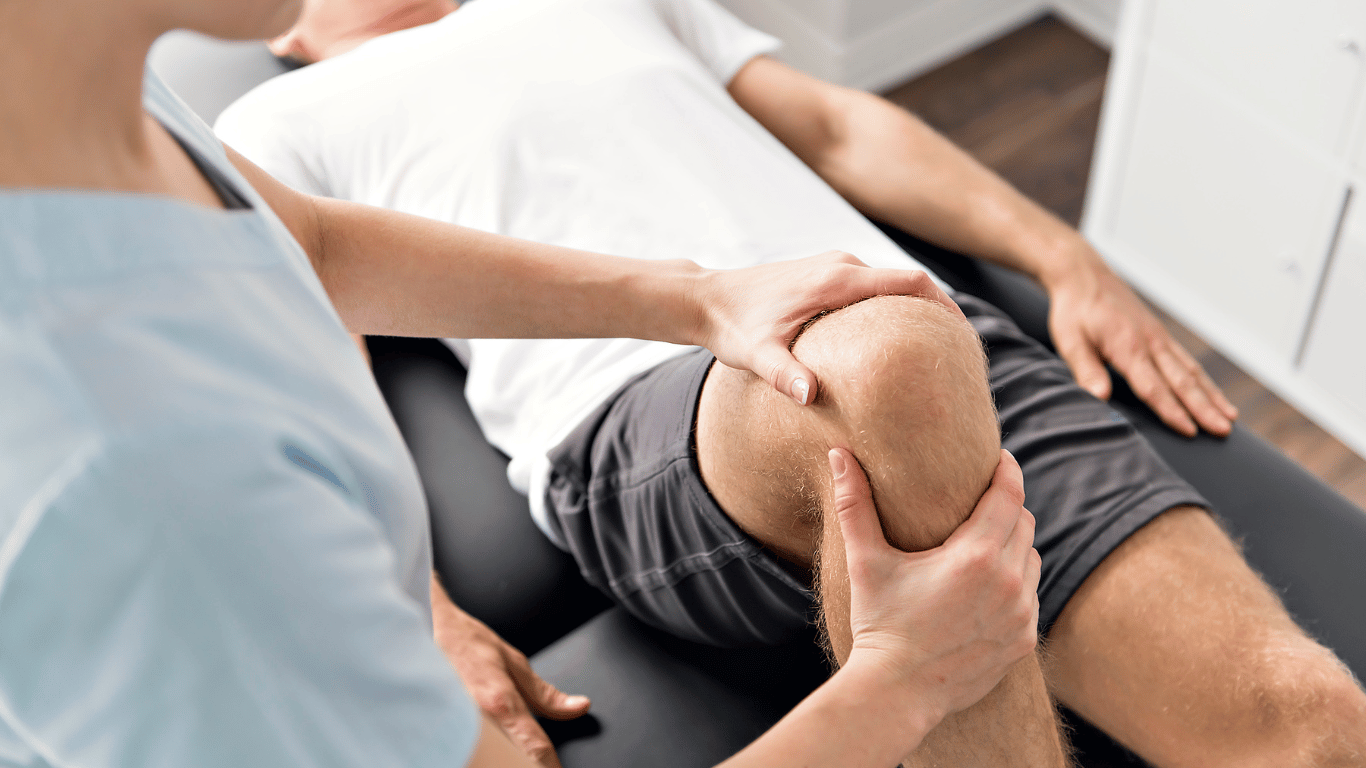
Knee osteoarthritis is the most common joint problem we see at Réhabital in Côte Saint-Luc. It rarely arrives dramatically. It starts as a stiff first few steps in the morning, an ache after a long walk, a knee that complains coming down stairs, and it slowly reshapes what people are willing to do. The most damaging part is usually not the cartilage — it is the gradual withdrawal from activity that follows.
The good news is unusually clear in this field: exercise-based physiotherapy is a first-line treatment for knee osteoarthritis in every major international guideline, ahead of injections and ahead of surgery. This article explains what is actually happening in an arthritic knee, how we assess it, and what a realistic 12-week plan looks like.
What knee osteoarthritis really is
Osteoarthritis is not simply "worn-out cartilage". It is a whole-joint condition involving cartilage, bone, synovium, ligaments and the muscles that control the joint. Cartilage thins and loses its shock-absorbing quality, the underlying bone remodels, the joint lining can become inflamed and produce excess fluid, and the quadriceps — the knee's main protective muscle — weakens quickly.
That last point matters more than most patients realise. Quadriceps weakness is both a consequence and a driver of knee osteoarthritis. A weak quadriceps allows more load to pass through the joint surface with every step, which increases irritation, which increases pain, which further inhibits the muscle. This is the loop physiotherapy is designed to break.
It also explains a fact that surprises people: X-ray severity correlates poorly with symptoms. Patients with impressive-looking films can walk comfortably, and patients with mild radiographic changes can be significantly limited. Strength, movement quality and pain sensitivity explain function far better than the picture does.
Typical symptoms
- Morning stiffness that eases within 30 minutes of moving.
- Pain going down stairs more than going up.
- Pain after prolonged sitting, relieved by a few steps.
- Swelling after activity that settles overnight.
- Grinding or crunching sensations, usually harmless on their own.
- A feeling of instability or the knee "giving way", almost always muscular rather than ligamentous.
- Difficulty kneeling, squatting or getting out of a low chair.
The physiotherapy assessment at Réhabital
The first session with Colin Teghen Tamuton, our OPPQ physiotherapist, lasts about an hour and is far more than a knee examination.
- History and goals — how far you can walk today, which stairs you avoid, what you have stopped doing, and what you want back. Goals are written in real activities, not degrees.
- Range of motion — loss of full extension is the most functionally costly deficit and the first thing we chase.
- Strength testing — quadriceps, hamstrings, hip abductors and glutes. Hip weakness is present in a majority of painful knees.
- Functional tests — 30-second sit-to-stand, timed walk, stair negotiation, single-leg balance. These give measurable baselines we re-test every few weeks.
- Joint and soft-tissue examination — swelling, patellar mobility, joint-line tenderness, calf and ankle range.
- Screening for other causes — meniscal irritation, patellofemoral pain, referred pain from the hip or lumbar spine.
Manual therapy: the door-opener
Hands-on treatment does not cure osteoarthritis, but it makes the exercise possible, which is the point. We use tibiofemoral and patellofemoral mobilization to restore glide, soft-tissue work on the quadriceps, hamstrings, calf and iliotibial band, and specific work to recover the last few degrees of extension. Hip and ankle mobility are treated at the same time, because a stiff hip or a stiff ankle sends its problem straight to the knee.
Many patients also benefit from modalities in the reactive phase — therapeutic ultrasound, and progressive loading education so that they stop fearing the joint.
The exercise plan: the part that actually changes the outcome
Phase 1 — Weeks 1 to 3: calm and activate
The objective is to reduce reactivity and restore basic control. Isometric quadriceps contractions, straight-leg raises, heel slides for range, glute bridges, and short, frequent walks. Nothing spectacular, but this phase is where pain typically drops the most.
Phase 2 — Weeks 4 to 8: build strength
Now we load. Sit-to-stand progressions, mini-squats within a comfortable range, step-ups starting low, leg press or band-resisted knee extension, hip abduction work in standing and side-lying, calf raises. Two to three sessions a week, with weight or repetitions rising every week. This is the phase most home programs never reach, and it is the phase that changes function.
Phase 3 — Weeks 9 to 12 and beyond: capacity and confidence
Longer walks, stationary cycling, stairs trained deliberately rather than avoided, single-leg balance and controlled step-downs, and where appropriate a return to hiking, tennis, dancing or the gym. We also plan the maintenance program, because the gains fade if the loading stops.
Throughout, we apply the pain-monitoring rule: discomfort up to about 4/10 during exercise, settling within 24 hours, is acceptable. Above that, we reduce the dose rather than abandon the exercise.
Where osteopathy and massage therapy fit
Knees rarely suffer alone. A restricted hip, an old ankle sprain, a rotated pelvis or a stiff lumbar spine all change how load arrives at the knee. Osteopathy is very useful for that chain, and our article on hip, pelvis and lower back osteopathy explains the mechanics. Massage therapy plays a supporting role by releasing the chronically overworked quadriceps and calf and by lowering the nervous-system sensitivity that amplifies chronic joint pain. At Réhabital these services share a building and a treatment plan.
What you can do starting today
- Move often, in smaller doses. Three 10-minute walks beat one exhausting 30-minute walk.
- Do the sit-to-stand exercise daily. Ten repetitions from a normal chair, twice a day, is the single most useful home exercise for an arthritic knee.
- Chase full extension. Sit with the heel propped and let gravity straighten the knee, five minutes, twice a day.
- Warm up the knee in the morning before you demand anything from it — 20 gentle bends in bed before standing.
- Choose supportive footwear with cushioning; flat, hard-soled shoes make most arthritic knees complain.
- Manage weight if relevant. Small losses translate into large load reductions at the joint.
- Do not wait for the knee to be pain-free to start. Waiting is what causes the deconditioning.
Realistic expectations
Within 6 weeks most patients report meaningfully less pain, easier stairs and better walking tolerance. Within 12 weeks measurable strength gains appear on re-testing. Osteoarthritis remains a long-term condition with better and worse periods, but a strong, mobile, well-controlled knee has far fewer bad periods and recovers from them faster. For many patients, that is the difference between planning a surgery and postponing it indefinitely.
Booking at Réhabital, Côte Saint-Luc
Knee osteoarthritis assessments are performed by Colin Teghen Tamuton, physiotherapist (OPPQ), at our Cavendish Boulevard clinic in Côte Saint-Luc, with free parking and evening availability. Receipts are issued for private insurance. You can book online or read more about our physiotherapy services.
Frequently asked questions
Go deeper with our dedicated physiotherapy pages
Physiotherapy pages with Colin Teghen Tamuton (OPPQ) in Côte Saint-Luc:
Related articles
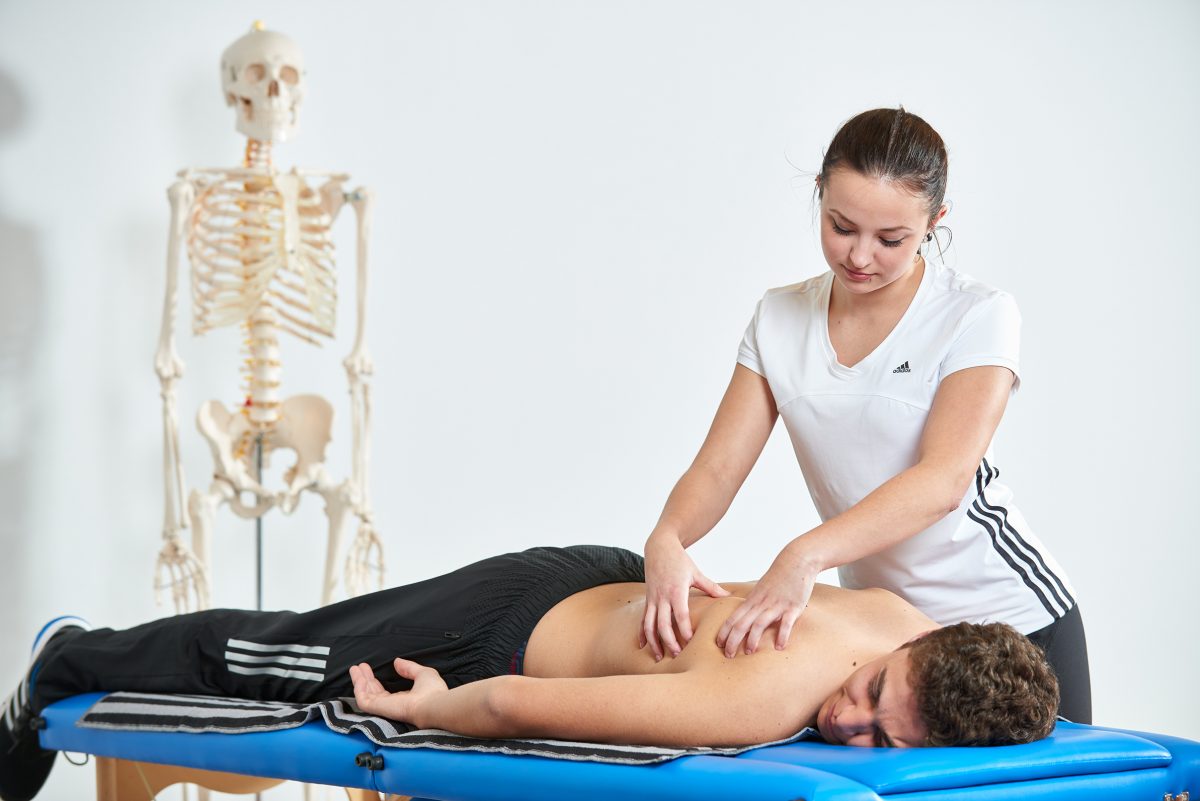
Can Physiotherapy Really Cure Sciatica?
The question almost every patient asks in the first session. Here is what physiotherapy can genuinely fix in sciatica, what it cannot, and exactly how a treatment plan unfolds in Côte Saint-Luc.
Knee Pain: How Osteopathy and Physiotherapy Treat It in Côte Saint-Luc
Knee that clicks, burns, locks or gives way? Learn how Réhabital's osteopaths and physiotherapists assess and treat knee pain — from osteoarthritis and patellofemoral syndrome to ligament sprains and tendinopathies.
Knee Osteoarthritis: Should You Stop Walking and Exercising?
Contrary to popular belief, stopping physical activity is not the answer for knee osteoarthritis. Discover what the science says about load management and strengthening.

Neck Pain: How Physiotherapy in Côte Saint-Luc Can Help You
Common causes of neck pain, red flags and a complete treatment plan with Réhabital Team, OPPQ physiotherapist at Réhabital in Côte Saint-Luc.
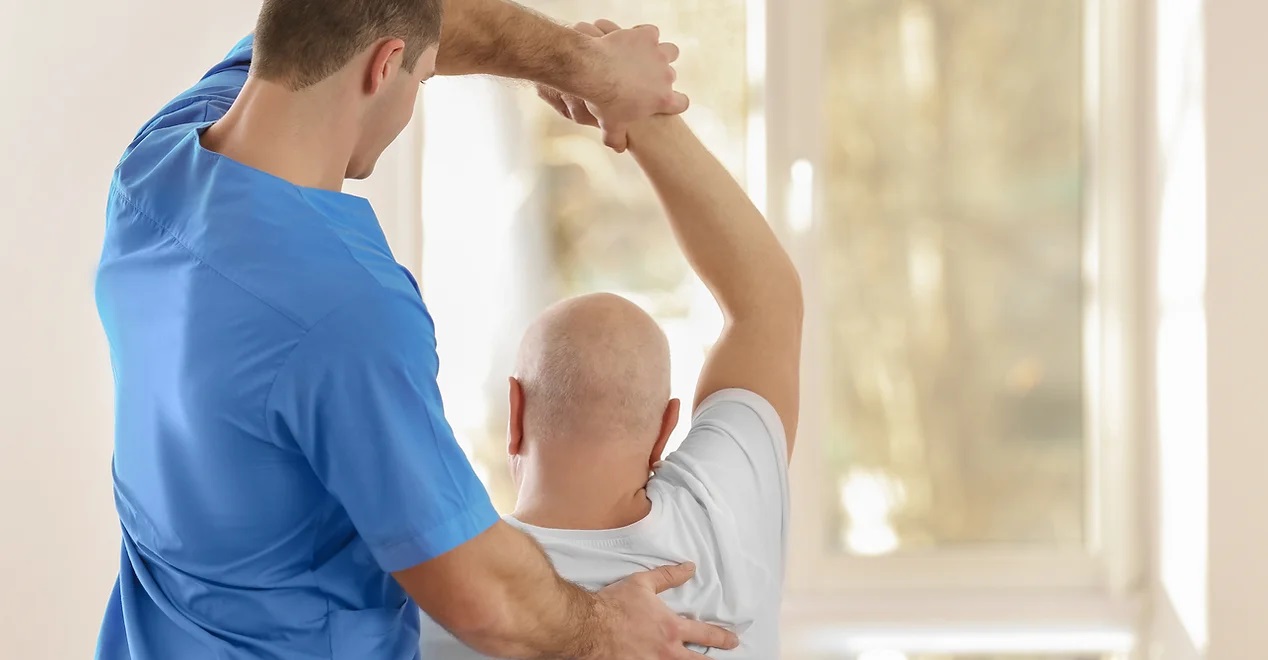
Shoulder Pain: How Physiotherapy Treats Rotator Cuff Injuries and Frozen Shoulder
A shoulder that hurts at night, catches when you lift your arm, or loses range month after month is almost never simple unavoidable wear. Here is how a structured physiotherapy plan restores strength and range in Côte Saint-Luc.
After a Knee or Hip Replacement: A Week-by-Week Rehabilitation Plan
The first six weeks decide your final range of motion. Here is what real rehabilitation after a total knee or hip replacement looks like with our physiotherapist, founding osteopath and massage therapists in Côte Saint-Luc.