
After a Knee or Hip Replacement: A Week-by-Week Rehabilitation Plan
The first six weeks decide your final range of motion. Here is what real rehabilitation after a total knee or hip replacement looks like with our physiotherapist, founding osteopath and massage therapists in Côte Saint-Luc.
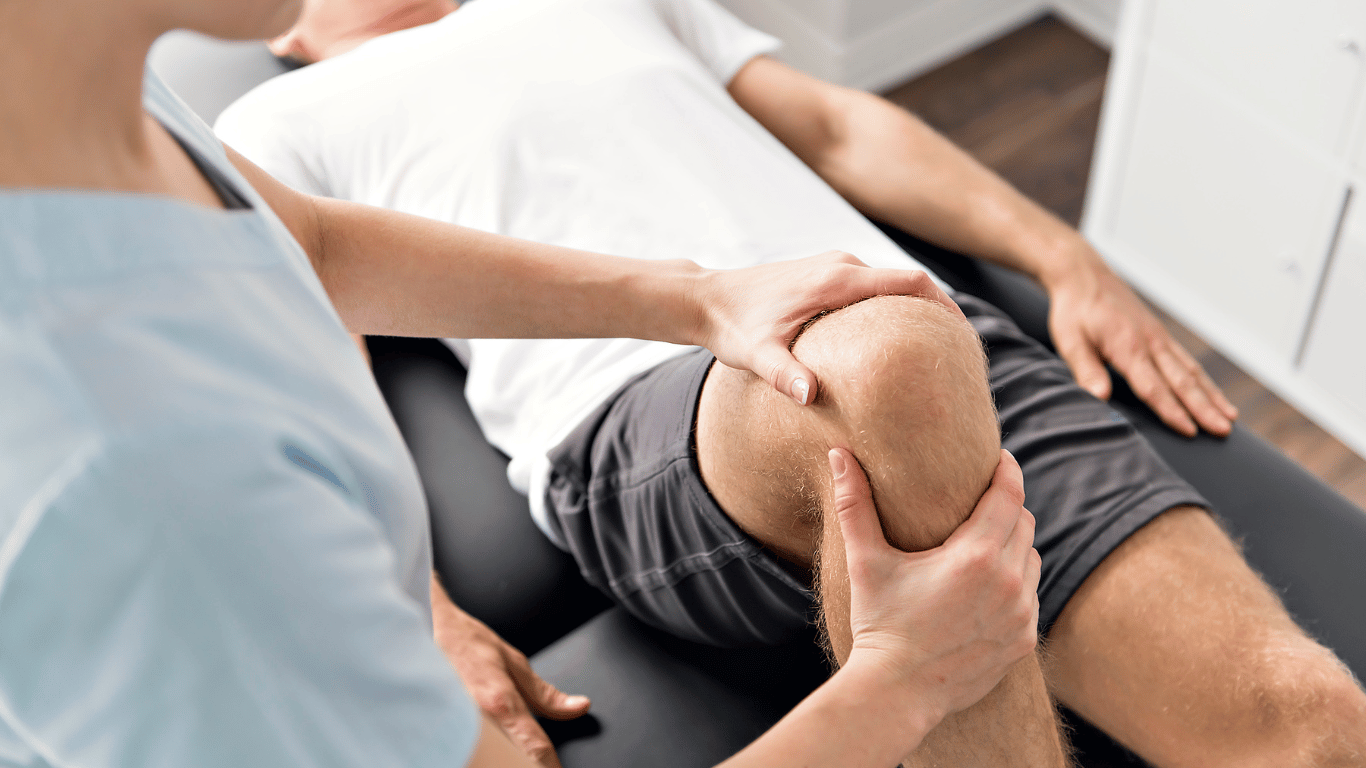
A joint replacement is not the end of a problem; it is the start of a rebuilding project. The surgeon replaces the mechanical part. What determines whether you walk without a limp in six months — whether you can climb stairs one foot at a time, get off a low couch, or sleep through the night — is almost entirely what happens in the weeks after.
This guide sets out how rehabilitation after a total knee or hip replacement actually unfolds, why the early window matters so much, and how our physiotherapist, osteopath and massage therapists share the work at our Côte Saint-Luc clinic. Clinical detail on each procedure lives on our dedicated pages for knee replacement rehabilitation and hip replacement rehabilitation.
Why the first six weeks decide the outcome
After a knee replacement in particular, the joint fills with post-surgical swelling and the body begins laying down scar tissue almost immediately. That tissue is still soft and remodellable in the first six to eight weeks. After roughly three months it has organised, and range of motion gained after that point comes much harder — sometimes not at all without a manipulation under anaesthesia.
This is why the target is not comfort. It is range. Most surgeons want to see full extension — a knee that straightens completely — and 110 to 120 degrees of flexion within the first three months. Full extension matters more than most people expect: a knee that lacks even five degrees of straightening changes your gait, overloads the other leg, and produces the limp that never quite goes away.
Hip replacements follow a gentler curve. Range usually returns more readily, and the challenge shifts to strength, particularly the gluteus medius, and to confidence in single-leg loading. The classic post-hip pattern is not stiffness but a hip drop that persists for months if nobody trains it away.
Phase 1 — Weeks 0 to 2: swelling, extension and safe walking
Goals in this phase are modest and non-negotiable: control swelling, protect the incision, achieve full passive extension, get flexion moving, and walk safely with the aid you were given.
Our physiotherapist Colin Teghen Tamuton focuses on quadriceps activation, which is often profoundly inhibited after knee surgery — the muscle is intact but the nervous system has switched it off. Heel props for extension, ankle pumps for circulation, gentle heel slides, isometric quad and glute sets, and a walking programme measured in minutes rather than distance. For hip replacements, the emphasis moves to gait quality, hip abduction activation, and respecting any movement precautions your surgeon specified.
Two things people get wrong here. First, they place a pillow under the knee to feel comfortable, which is the single most reliable way to lose extension. Second, they mistake fatigue for damage and stop walking. Swelling and soreness after activity are expected; increasing redness, heat, fever or calf pain are not, and warrant a same-day medical call.
Phase 2 — Weeks 2 to 6: range, gait and getting off the aid
This is the working phase. Flexion targets move from 90 to 110 degrees and beyond, extension must be fully maintained, and the walking aid is progressively withdrawn — cane first on the opposite side, then only outdoors, then not at all.
Sessions with Colin Teghen Tamuton in this window combine manual joint mobilisation, soft tissue work around the incision and patellar mobility, progressive closed-chain strengthening, stationary cycling once flexion allows a full pedal revolution, and gait retraining. Gait retraining is the piece people skip and later regret: after months of limping before surgery, the limp is a learned motor pattern that outlives the joint that caused it.
Osteopathic sessions with Shahram Ghasemi, MD (Iran), DOMP become useful around this stage for a reason that is easy to miss. You did not just have a joint replaced — you spent one or two years walking asymmetrically before the operation. The lumbar spine, sacroiliac joints, the opposite hip and the ankle on the operated side have all adapted to that pattern. Treating only the new joint while leaving those adaptations in place is why some people report that their back hurts more after a successful hip replacement than before it.
Phase 3 — Weeks 6 to 12: strength, balance and real life
By now the joint tolerates load, and the plan turns to capacity. Progressive resistance for the quadriceps, hamstrings, glutes and calves; step-ups and controlled step-downs; sit-to-stand from progressively lower surfaces; single-leg balance work; and stair training that teaches reciprocal stepping rather than the one-step-at-a-time pattern most people default to.
Balance deserves particular attention after hip replacement, because proprioception around a surgically altered joint takes time to recalibrate and fall risk is genuinely elevated in the first months. Ten minutes of balance work per session is not filler — it is fracture prevention.
Massage therapy earns its place here as well. Sessions with Jeanne Andrea Rahantamalala, Irina Kushnir or Cedik Elaiba help with scar tissue mobility around a well-healed incision, with quadriceps and hamstring tightness, and with the compensating tension that builds in the lower back and opposite leg. We schedule it around rehabilitation sessions rather than instead of them, and never over an incision that is not fully closed.
Phase 4 — Months 3 to 12: consolidation
Most people are functionally independent by three months and think rehabilitation is over. It is not — strength continues improving for a year or more, and the gap between "walking normally" and "confident on uneven ground, stairs, and long days" is closed in this final phase.
What we work on: endurance rather than isolated strength, walking distance, hills and uneven terrain, return to cycling, swimming, golf or doubles tennis where appropriate, and a maintenance programme you will actually keep doing. Running and high-impact sport are generally not recommended after joint replacement, and we would rather have that conversation early and honestly than let a patient discover it at month eight.
What slows people down
- Chasing comfort instead of range in weeks 0 to 6. Comfort now, stiffness forever.
- The pillow under the knee. It costs extension, and extension is the hardest thing to regain.
- Stopping rehab when walking feels normal. Walking normally is roughly the halfway point.
- Keeping the cane too long. It becomes a habit that entrenches the limp.
- Treating only the operated joint. The spine, opposite hip and ankle carried the compensation for years.
- Not managing pain well enough to move. Pain control exists so you can do rehabilitation, not so you can rest.
How the team works together
In a typical case, Colin Teghen Tamuton leads the plan and owns the progression of range and strength; Shahram Ghasemi, MD (Iran), DOMP addresses the spine, pelvis and the compensations built up before surgery; and one of our massage therapists supports tissue quality and comfort between sessions. That division is decided at the assessment and adjusted as you progress, so you are not paying for three parallel treatments that do not talk to each other.
Frequency in the first six weeks is typically two physiotherapy sessions per week, dropping to weekly, then to every two or three weeks as a home programme carries more of the load. Costs and session lengths are listed transparently on our pricing page.
Booking in Côte Saint-Luc
Réhabital is located in Côte Saint-Luc with free on-site parking, serving Hampstead, Montreal West, NDG, Snowdon, Saint-Laurent and Côte-des-Neiges. We accept private insurance and direct payment; we do not accept CNESST or SAAQ treatment files. You can book directly with Colin Teghen Tamuton for post-surgical physiotherapy, or view the full team on our practitioners page. Related reading: post-surgery rehabilitation and knee pain treatment.
Frequently asked questions
Go deeper with our dedicated physiotherapy pages
Physiotherapy pages with Colin Teghen Tamuton (OPPQ) in Côte Saint-Luc:
Related articles
Rehabilitation After Hip or Knee Replacement: What to Expect Week by Week
A week-by-week guide to recovery after hip or knee replacement surgery, from first steps to returning to full activity.

Physiotherapy for Knee Pain, Sports Injuries & Post-Surgery Recovery in Montreal
How physiotherapy treats knee pain, ACL injuries, frozen shoulder and post-surgical recovery. Evidence-based rehabilitation protocols at our Montreal clinic.
Knee Pain: How Osteopathy and Physiotherapy Treat It in Côte Saint-Luc
Knee that clicks, burns, locks or gives way? Learn how Réhabital's osteopaths and physiotherapists assess and treat knee pain — from osteoarthritis and patellofemoral syndrome to ligament sprains and tendinopathies.
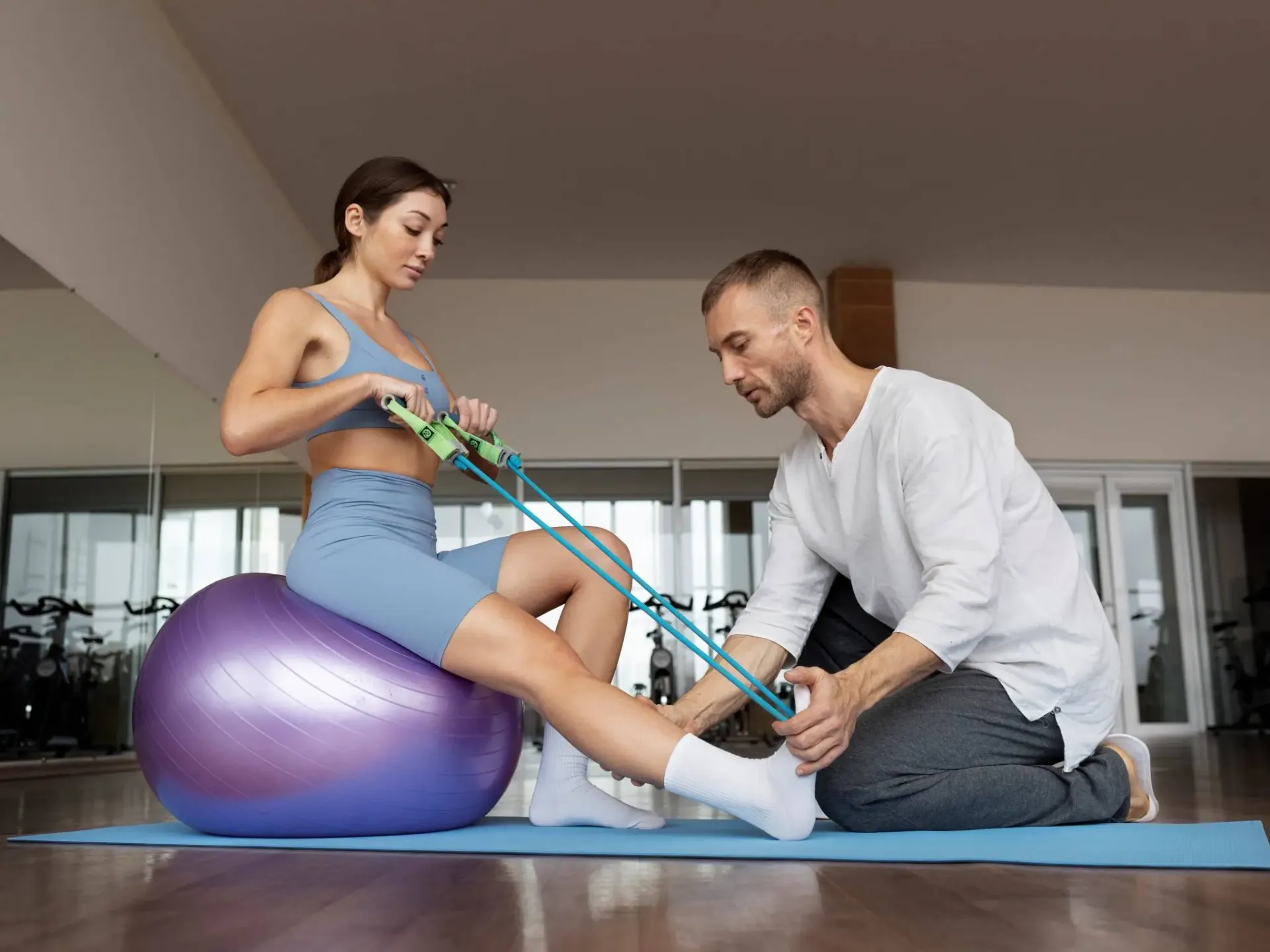
Returning to Walking, Running, the Gym and Lifting After Sciatica
Feeling better is not the same as being ready. Our physiotherapists lay out a staged return to walking, running, gym work and lifting, with simple rules for when to progress.
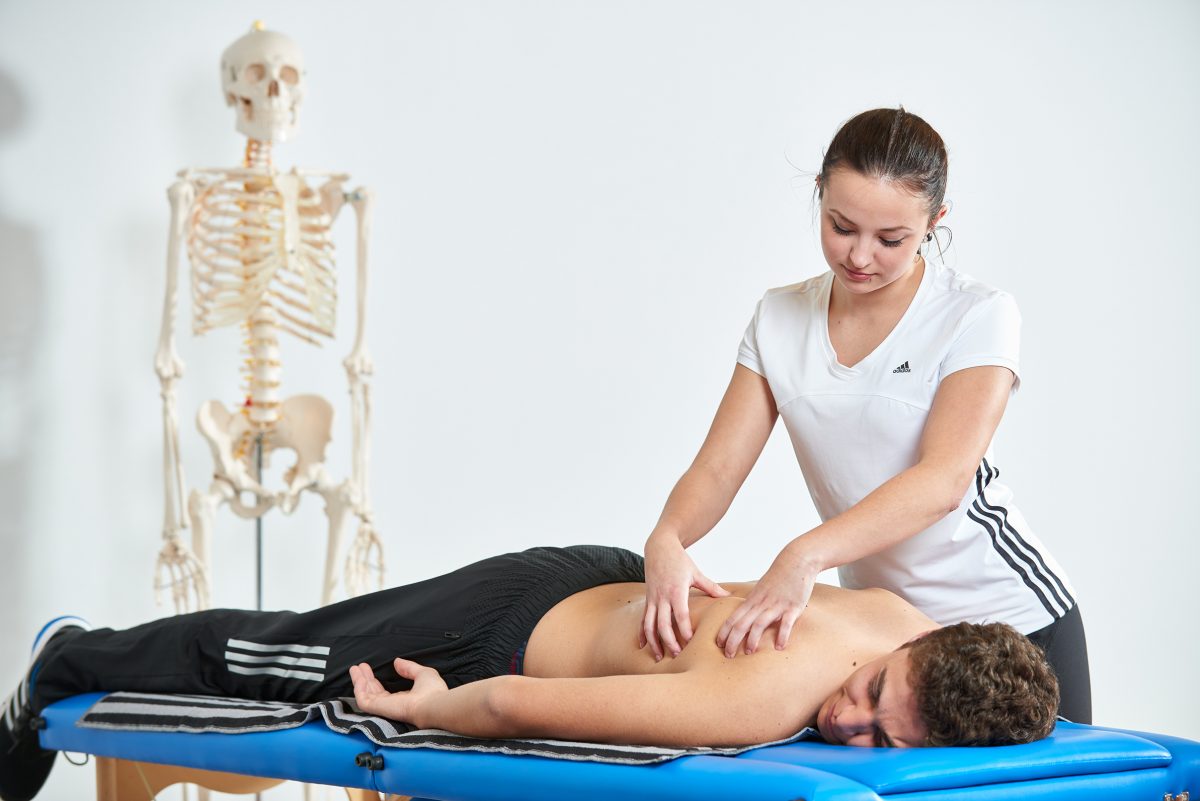
Physiotherapy and Osteopathy Combined: Why Réhabital Integrates Both in Every Treatment Plan
In Côte Saint-Luc, our difference is not simply offering physiotherapy and osteopathy side by side — we combine them inside one personalized treatment plan. Here is how this integration accelerates recovery and who benefits the most.
Physiotherapy in Côte Saint-Luc: regain mobility, strength and quality of life
How a structured physiotherapy plan — assessment, manual therapy, targeted exercises and education — accelerates recovery at Réhabital in Côte Saint-Luc.