
Can Physiotherapy Really Cure Sciatica?
The question almost every patient asks in the first session. Here is what physiotherapy can genuinely fix in sciatica, what it cannot, and exactly how a treatment plan unfolds in Côte Saint-Luc.

It is almost always the first question asked in the room, usually before the patient has even sat down: can physiotherapy actually cure this, or am I just going to be managing it forever? It is a fair question, and it deserves a precise answer rather than reassurance. The honest version is this: physiotherapy cures the mechanical drivers of sciatica in the large majority of cases, and those mechanical drivers are what produce the pain in the first place. What it does not do is rewrite your imaging report. Fortunately, your imaging report is rarely the thing that hurts.
What sciatica actually is, and why the distinction matters
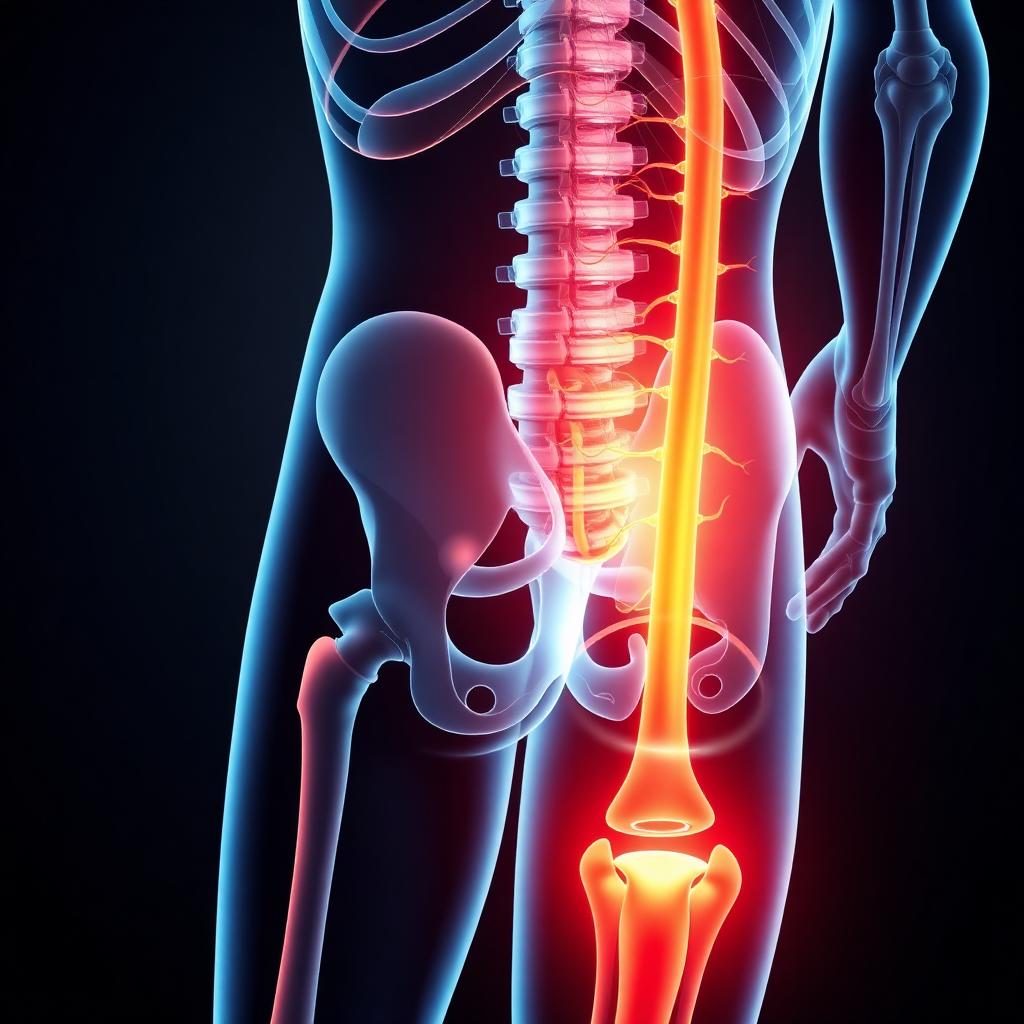
Sciatica is not a diagnosis. It is a description of a symptom pattern: pain, tingling, burning or weakness travelling along the path of the sciatic nerve, from the lower back or buttock down the back of the thigh, sometimes to the calf, foot or toes. The nerve itself is roughly the diameter of your little finger where it exits the pelvis, and it is formed from nerve roots L4 through S3.
That nerve can be irritated at several distinct points, and each point calls for a different treatment emphasis:
- At the nerve root, where a disc bulge, a narrowed foramen or an inflamed joint capsule compresses or chemically irritates the root as it leaves the spine.
- In the deep gluteal space, where the piriformis and the other deep hip rotators can compress the nerve trunk, particularly in people who sit for long hours or who have weak gluteal muscles.
- Along the nerve pathway itself, where scarred or thickened fascia prevents the nerve from sliding normally within its sheath as you move.
- At the level of the nervous system, where months of pain have made the whole pathway hypersensitive, so that harmless movements are interpreted as threatening.
Most chronic sciatica involves more than one of these at once. This is precisely why generic advice fails so often: an exercise that decompresses a nerve root can simultaneously irritate a piriformis, and a stretch that feels productive can pull on a nerve that needed rest, not tension.
What physiotherapy can genuinely change
1. It restores the mobility that is missing
Almost every sciatica case we assess in Côte Saint-Luc arrives with the same mechanical signature: a stiff lumbar segment or two, a stiff hip on the symptomatic side, and a thoracic spine that has stopped rotating. Because the body must move somewhere, the mobile segments above and below absorb what the stiff ones refuse to do. Manual therapy, joint mobilization and targeted mobility work redistribute that load. Patients often describe the effect as the back finally being able to breathe.
2. It rebuilds the muscles that protect the nerve
The gluteus medius and maximus are the shock absorbers of the lumbar spine. When they are weak — and after months of pain and sitting they always are — every step, every stair, every lift is transmitted into the lower back and the deep gluteal space. Progressive loading of the glutes, the deep abdominal wall and the hip external rotators is not optional extra work; it is the single most reliable predictor of whether the sciatica will return next year. This is the part that patients most often skip, and it is the part that decides the long-term outcome.
3. It teaches the nerve to glide again
A healthy sciatic nerve slides several millimetres within its sheath every time you bend forward or straighten your knee. When it is irritated, protective muscle guarding and inflammatory adhesions restrict that glide, and the nerve becomes mechanically sensitive: the leg complains at movements it used to tolerate. Neural glides — slow, rhythmic, low-amplitude movements that alternately tension and release the nerve at opposite ends — restore that mobility without ever stretching the nerve, which would only inflame it further.
4. It changes what you do for the other 165 hours of the week
You spend at most a few hours per month in a clinic. The rest of the time you sit, drive, lift, sleep and work. Physiotherapy that ignores those hours produces temporary relief. A proper plan rebuilds the workstation, the sleeping position, the lifting pattern and the daily movement dose, because those are the actual load inputs on your spine.
What physiotherapy cannot do
It cannot shrink a disc herniation on command, although most herniations resorb by themselves over 6 to 12 months. It cannot widen a spinal canal narrowed by advanced degenerative stenosis, although flexion-based programmes and hip mobility work often restore substantial walking distance. It cannot help a nerve compression that is producing progressive motor weakness, foot drop, saddle numbness or loss of bladder and bowel control — those are medical emergencies and require immediate physician assessment, not exercise.
Being clear about these limits is part of good care. A physiotherapist who promises everything is not being confident; they are being imprecise.
The assessment: what actually happens in the first hour
Your first appointment at Réhabital lasts about 60 minutes and it is mostly investigation. Colin Teghen Tamuton, our physiotherapist, screens for red flags first, then tests reflexes, myotomal strength and dermatomal sensation to identify which nerve root is involved. A straight-leg raise and a slump test confirm whether the symptoms are truly neural rather than referred from a joint or muscle.
Then comes the part that decides the plan: repeated movement testing. You perform a sequence of lumbar movements while reporting exactly where the symptoms travel. If repeated extension pulls the pain from the calf up to the buttock, you have an extension preference and your programme is built around it. If flexion produces the relief, the programme inverts. This directional preference is the single most useful piece of information in the entire assessment, and it cannot be found on any scan.
The treatment plan, phase by phase
Phase one: calm the nerve (weeks 1 to 2)
The goal is not strength, it is symptom control and centralization. Directional preference exercises are repeated in small doses several times a day. Manual therapy reduces protective guarding. Sitting tolerance is managed with position changes and lumbar support. Nothing aggressive, nothing heroic. Most patients report their first genuinely comfortable night within this window.
Phase two: restore mobility and nerve glide (weeks 2 to 5)
Hip mobility, thoracic rotation and lumbar segmental mobility are addressed together, and neural glides are introduced once symptoms have centralized. Walking volume increases progressively. Patients begin to notice that morning stiffness clears in ten minutes rather than an hour.
Phase three: load the system (weeks 4 to 10)
This is where the recurrence rate is decided. Bridges progress to single-leg bridges, then to hip thrusts. Split squats and step-ups rebuild the hip and knee chain. Carries and anti-rotation work rebuild the trunk. The lumbar spine is deliberately loaded in controlled ranges, because a spine that is only protected never becomes robust.
Phase four: return to your real life (weeks 8 onward)
Deadlift patterns for the person who lifts children, rotational tolerance for the golfer, sustained sitting tolerance for the office worker, and long-distance walking for everyone. The programme ends when your capacity exceeds the demands you actually place on your body — not when the pain first disappears, which usually happens weeks earlier.
Where osteopathy and massage therapy fit
At Réhabital many sciatica patients see more than one practitioner, and this is deliberate rather than commercial. Osteopathy is often the fastest route out of an acute mechanical lock, particularly where the pelvis, sacroiliac joint and diaphragm are involved. Massage therapy is invaluable when the deep gluteal muscles and lumbar fascia are so guarded that no exercise can be performed comfortably. Physiotherapy is what makes the result permanent, because only progressive loading changes tissue capacity.
A typical combined plan looks like osteopathy every two weeks for the first six weeks, massage therapy monthly during the same period, and physiotherapy weekly throughout, tapering as the home programme takes over.
Book with our team in Côte Saint-Luc
- Physiotherapy: Colin Teghen Tamuton, Physiotherapist — book online
- Osteopathy: Shahram Ghasemi, MD (Iran), DOMP — book online
- Massage therapy: Cedik Elaiba — book online
The clinic is at D4-5800 Cavendish Blvd, Côte Saint-Luc, easily reached from Hampstead, Notre-Dame-de-Grâce, Snowdon, Montreal West and Saint-Laurent. Insurance receipts are issued at every visit.
Related reading
Frequently asked questions
Go deeper with our dedicated physiotherapy pages
Physiotherapy pages with Colin Teghen Tamuton (OPPQ) in Côte Saint-Luc:
Related articles
Sciatic Nerve Glides (Flossing): What They Are, How They Work and Who Should Avoid Them
Nerve glides are gentle movements that help the sciatic nerve slide freely instead of stretching it. Our physiotherapists explain how they work, how to start and when they are not appropriate.

Knee Osteoarthritis: What Physiotherapy Genuinely Changes, Step by Step
Pain, morning stiffness, difficult stairs: understanding knee osteoarthritis and the progressive physiotherapy plan we use at Réhabital in Côte Saint-Luc.
Herniated Disc, Sciatica or Piriformis Syndrome: How to Tell Them Apart
Pain shooting down your leg? It is not always “sciatica.” Learn how to tell a herniated disc, a true radicular sciatica and a piriformis syndrome apart — and how osteopathy and physiotherapy at Réhabital in Côte Saint-Luc treat each one differently.

Physiotherapy in Côte Saint-Luc: regain mobility, strength and quality of life
How a structured physiotherapy plan — assessment, manual therapy, targeted exercises and education — accelerates recovery at Réhabital in Côte Saint-Luc.
What Is the Difference Between Acupuncture and Physiotherapy?
Two approaches, two logics. Understand what acupuncture does, what physiotherapy does, and when to choose one, the other, or both.

Neck Pain: How Physiotherapy in Côte Saint-Luc Can Help You
Common causes of neck pain, red flags and a complete treatment plan with Réhabital Team, OPPQ physiotherapist at Réhabital in Côte Saint-Luc.