
Fall Prevention in Older Adults: Balance, Strength and Mobility
Falls are not an inevitable part of aging. Learn how balance, muscle strength and mobility can be improved at any age through physiotherapy.
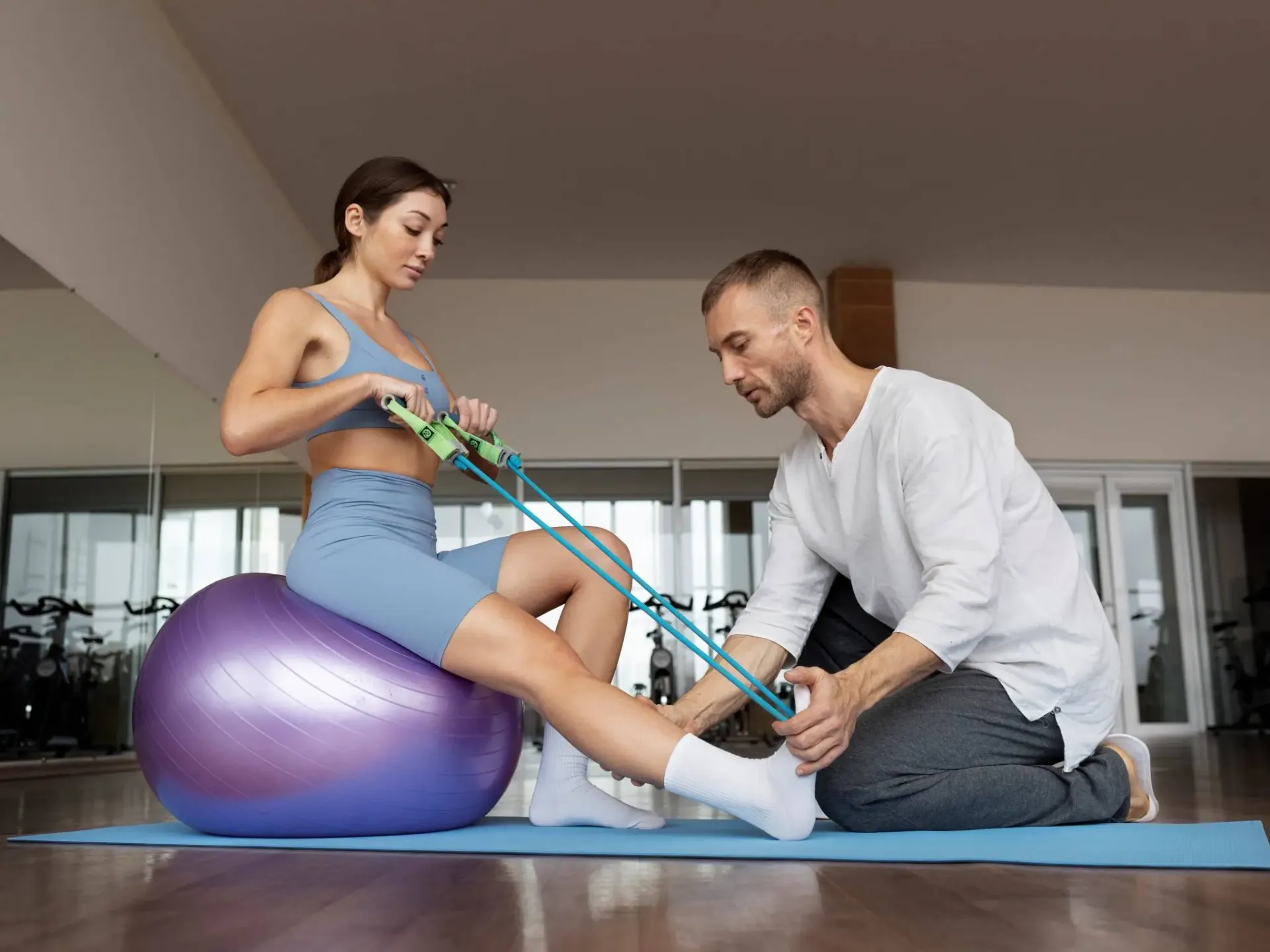
A fall can seem like an isolated accident, but in the vast majority of cases, it is the visible result of gradual changes in balance, muscle strength, and mobility that have accumulated over months or years. The good news is that these changes are not inevitable and, more importantly, are largely reversible with a structured physiotherapy program. At Clinique Réhabital in Côte Saint-Luc, we work with many older adults in the community to assess their fall risk and build personalized programs that restore confidence and independence.
Why Fall Risk Increases With Age
Aging naturally brings a gradual decrease in muscle mass, a phenomenon known as sarcopenia, along with reduced nerve conduction speed and slower reaction times. These changes directly affect the body's ability to catch itself when an imbalance occurs, such as tripping on a rug or missing a step.
Other factors often add to this: vision changes related to cataracts or macular degeneration, side effects of certain medications like drowsiness or low blood pressure, arthritis limiting joint mobility, and sometimes reduced sensory feedback in the feet, which lowers the ability to detect uneven surfaces. No single one of these factors necessarily causes a fall, but their accumulation creates a significantly higher risk.
Balance Assessment: The Essential First Step
Before starting any exercise program, a thorough assessment helps identify each individual's specific weaknesses. A physiotherapist will use a combination of standardized tests to measure static balance (the ability to remain stable while standing), dynamic balance (stability during movement), lower limb strength, and walking speed.
These tests may include single-leg stance holds, a timed chair-rise test, or observation of gait over a set distance. The results allow exercises to be precisely targeted, rather than following a generic program that might not address the person's actual needs.
Strength Training: The Foundation of Stability
Leg strength, particularly in the quadriceps, calves, and gluteal muscles, plays a central role in the ability to react quickly when an imbalance occurs. A well-designed strengthening program typically includes exercises like chair rises, mini-squats, hip extensions, and calf raises, often using resistance bands or light weights to progress gradually.
Core strengthening is equally important, since a stable trunk allows the body to better absorb sudden disturbances without losing balance. This approach is particularly relevant for people who already have back or hip pain, since a tailored strengthening program can both reduce pain and improve functional stability.
Balance Training: Beyond Strength
Strength alone is not enough to prevent falls. Specific balance training, which includes exercises like tandem walking, weight shifting, standing on an unstable surface, and reactive training (learning to catch yourself quickly when off balance), has shown significant benefits in reducing falls.
These exercises should always be practiced in a safe environment, ideally under supervision at first, with a support point nearby. Over time, difficulty can be gradually increased, for example by closing the eyes for short periods or adding dual tasks, such as counting backward while exercising, which better mimics real-life daily conditions.
Joint Mobility and the Complementary Role of Osteopathy
Reduced joint mobility, particularly in the ankles, hips, and spine, can compromise balance by limiting the body's ability to adjust its posture. An osteopathy assessment can identify specific restrictions that limit functional mobility and offer gentle manual techniques to release them, complementing the physiotherapy program.
For people who have had a previous ankle sprain, it is particularly important to fully restore mobility and proprioception in that joint, as a stiff or unstable ankle is a significant risk factor for falls in older adults.
Adapting the Home Environment
- Remove or secure slippery rugs
- Improve lighting in hallways, stairs, and the bathroom
- Install grab bars near the shower and toilet
- Keep frequently used pathways clear
- Wear shoes with good support and non-slip soles
These modifications, combined with an exercise program, significantly reduce the risk of falls at home.
The Role of Massage Therapy and Naturopathy in Overall Well-Being
Certain chronic pains can unconsciously alter a person's gait, creating compensations that affect balance. Massage therapy can help reduce these chronic muscle tensions, while a naturopathy consultation can address factors like sleep quality, nutrition, and overall energy, all of which indirectly influence daily stability and alertness.
What a Session at Our Clinic Involves
During your first visit for a fall risk assessment, your physiotherapist will begin with a detailed interview covering your history of falls, medications, existing health conditions, and personal goals, whether that means continuing to garden, traveling with confidence, or simply moving around the house without fear. This is followed by a comprehensive physical evaluation including static and dynamic balance testing, a measurement of lower limb strength, gait analysis, and a screening of environmental and medical risk factors.
Based on these results, a personalized program is developed, combining in-clinic exercises with a home exercise routine. Subsequent sessions gradually progress in intensity and complexity, always in a safe, supervised environment, with periodic reassessments to objectively measure progress.
Differentiating Causes: Dizziness, Weakness, or a Gait Problem
Not all falls share the same underlying cause, and a good prevention program starts with a clear distinction between the different contributing factors. A dizziness or vertigo problem, like the one described in our article on dizziness and vertigo, requires a different approach than pure muscle weakness or a gait disorder related to knee or hip arthritis. An accurate assessment helps direct treatment toward the true cause rather than a generic approach.
Realistic Timelines for Improvement
Most people who follow a structured fall prevention program notice a measurable improvement in balance and strength within six to eight weeks, with exercises practiced consistently two to three times per week. Benefits generally consolidate over three to six months, a period during which gains in strength and coordination become more durable. It is important to understand that fall prevention is an ongoing commitment rather than a one-time treatment: maintaining these gains requires regular, long-term practice, often integrated into an active lifestyle routine.
Our Community: Côte Saint-Luc, Hampstead and Surrounding Neighborhoods
Many residents of Côte Saint-Luc, as well as Hampstead, Notre-Dame-de-Grâce (NDG), Westmount, Snowdon, and Montreal West, choose our clinic for their fall prevention program due to its accessibility and the consistency of the clinical team. Many of our patients are referred by their family doctor after a first fall or a concern raised during a routine check-up. The stability of the team and geographic proximity make long-term follow-up easier, which is essential for maintaining the gains achieved over the weeks.
Footwear and Assistive Devices
Proper footwear with a firm sole, low heel, and secure fit makes a meaningful difference in stability, while loose slippers or socks alone on hard flooring are a frequent, easily fixed contributor to slips. If a cane or walker is recommended, correct sizing and technique matter as much as the device itself, which is why our physiotherapists always check fit and gait pattern rather than simply handing over equipment.
Medication Review and Fall Risk
Certain medications, including sedatives, some blood pressure drugs, and combinations of multiple prescriptions, can increase dizziness or slow reaction time, raising fall risk independent of physical strength or balance ability. Reviewing your medication list with your physician or pharmacist alongside a physiotherapy program is a valuable, often overlooked step in comprehensive fall prevention.
Anatomy and Mechanism: How Balance Actually Works
Balance depends on the brain constantly integrating three sources of information: the vestibular system in the inner ear, which senses head position and movement; vision, which detects the environment and horizon; and proprioception, the sense of joint and muscle position, particularly from the feet, ankles, and spine. When one of these systems weakens with age or injury, the other two must compensate more heavily, which is why an ankle problem, a vision change, or an inner ear issue can each independently increase fall risk even when the other systems remain intact. Understanding which system is underperforming is central to designing an effective, targeted program rather than a generic set of exercises.
Warning Signs That Should Never Be Ignored
Certain signs require prompt medical consultation rather than a physiotherapy-only approach: frequent dizziness, loss of consciousness, sudden weakness on one side of the body, a fall with head injury, or intense pain following a fall. These situations should be evaluated by a physician without delay, as they may indicate underlying medical causes beyond the scope of physical rehabilitation.
Mechanism: Sarcopenia and Neuromuscular Aging in Detail
Sarcopenia, the progressive loss of muscle mass and strength with age, typically begins as early as the fourth decade of life and accelerates after age sixty if left unaddressed. Beyond the loss of muscle fibers themselves, aging also brings a decline in the number and responsiveness of motor units, the nerve-muscle connections responsible for generating quick, coordinated contractions. This means that even when muscle bulk is reasonably preserved, the speed at which that muscle can be activated in an emergency, such as catching yourself after a stumble, often slows down first. This is precisely why fall prevention programs emphasize not just strength but also power and reaction time, using exercises performed with some speed and control rather than slow, heavy lifting alone.
Sensory changes compound this neuromuscular decline. Reduced sensation in the soles of the feet, common with age or conditions like diabetes, means the brain receives less accurate information about the walking surface, further delaying corrective responses. A comprehensive assessment at our clinic considers all of these overlapping systems rather than focusing on strength in isolation.
What to Expect at Follow-Up Visits
Fall prevention is rarely resolved in a single appointment. After the initial assessment, most patients return for a structured series of follow-up sessions, generally once or twice weekly at first, where exercises are progressed in difficulty as strength and confidence improve. Your physiotherapist will periodically repeat key measurements, such as the timed chair-rise test or single-leg stance duration, to provide objective evidence of your progress and to adjust the home exercise program accordingly. Many patients are pleasantly surprised at how quickly measurable gains appear, often within the first few weeks, which helps sustain motivation for the longer-term maintenance phase that follows.
Start Your Fall Prevention Program in Côte Saint-Luc
At Clinique Réhabital, our physiotherapists offer comprehensive balance and mobility assessments, followed by personalized programs designed to build confidence and reduce fall risk. We accept most private insurance plans and SAAQ claims, but not CNESST. Our hours are Monday to Friday from 10:00 a.m. to 8:00 p.m., and Sunday from 10:00 a.m. to 4:00 p.m., closed on Saturday.
Also visit our blog for more tips on active aging, or our page on physiotherapy and massage therapy to understand how these approaches complement each other. Meet our team to learn more about our professionals.
Contact us today to schedule a balance assessment and start your journey toward greater stability and a better quality of life.
This article is provided for informational purposes only and does not replace a professional medical diagnosis. If you fall with an injury or have concerning symptoms, seek medical attention immediately.
Frequently asked questions
Go deeper with our dedicated physiotherapy pages
Physiotherapy pages with Colin Teghen Tamuton (OPPQ) in Côte Saint-Luc:
Related conditions we treat
Related articles
From Walker to Walking on Your Own: Which Osteopathy Techniques Help Restore Independent Mobility
You or a loved one uses a walker because of pain, weakness or instability? Discover the osteopathy techniques — combined with physiotherapy — that help step-by-step to reduce dependence on the walker and safely restore independent walking, in Côte Saint-Luc.
Physiotherapy in Côte Saint-Luc: regain mobility, strength and quality of life
How a structured physiotherapy plan — assessment, manual therapy, targeted exercises and education — accelerates recovery at Réhabital in Côte Saint-Luc.
Frozen Shoulder: Physiotherapy and Massage Therapy to Restore Full Mobility
Stuck, painful shoulder? Discover the combined physiotherapy + massage protocol at Réhabital in Côte Saint-Luc to beat frozen shoulder.
Ankle Sprain Recovery Timeline: Walk, Run & Sport by Grade
Week-by-week ankle sprain recovery timeline for grade I, II and III sprains: when to walk, run and return to sport. Grade I, II or III? Discover realistic healing timelines for each type of ankle sprain and the precise criteria to safely return to walking, running, and sport.
Your First Physiotherapy Appointment: What to Expect
Complete guide for your first physiotherapy visit in Côte Saint-Luc. Assessment, treatment, exercises and follow-up plan.
Knee Osteoarthritis: What Physiotherapy Genuinely Changes, Step by Step
Pain, morning stiffness, difficult stairs: understanding knee osteoarthritis and the progressive physiotherapy plan we use at Réhabital in Côte Saint-Luc.