
Vestibular Rehabilitation Therapy (VRT) in Physiotherapy in Côte Saint-Luc: Vertigo, Imbalance and Getting Your Life Back
Vestibular rehabilitation is a customized exercise program that retrains the brain's balance system after BPPV, vestibular neuritis, concussion or PPPD. Here is how we deliver it in physiotherapy at Réhabital, Côte Saint-Luc.
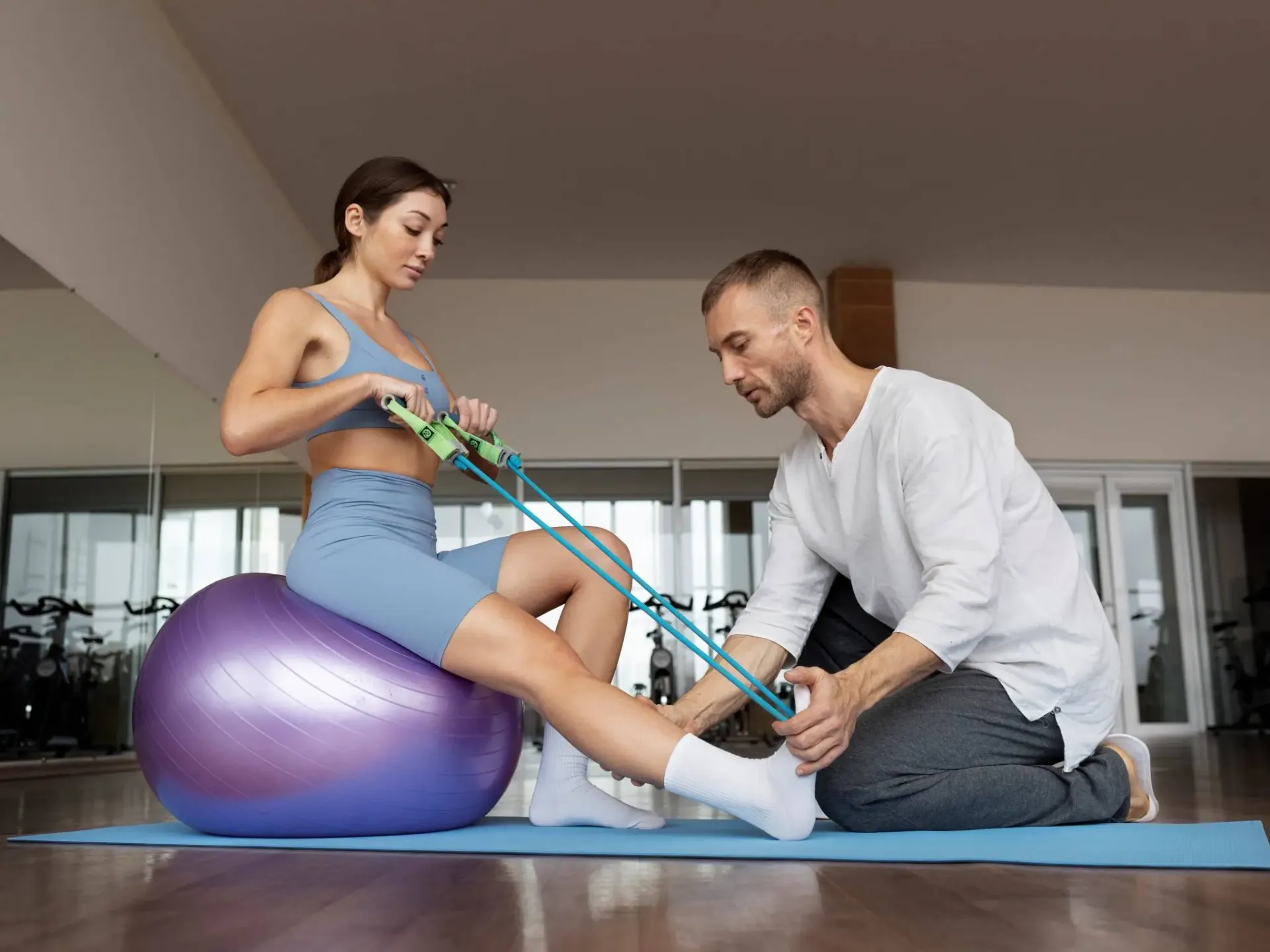
Dizziness is one of the most disabling symptoms a person can live with, and one of the most misunderstood. Patients arrive at our Côte Saint-Luc clinic having been told the room spinning is "just an inner ear thing" that will pass on its own, after months of avoiding stairs, driving, grocery stores and social events. Vestibular rehabilitation therapy (VRT) — delivered by a physiotherapist — is the evidence-based treatment for most of these cases, and it works far better and far faster than waiting.
This guide explains what the vestibular system does, what goes wrong, how a vestibular physiotherapy assessment unfolds, which exercises drive recovery, and what timeline you can realistically expect. If you want the measurement side of the story, our companion article on the Dizziness Handicap Inventory (DHI) explains how we quantify progress.
1. What the vestibular system actually does
Inside each inner ear sit three semicircular canals (sensing rotation) and two otolith organs, the utricle and saccule (sensing linear acceleration and gravity). They feed the brainstem and cerebellum with a constant stream of head-motion data. The brain fuses that data with vision and proprioception from your joints and feet to answer three questions many times per second: where is my head, where is my body, and is the world moving or am I?
Two reflexes depend on this. The vestibulo-ocular reflex (VOR) moves your eyes exactly opposite to your head so images stay stable on the retina — it is why you can read a sign while walking. The vestibulo-spinal reflex adjusts postural muscles to keep you upright. When vestibular input becomes asymmetrical or unreliable, both reflexes fail: the world appears to bounce or slide (oscillopsia), and balance becomes effortful and unreliable.
2. The conditions vestibular physiotherapy treats
BPPV — Benign Paroxysmal Positional Vertigo
The most common cause of true spinning vertigo. Calcium carbonate crystals (otoconia) become dislodged from the utricle and float into a semicircular canal. Rolling over in bed, lying down, looking up at a cupboard, or tipping the head back at the hairdresser triggers a violent 10 to 60 second spin. BPPV is mechanical, and so is the fix: a repositioning maneuver, not a pill.
Vestibular neuritis and labyrinthitis
A viral inflammation of the vestibular nerve causes days of severe constant vertigo, nausea and imbalance, then a long tail of unsteadiness and visual instability that can last months if untreated. This is where VRT shines: the peripheral organ may not recover, but the brain can be trained to compensate for the asymmetry.
Vestibular migraine
Episodes of dizziness, motion sensitivity and visual intolerance that may occur with or without headache. VRT reduces motion sensitivity and restores function while trigger management addresses the migraine biology.
Post-concussion dizziness
After a head impact, vestibulo-ocular and cervical systems are frequently both disturbed. Graded VOR training, convergence work and cervical treatment together shorten recovery considerably compared with rest alone.
Cervicogenic dizziness
Altered proprioceptive signalling from a stiff, painful upper neck creates a floating, off-balance sensation with neck stiffness and headache. Combining physiotherapy with osteopathy is particularly effective here, and our article on fascia, tension and manual therapy explains the soft-tissue side of that picture.
PPPD — Persistent Postural-Perceptual Dizziness
A chronic functional disorder that often follows an acute vestibular event. Daily non-spinning dizziness, worse standing, worse in visually complex environments, worse on screens. Recovery requires patience, graded exposure and education — but it does happen.
Age-related balance decline
Vestibular function declines with age, and falls are the leading cause of injury-related hospitalization in Quebec seniors. Balance and vestibular training are among the few interventions with strong evidence for reducing that risk. If mobility is already limited, our guide on progressing from a walker back to independent walking pairs naturally with vestibular work.
3. What the assessment looks like at Réhabital
A first vestibular physiotherapy visit lasts about an hour and is systematic:
- History. Is it spinning, floating, lightheadedness or imbalance? How long does an episode last — seconds, minutes, hours or constant? What triggers it? Any hearing change, tinnitus, aural fullness, headache or visual aura?
- Oculomotor exam. Smooth pursuit, saccades, spontaneous and gaze-evoked nystagmus, skew deviation — these help separate peripheral from central causes.
- Head impulse test. A rapid, low-amplitude head turn reveals a corrective catch-up saccade when the VOR on that side is underperforming.
- Positional testing. Dix-Hallpike and supine roll tests identify which canal holds displaced crystals and in which direction.
- Dynamic visual acuity. Reading an eye chart with the head still, then moving — a drop of three lines or more indicates significant VOR dysfunction.
- Balance and gait. Standardized measures such as the modified CTSIB, Functional Gait Assessment, Timed Up and Go and gait with head turns.
- Cervical screen. Upper cervical mobility, joint tenderness and cervical joint position error testing.
- Self-report. The DHI and often the Activities-specific Balance Confidence scale.
The assessment produces a mechanism, not just a label — and the mechanism dictates the treatment.
4. Repositioning maneuvers for BPPV
When testing confirms posterior canal BPPV, the Epley maneuver guides the crystals back to the utricle through a sequence of head positions, each held roughly 30 to 60 seconds until the nystagmus settles. The Semont liberatory maneuver is an alternative, and the BBQ (Lempert) roll is used for horizontal canal involvement. Success rates exceed 80 percent after a single treatment and approach 95 percent after three.
Two practical points matter. First, self-treating with videos found online frequently fails, because performing the correct maneuver for the wrong canal can make symptoms worse. Second, mild unsteadiness for a few days after a successful maneuver is normal and is treated with short habituation exercises rather than another maneuver.
5. The three exercise mechanisms of VRT
Adaptation — gaze stabilization
VOR x1: hold a business card with a letter on it at arm's length, keep the letter perfectly in focus, and turn your head horizontally at a speed where the letter stays sharp. Start at 30 seconds, progress to 2 minutes, three to five times per day, then repeat vertically. VOR x2: head and target move in opposite directions — a much harder demand added later. Progressions include standing, standing on foam, and busy visual backgrounds.
Habituation — controlled provocation
We identify your two or three most provocative movements and repeat them in a graded way, typically five repetitions two to three times daily. The dizziness should spike modestly and settle within 15 to 20 minutes. Over two to four weeks, the response shrinks. This is the core treatment for motion sensitivity and PPPD.
Substitution and balance retraining
When vestibular input is permanently reduced, the brain can lean on vision and proprioception. We train that deliberately: narrow and tandem stance, eyes open then closed, firm floor then foam, head turns while walking, direction changes, dual-task walking while counting or carrying, and stair and community-level practice for people who need to feel safe at Cavendish Mall or on winter sidewalks.
6. Home program and dosage
VRT is largely a home program supervised in clinic. Typical dosage is 10 to 20 minutes of exercise spread over three to five short sessions per day, with clinic visits once or twice weekly to progress the difficulty. Short and frequent beats long and rare, because the brain adapts to repeated exposure, not to endurance. We give written and video instructions, and we adjust dosage using a simple rule: symptoms should return to baseline within 20 minutes.
7. A realistic recovery timeline
- BPPV: 1 to 3 visits, often resolved the same week.
- Vestibular neuritis: meaningful improvement at 3 to 4 weeks, functional recovery around 6 to 8 weeks.
- Vestibular migraine: 8 to 12 weeks in combination with trigger and medical management.
- Post-concussion dizziness: 6 to 16 weeks depending on cervical and visual involvement.
- PPPD: 3 to 6 months, with the biggest gains coming from consistency rather than intensity.
A drop of 18 points or more on the DHI is the accepted marker of genuine clinical improvement, which is why we re-administer it at four to six weeks and at discharge.
8. Where multidisciplinary care helps
Dizziness rarely lives in one system. When the upper neck is a driver, combining physiotherapy with osteopathy addresses both the proprioceptive input and the joint and fascial restriction behind it. When tension headaches and jaw clenching accompany the dizziness, our article on TMJ and jaw pain is worth reading. When anxiety amplifies symptoms — extremely common in PPPD — therapeutic massage and breathing work support the autonomic side of recovery without replacing VRT.
9. Working with Colin Teghen Tamuton
Physiotherapy at Réhabital is provided by Colin Teghen Tamuton, physiotherapist and member of the Ordre professionnel de la physiothérapie du Québec (OPPQ). His practice combines manual therapy, progressive exercise prescription and functional goal-setting: not just fewer symptoms, but a concrete return to driving, working, walking outdoors in winter and sleeping without fear of rolling over. You can review his background, patient feedback and book directly with him on his practitioner page.
10. Book vestibular physiotherapy in Côte Saint-Luc
Réhabital is located at D4-5800 Cavendish Boulevard, Côte Saint-Luc, inside Cavendish Mall, with free indoor parking, a bilingual team and evening availability. We serve patients from Côte Saint-Luc, Hampstead, NDG, Snowdon, Westmount, Montreal West and Saint-Laurent.
Book online 24/7 on Jane App or call 438-842-3550. Learn more on our physiotherapy page, or continue reading our guide to the Dizziness Handicap Inventory.
This article is educational and does not replace an individual assessment. Sudden dizziness with neurological symptoms requires emergency care.
Frequently asked questions
Go deeper with our dedicated physiotherapy pages
Physiotherapy pages with Colin Teghen Tamuton (OPPQ) in Côte Saint-Luc:
Related articles
The Dizziness Handicap Inventory (DHI) in vestibular physiotherapy in Côte Saint-Luc
Understanding the DHI: a validated 25-item questionnaire used in vestibular physiotherapy to measure the impact of dizziness and guide your rehabilitation program.
Dizziness and Vertigo: Inner Ear, Neck or Something Else?
Dizziness has many possible causes. Learn how to tell benign causes from red-flag symptoms, and how vestibular physiotherapy and osteopathy can help.
Physiotherapy in Côte Saint-Luc: regain mobility, strength and quality of life
How a structured physiotherapy plan — assessment, manual therapy, targeted exercises and education — accelerates recovery at Réhabital in Côte Saint-Luc.
Knee Pain: How Osteopathy and Physiotherapy Treat It in Côte Saint-Luc
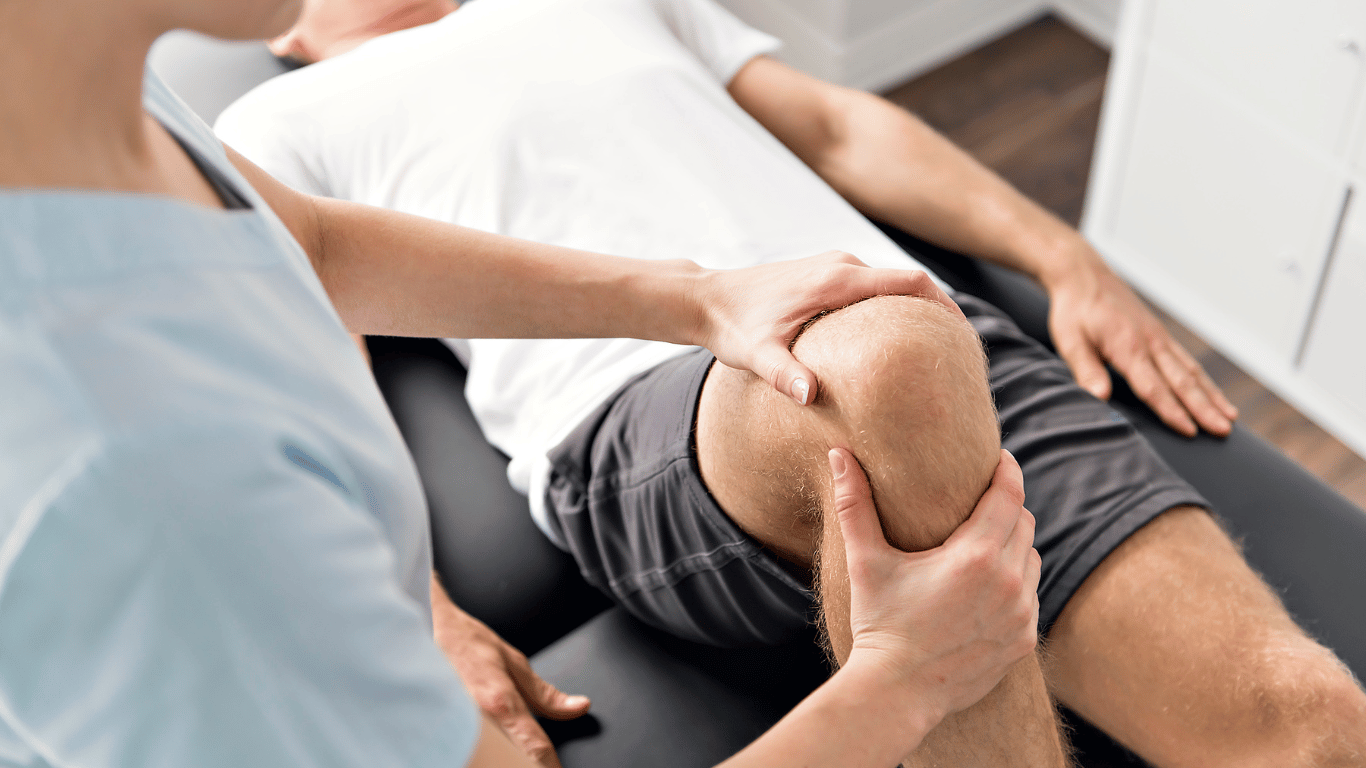
Knee that clicks, burns, locks or gives way? Learn how Réhabital's osteopaths and physiotherapists assess and treat knee pain — from osteoarthritis and patellofemoral syndrome to ligament sprains and tendinopathies.

Frozen Shoulder: Physiotherapy and Massage Therapy to Restore Full Mobility
Stuck, painful shoulder? Discover the combined physiotherapy + massage protocol at Réhabital in Côte Saint-Luc to beat frozen shoulder.
After a Knee or Hip Replacement: A Week-by-Week Rehabilitation Plan
The first six weeks decide your final range of motion. Here is what real rehabilitation after a total knee or hip replacement looks like with our physiotherapist, founding osteopath and massage therapists in Côte Saint-Luc.