
Hip Pain on the Side at Night: Gluteal Tendinopathy Explained (and Why Stretching Makes It Worse)
Cannot sleep on your side, pain climbing stairs, tenderness right on the hip bone: gluteal tendinopathy is massively underdiagnosed. Here is why stretching makes it worse and how our osteopath, physiotherapist and massage therapists treat it.
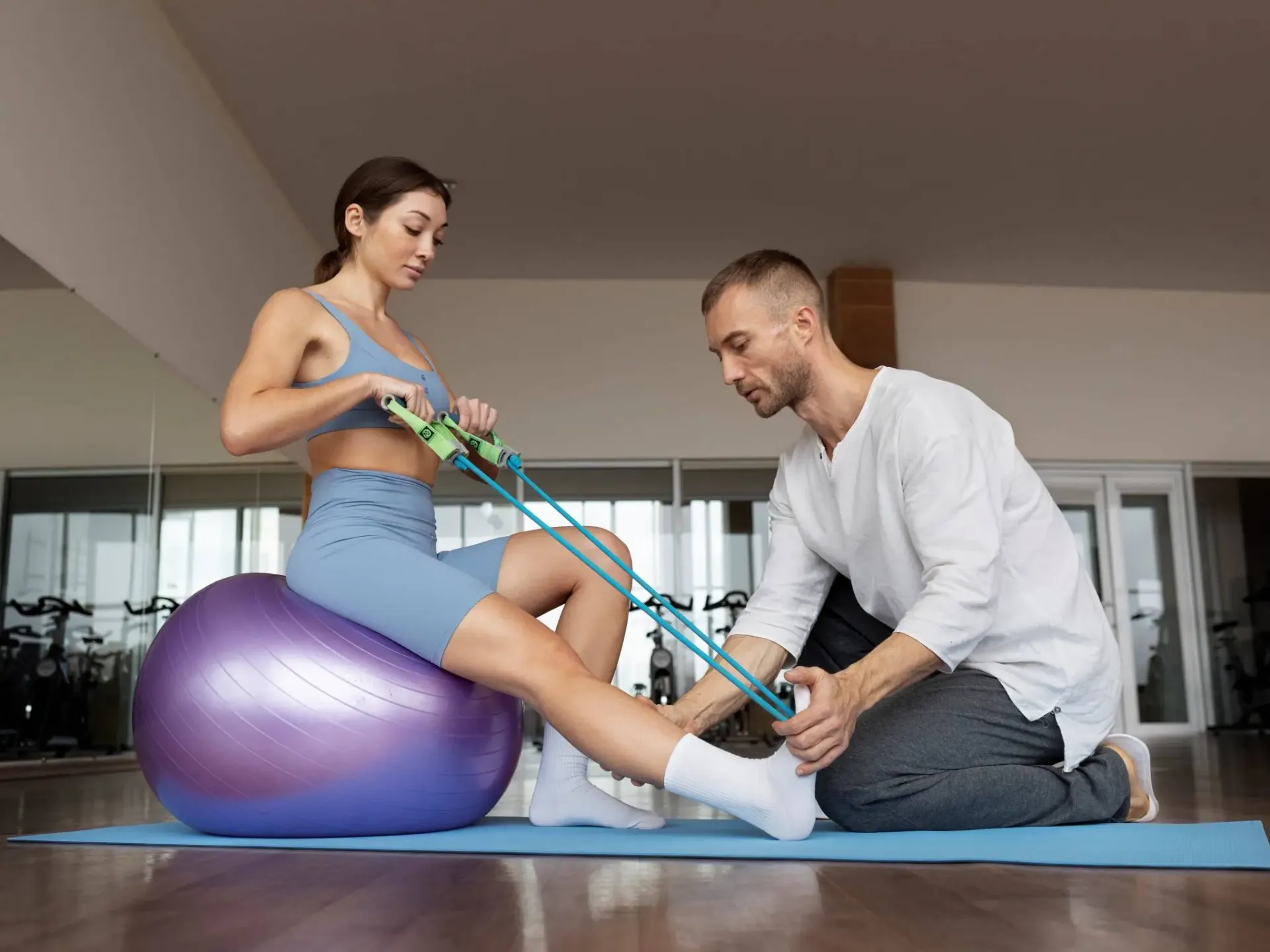
There is a specific kind of hip pain that ruins sleep. It sits on the bony point on the outside of the hip, it screams when you lie on that side, it aches when you lie on the other side because the top leg drops across the body, and it flares on stairs, on hills and after long walks. People often describe it as bursitis. Most of the time it is not.
What it usually is: gluteal tendinopathy — an overload condition of the gluteus medius and minimus tendons where they attach to the greater trochanter. It is one of the most common and most misdiagnosed sources of hip pain in adults, particularly in women over 40, in runners, and in people who have recently increased their walking.
Why "bursitis" is usually the wrong label
For decades this presentation was called trochanteric bursitis, and treatment followed accordingly: anti-inflammatories, rest and cortisone into the bursa. Imaging studies since have shown that in the large majority of cases the bursa is not primarily inflamed — the tendon is degenerated and overloaded, and any bursal irritation is secondary.
The distinction is not academic. If you treat it as inflammation you rest, stretch and inject. If you treat it as tendon overload you unload the compressive positions and progressively load the tendon. Those two plans point in opposite directions, which is exactly why so many people with this condition report months of treatment with no lasting change.
The compression mechanism nobody explains
The key concept is compression. The iliotibial band runs directly over the gluteal tendons at the greater trochanter. Whenever the hip moves into adduction — the thigh crossing toward or past the midline — the band presses the tendon against the bone. Compression plus load is what irritates a tendon; load alone does not.
This explains every one of the classic aggravating factors:
- Sleeping on the painful side compresses the tendon directly under body weight.
- Sleeping on the other side lets the top leg fall across the body — pure adduction, sustained for hours.
- Standing with your weight on one hip, the classic "hip hang", holds the tendon in compression all day.
- Sitting cross-legged or with knees together and feet apart does the same thing while seated.
- Stairs and hills add high load in a position of relative adduction.
And it explains the most common self-treatment mistake: the IT band stretch, where you cross the leg over and lean away. That movement is maximal adduction — the exact position that compresses the sore tendon. It feels productive because stretching a painful area feels like doing something. It is reliably counterproductive here, and it is one of the first things we ask people to stop.
How we assess it
The presentation is fairly distinctive. Pain localised to the bony point rather than in the groin; tenderness on direct palpation; pain lying on that side; pain on single-leg standing within 30 seconds; pain on stairs. Groin pain, deep stiffness and pain putting on socks point instead toward hip joint osteoarthritis, and referred pain from the lumbar spine can also mimic it — which is why the assessment covers the back, pelvis and hip together.
Osteopathic assessment with Shahram Ghasemi, MD (Iran), DOMP looks at why this tendon is being overloaded in the first place. A pelvis that does not stay level in single-leg stance, a lumbar spine that has lost rotation, a stiff opposite hip, a foot that collapses inward, an old ankle sprain that changed your gait years ago — any of these push a person into more hip adduction with every step. Treating the tendon while leaving the cause in place is why this condition recurs so often.
Physiotherapy assessment with Colin Teghen Tamuton quantifies the deficit: hip abductor strength, pelvic control in single-leg stance, gait analysis, load tolerance and irritability. From that we know where in the loading progression to start, which matters enormously because starting too heavy flares a tendon for a week and starting too light achieves nothing.
The treatment plan that actually works
Step one: remove compression. This alone often reduces night pain within two weeks. Sleep on the non-painful side with a firm pillow between the knees so the top leg stays level, or on your back. Stop standing on one hip. Uncross your legs when sitting. Avoid deep stretching into adduction. Widen your stride slightly rather than walking on a narrow line.
Step two: isometric loading. Early on, isometric abduction holds — pushing outward against a wall or band without movement — reduce tendon pain and begin restoring capacity without provoking the tissue. This is the phase where people who were told to rest completely start to make progress for the first time.
Step three: progressive strengthening. Colin Teghen Tamuton builds abductor strength through side-lying abduction with correct alignment, bridging, sit-to-stand variations, step-ups, and eventually loaded single-leg work. Tendons adapt to load; they do not adapt to rest. The progression is slow and deliberate — typically twelve weeks or more — and that timeline is worth stating honestly at the start.
Step four: manual therapy and osteopathy as support. Sessions with Shahram Ghasemi, MD (Iran), DOMP address lumbar and sacroiliac mobility, thoracolumbar fascia tension, hip joint mechanics and foot and ankle contribution. This is what changes the mechanical environment so the strengthening actually holds.
Step five: soft tissue work. Massage sessions with Cedik Elaiba or Irina Kushnir help with tensor fasciae latae and lateral thigh tension and general comfort — but deep, aggressive work directly over the tender trochanter is avoided, because pressing hard on a compressed tendon is simply more compression.
What recovery looks like
Night pain is usually the first thing to improve, often within two to four weeks of correcting sleep position and starting isometrics. Stairs and walking tolerance improve next, over roughly six to twelve weeks. Full tendon capacity — being able to hike, run or stand on one leg for a long time without a reaction — takes three to six months.
That timeline frustrates people, and understandably. But tendon tissue remodels slowly, and this condition has a high recurrence rate precisely because people stop the strengthening as soon as the pain goes. The pain leaves before the capacity returns. Continuing the programme for two to three months after you feel fine is the difference between a resolved problem and an annual one.
What to stop doing today
- Stretching the IT band by crossing the leg and leaning away.
- Foam rolling aggressively over the outside of the hip.
- Sleeping without a pillow between the knees.
- Standing with all your weight on one hip while cooking, queueing or holding a child.
- Sitting with legs crossed for long stretches.
- Adding hill or stair training while the tendon is still highly irritable.
Booking at Réhabital in Côte Saint-Luc
If you have lateral hip pain that stops you sleeping on your side, an assessment is worth doing properly rather than assuming it is bursitis or arthritis. Most people start with either Shahram Ghasemi, MD (Iran), DOMP for an osteopathic assessment of the pelvis, spine and hip mechanics, or Colin Teghen Tamuton for a physiotherapy assessment focused on abductor strength and loading. Where both add value, we say so and plan the sequence together.
We are located in Côte Saint-Luc with free on-site parking, serving Hampstead, Montreal West, NDG, Snowdon, Saint-Laurent and Côte-des-Neiges. Private insurance receipts are issued; we do not accept CNESST or SAAQ treatment files. Meet the full team on our practitioners page, or read more on osteopathy and physiotherapy at our clinic. Related reading: sciatica and office ergonomics.
Frequently asked questions
Go deeper with our dedicated osteopathy pages
Osteopathy pages with Shahram Ghasemi, MD (Iran), DOMP in Côte Saint-Luc:
Related articles
Hip Pain When Walking or Sleeping on Your Side: Possible Causes and Treatments
Pain on the side of the hip at night or while walking? Gluteal tendinopathy, bursitis, femoroacetabular impingement or osteoarthritis: here is how to tell them apart.
Hip Pain: How Osteopathy Treats the Pelvis, Hip and Lower Back as One System
A painful hip is rarely an isolated problem. The pelvis, sacroiliac joints, psoas, diaphragm and foot all participate in hip mechanics. Here is the complete osteopathic approach, explained step by step.
Sciatica Pain Explained: Causes, Symptoms and How Osteopathy Brings Lasting Relief
Sharp, burning pain shooting from your lower back down the leg? Discover the most common causes of sciatica and how our osteopaths in Côte Saint-Luc relieve it without medication or surgery.
Tight Hamstrings: Why Stretching Alone Fails and Which Exercises We Prescribe in Osteopathy
Tight hamstrings are rarely fixed by stretching alone. Here are the real causes, the tests we run in clinic, and the exercise program our osteopaths prescribe in Côte Saint-Luc.
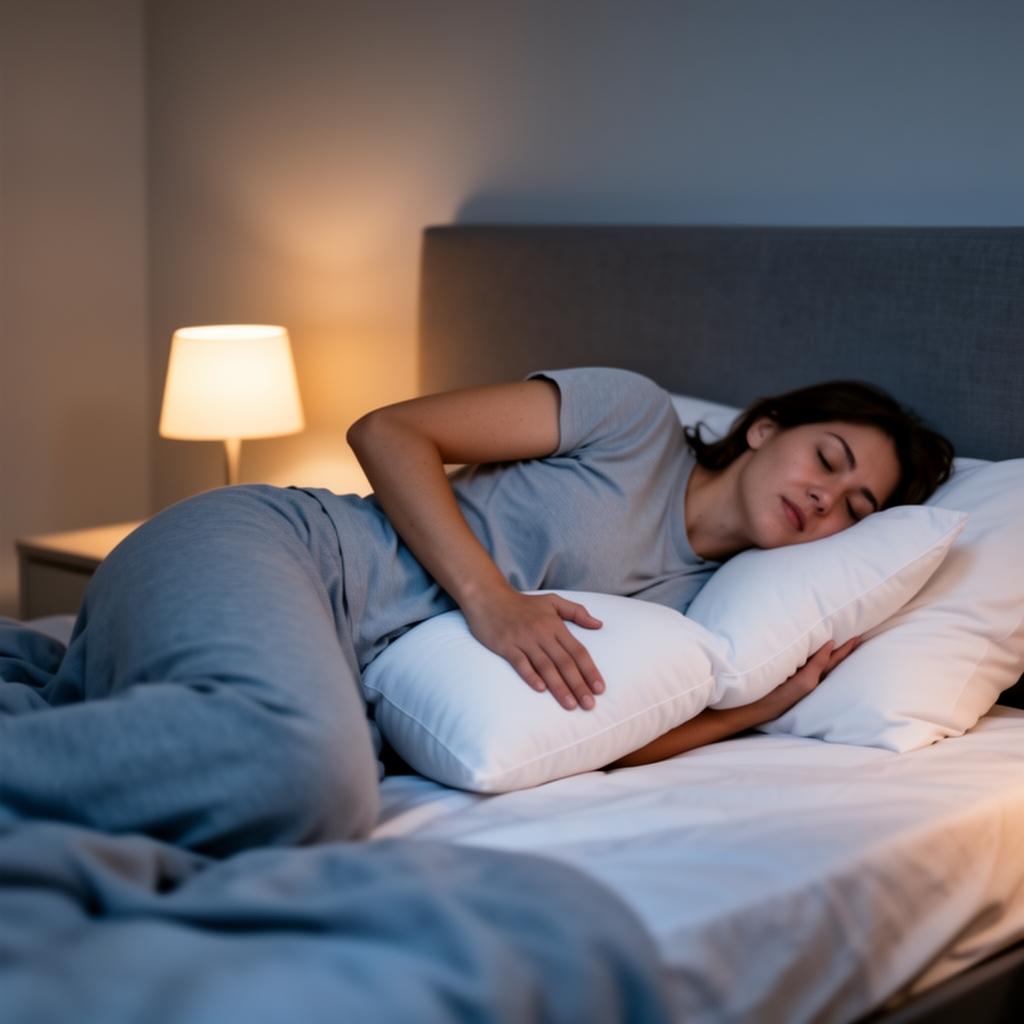
Sciatica at Night: Why Pain Worsens After Dark and How Osteopathy Helps You Sleep Again
Tossing, turning, woken up by a burning leg at 3 a.m.? Discover why sciatica intensifies at night and how our osteopaths in Côte Saint-Luc help patients sleep deeply again.
Herniated Disc, Sciatica or Piriformis Syndrome: How to Tell Them Apart
Pain shooting down your leg? It is not always “sciatica.” Learn how to tell a herniated disc, a true radicular sciatica and a piriformis syndrome apart — and how osteopathy and physiotherapy at Réhabital in Côte Saint-Luc treat each one differently.