
Tight Hamstrings: Why Stretching Alone Fails and Which Exercises We Prescribe in Osteopathy
Tight hamstrings are rarely fixed by stretching alone. Here are the real causes, the tests we run in clinic, and the exercise program our osteopaths prescribe in Côte Saint-Luc.
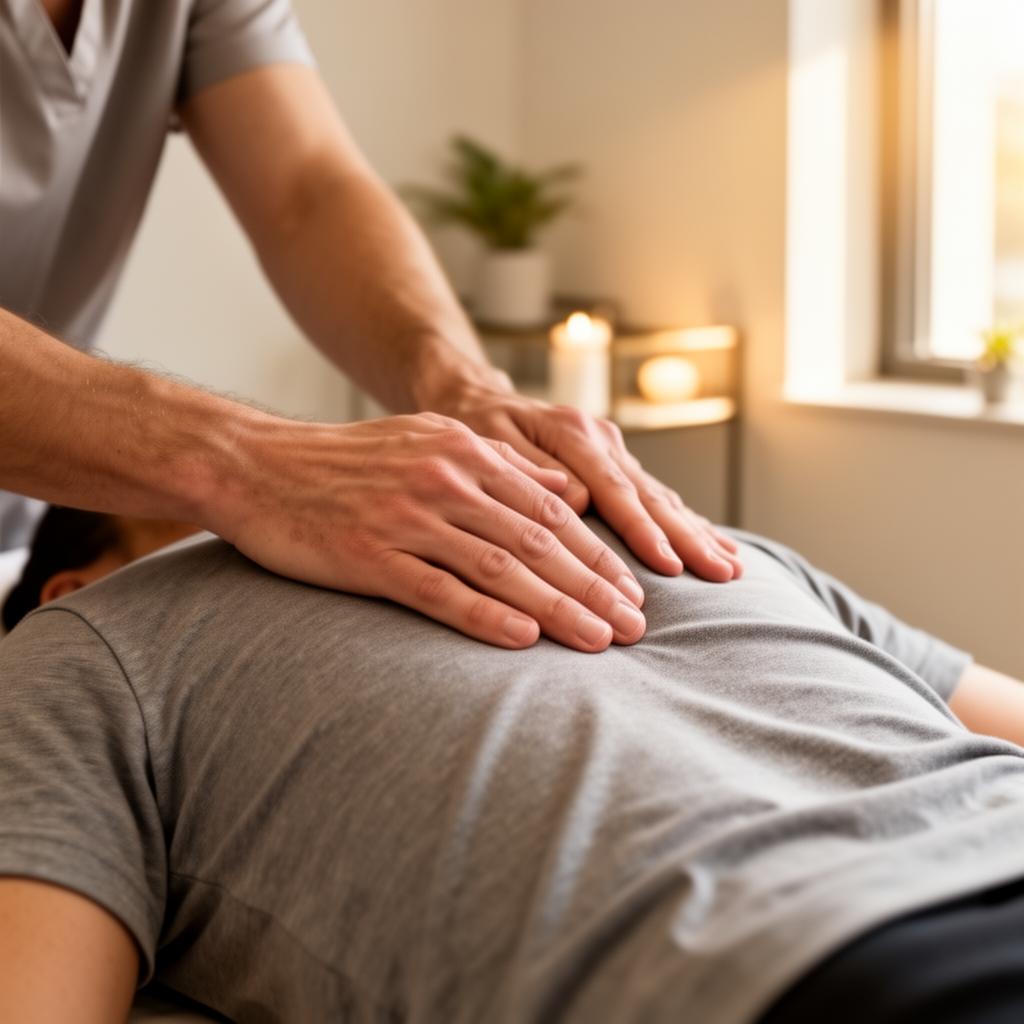
Almost every week someone sits on our treatment table in Côte Saint-Luc and says the same sentence: "I've been stretching my hamstrings for years and they're still tight." It is one of the most common complaints we hear, and one of the most misunderstood. The instinct is logical — the back of the thigh feels short, so pull on it. Yet years of pulling rarely change anything, and for a simple reason: in the majority of cases the hamstrings are not short. They are protectively toned, and tone is a nervous-system decision, not a tissue-length problem.
This article explains what really drives hamstring tightness, how we test it in clinic, what osteopathic treatment addresses, and the exact progression of stretches and exercises our osteopaths prescribe. If you also experience pain radiating down the leg, read our article on osteopathy and back pain alongside this one.
The three different things people call "tight hamstrings"
1. True muscular shortness
The muscle-tendon unit has genuinely adapted to a shortened position, typically after months of sitting, immobilization or training exclusively in small ranges. This is the least common of the three and the easiest to change with loaded range work.
2. Protective tone
The most common presentation. The hamstrings act as a guy-wire for an unstable or poorly controlled pelvis and lumbar spine. When the deep stabilizers or the gluteus maximus are not doing their share, the hamstrings never fully switch off. Stretching a muscle that is on duty produces temporary relief followed by an immediate return of tension — often within hours.
3. Neural tension
The sciatic nerve runs directly through the posterior thigh. When it is irritated or adherent along its path — at the lumbar spine, under the piriformis, or at the ischial tuberosity — the body limits hip flexion to protect it. The sensation is a sharp, electric, "cable-like" pull that stops abruptly rather than the diffuse, warm stretch of true muscular tension.
How we tell the difference in clinic
A five-minute assessment usually settles it:
- Passive straight leg raise. Baseline range. Under 70 degrees suggests a genuine restriction somewhere in the chain.
- Slump test. Seated, slouched, leg extended, then neck flexion. If flexing the neck sharply increases the pull in the thigh, the limiter is neural, not muscular. This single manoeuvre changes the whole treatment plan.
- Active knee extension. Hip at 90 degrees, straighten the knee. Compares each side and isolates hamstring length from pelvic position.
- Pelvic tilt control. We watch what the pelvis does during forward bending. A pelvis that refuses to rotate forward forces the hamstrings to be blamed for a hip and lumbar problem.
- Glute strength test. Single-leg bridge and prone hip extension. Weakness here almost guarantees hamstring overwork.
Why sitting is the biggest offender
Sitting places the hamstrings in a shortened position at the hip while simultaneously compressing them under body weight at the ischial tuberosity, exactly where the sciatic nerve passes. Eight hours of that daily produces reduced local circulation, adaptive stiffness and a nerve that dislikes being lengthened. This is why the tightness is worst in the first minutes of standing and why desk workers who "never train" can be far tighter than athletes. Our article on sitting posture and sciatica covers this mechanism in more detail.
What osteopathic treatment actually does
Our osteopaths do not simply stretch your leg for you. The session addresses the reasons the hamstrings are holding tone:
- Lumbo-pelvic mobilization. Restoring sacroiliac and lumbar segmental motion removes the mechanical reason for guarding.
- Myofascial release along the posterior chain. The hamstrings are continuous with the sacrotuberous ligament, the thoracolumbar fascia and the plantar fascia. Treating only the thigh ignores two-thirds of the chain.
- Neural mobilization. Gentle, oscillatory sliders that restore the nerve's ability to glide within its tissue bed — never aggressive tensioning, which flares symptoms.
- Hip joint work. Restricted hip flexion or internal rotation forces the pelvis and hamstrings to compensate on every step.
- Diaphragm and psoas balance. A tight anterior chain tilts the pelvis and keeps the posterior chain permanently loaded. Releasing the front is often what finally frees the back.
The exercise program we prescribe
Manual treatment opens a window; exercise is what keeps it open. We progress patients through four phases, three sessions per week.
Phase 1 — Calm the nerve and the tone (week 1–2)
- Sciatic nerve slider. Seated, knee bending as the neck extends, knee straightening as the neck flexes. Ten slow repetitions, twice daily. No pain, no stretch sensation held — the nerve should glide, not be pulled.
- Supine hamstring float with strap. Leg supported by a strap, knee slightly bent, 45 seconds. Gentle, tolerable, no bracing.
- 90/90 breathing. Five minutes on your back, feet on a wall, long exhales. This reduces the global protective tone that no stretch can reach.
Phase 2 — Restore pelvic control and glute strength (week 2–4)
- Glute bridge, feet close. 3 × 12, pushing through the heels with a posterior pelvic tilt at the top. If you cramp in the hamstrings, the glutes are not firing — bring the feet closer.
- Hip hinge with dowel. 3 × 10, teaching the pelvis to rotate forward instead of loading the lumbar spine.
- Side-lying clamshell and hip abduction. 2 × 15 each side, for the lateral hip stabilizers that quietly influence hamstring tone.
Phase 3 — Strength through range, the phase that actually works (week 4–8)
- Romanian deadlift with light load. 3 × 8, four seconds down. The single most effective exercise for lasting hamstring length.
- Single-leg RDL. 3 × 8 per side, adding balance and rotational control.
- Eccentric slider curls. Heels on sliders, lower the hips slowly while extending the knees. 3 × 6.
- Elevated split squat. 3 × 10 per side, addressing the hip flexor side of the equation.
Phase 4 — Load and speed tolerance (week 8+)
- Nordic hamstring curl (assisted). 3 × 5 slow negatives. Gold standard for reducing hamstring reinjury.
- Kettlebell swing. 4 × 12, teaching the hamstrings to produce force quickly instead of only resisting.
- Loaded stretching. Jefferson curl with very light weight, under supervision, for patients whose goal is genuine range gain.
How to stretch properly, if you are going to stretch
- Keep the lumbar spine neutral. A rounded back means you are stretching your low back, not your hamstrings.
- Hinge from the hip, chest forward, sit bones back.
- Hold 30 to 45 seconds, three rounds, and breathe out slowly during the hold.
- Never chase pain. Aim for 5 out of 10 sensation maximum.
- Stretch after training or after a warm shower, when tissue tolerance is highest.
Common mistakes we correct every week
- Bouncing into the stretch, which triggers the stretch reflex and increases tone.
- Stretching aggressively while a nerve is irritated, which reliably worsens symptoms.
- Stretching without ever strengthening — the classic plateau.
- Ignoring the hip flexors and calves, both of which change the pelvis and ankle position that hamstrings work around.
- Expecting change in days. Tissue and nervous-system adaptation take weeks.
Realistic expectations
Patients who follow the program report easier bending and less morning stiffness within two to three weeks. Measurable straight-leg-raise improvements of 10 to 20 degrees usually appear between weeks six and eight. Those with a neural component often improve fastest, because releasing nerve sensitivity can restore range within a single session. Those with years of sedentary adaptation need the full twelve weeks — but the change holds, because it is built on strength rather than on temporary tissue creep.
Book an assessment in Côte Saint-Luc
Hamstring assessments are performed by our osteopath team at our Cavendish Boulevard clinic in Côte Saint-Luc, with free parking and evening availability. Receipts are issued for private insurance and SAAQ claims. You can book online or read more about our osteopathy services.
Frequently asked questions
Go deeper with our dedicated osteopathy pages
Osteopathy pages with Shahram Ghasemi, MD (Iran), DOMP in Côte Saint-Luc:
Related conditions we treat
Related articles
Hamstrings and Osteopathy: Strain, Proximal Tendinopathy and a Complete Rehabilitation Guide
Strain, proximal tendinopathy or referred pain? Our osteopath Shahram Ghasemi explains how to tell the four hamstring problems apart and the full rehabilitation progression we use in Côte Saint-Luc.
Osteopathy vs Physiotherapy: Which Approach Should You Choose in Côte Saint-Luc?
Complete comparison between osteopathy and physiotherapy: differences, indications, training, insurance reimbursement and how to choose based on your condition in Côte Saint-Luc, Hampstead, NDG and across Montreal.
When Should You See an Osteopath? 10 Signs You Shouldn't Ignore
Persistent pain, morning stiffness, migraines? Discover 10 signs indicating you should see an osteopath in Montreal.

Osteopathy or Physiotherapy for Back Pain: A Guide Based on Your Symptoms
Struggling with back pain and unsure whether to see an osteopath or a physiotherapist? Here is a clear, symptom-based guide to help you choose the right approach in Côte Saint-Luc.
Hip Pain: How Osteopathy Treats the Pelvis, Hip and Lower Back as One System
A painful hip is rarely an isolated problem. The pelvis, sacroiliac joints, psoas, diaphragm and foot all participate in hip mechanics. Here is the complete osteopathic approach, explained step by step.
Pain After Sitting for a Long Time: Why Does Your Back Stiffen Up?
You stand up from your desk or a long car ride and your back is stiff and sore? Discover why this happens and how osteopathy can help.