
How Many Physiotherapy Sessions Do You Usually Need?
Wondering how many physiotherapy sessions you'll need for your condition? Here are realistic benchmarks based on injury type, from Clinique Réhabital.

This is one of the most frequent questions we receive at Clinique Réhabital: "How many physiotherapy sessions will I need?" The honest answer is that there is no universal magic number, but we can offer you realistic benchmarks based on years of clinical experience and the type of condition you have.
In this article, we review typical treatment durations for different types of injuries and conditions, so you can better plan your rehabilitation journey with our physiotherapy team in Côte Saint-Luc.
Factors That Influence the Number of Sessions
Before getting into details by condition, it's important to understand that several factors influence the total length of your treatment:
- The severity and duration of your condition before consulting
- Your age and general health status
- Your usual physical activity level
- Your consistency in doing prescribed exercises at home
- The presence of complicating factors, such as previous injuries or associated chronic conditions
Realistic Benchmarks by Condition Type
Back Pain (Low Back Pain)
For recent acute low back pain, most clients see significant improvement after 4 to 8 sessions. For chronic back pain, the process is longer and may require 8 to 12 sessions or more, combined with a long-term structured exercise program.
Neck Pain
Mechanical or postural neck pain generally improves within 4 to 8 sessions. However, an injury like whiplash may require a more extensive treatment plan. Check our page on neck pain treatment to learn more.
Sciatica
Sciatica can vary greatly in intensity and duration. Some clients feel notable relief after 6 sessions, while more complex cases may require up to 12 to 15 sessions. Our page on sciatica treatment offers more details on this condition.
Sports Injuries (Sprains, Tendinitis)
A mild ankle or knee sprain can resolve in 3 to 6 sessions. More severe injuries, like a partial ligament tear, may require 10 to 20 sessions spread over several months for a complete and safe recovery.
Post-Surgical Rehabilitation
After major orthopedic surgery, such as a knee or hip replacement, a typical rehabilitation plan often includes 12 to 24 sessions over a period of 2 to 4 months, with a progressive follow-up of exercise intensity.
Pain Related to Posture and Office Work
These types of pain generally respond well to a treatment plan of 4 to 8 sessions, particularly when combined with ergonomic adjustments and postural strengthening exercises.
Is Physiotherapy a Lifelong Treatment?
No. The goal of physiotherapy is not to create long-term dependency, but rather to restore your function and teach you the tools needed to manage your condition independently. However, some clients choose occasional maintenance visits, especially athletes or people with chronic conditions, to prevent recurrence.
How to Speed Up Your Recovery
Consistency is key. Clients who rigorously follow their home exercise program between sessions generally see faster recovery and need fewer total visits. Your physiotherapist will adjust your plan at each session based on your progress.
Direct Access to Physiotherapy in Quebec
As a reminder, in Quebec you do not need a medical prescription to see a physiotherapist: physiotherapy is direct access. That said, some insurers require a doctor's note for reimbursement, so check your insurance policy before starting your treatment.
Complementary Approaches
For some clients, combining physiotherapy with osteopathy or massage therapy can speed up the healing process. Check out our comparison of physiotherapy vs massage therapy to better understand how these approaches complement each other.
Insurance and Policies
Clinique Réhabital accepts most private insurance plans as well as SAAQ claims for physiotherapy related to a motor vehicle accident. Please note that CNESST claims are not accepted. Check our policies page for our 24-hour cancellation policy.
How the Tissue Healing Process Unfolds
Understanding the phases of tissue healing helps explain why the number of sessions varies so much. The initial inflammatory phase typically lasts 2 to 4 days, followed by a tissue repair phase that can extend from 2 to 6 weeks, then a remodeling phase that can last several months for tissues like ligaments and tendons. Physiotherapy supports each of these phases with tailored interventions: pain and inflammation control early on, then progressive strengthening and return to functional activities afterward.
What a Typical Session at Réhabital Looks Like
Each follow-up session generally includes a quick reassessment of your symptoms, an adjustment to your treatment plan, manual therapy if indicated, and a progression of your exercise program. Your exercises are reviewed and gradually made more complex to keep stimulating muscle adaptation without causing a setback.
The Importance of Home Exercises
Clients who consistently do their home exercises generally progress twice as fast as those who only do them sporadically. Here are a few tips to stay consistent:
- Attach your exercises to an existing routine, like after brushing your teeth
- Use reminders or an app so you don't forget
- Start with short 10-minute sessions if time is limited
- Communicate with your physiotherapist if an exercise causes pain
Signs You're Making Good Progress
Decreased pain intensity, improved range of motion, fewer painful episodes, and a gradual return to your usual activities are all good indicators of progress, even if full healing takes time.
When Your Condition Requires Medical Reassessment
If your pain does not improve after several weeks of consistent treatment, worsens despite therapy, or is accompanied by new symptoms like numbness or progressive weakness, your physiotherapist can refer you to a physician for further tests, such as diagnostic imaging.
A Multidisciplinary Clinic Serving the West End of Montreal
Based in Côte Saint-Luc, Clinique Réhabital also serves residents of Hampstead, Westmount, Snowdon, NDG, and Montréal-Ouest. Our flexible hours, Monday to Friday 10:00 to 20:00 and Sunday 10:00 to 16:00, allow our clients to fully commit to their treatment plan without sacrificing their other obligations.
Adapting the Treatment Plan to Your Schedule
Our physiotherapists take your daily reality into account, whether you're a busy parent in Côte Saint-Luc or a professional with a packed schedule, to propose a realistic session frequency and a home exercise program that fits easily into your routine.
A Final Word on Patience and Consistency
Recovery timelines are estimates, not guarantees, and staying consistent with both your appointments and home exercises remains the single biggest factor within your control for reaching your goals within the expected number of sessions.
Working With Your Family Doctor and Other Specialists
Your physiotherapist can communicate directly with your family doctor or other specialists involved in your care, when needed, ensuring a coordinated approach, particularly for complex cases involving multiple conditions or recent surgery.
Tracking Your Long-Term Outcomes
Even after your active treatment ends, we encourage clients to check in periodically, especially after a significant increase in activity level or a new physical demand at work, so that any small setback can be addressed early with a brief tune-up session rather than developing into a full recurrence requiring another extensive round of care.
The Role of the Initial Assessment in Estimating Session Count
Your very first physiotherapy visit is not limited to a diagnosis: it also serves to establish a realistic, though preliminary, estimate of the likely number of sessions, based on the severity of your condition, your history, and your goals. This estimate is revised throughout treatment based on your actual response, which may differ from the statistical average observed for your type of condition.
Insurance Coverage and Session Planning
Many private insurance plans have an annual maximum for physiotherapy coverage, so it's worth checking your policy limits early on to plan your treatment schedule accordingly. Our front desk team at the Côte Saint-Luc clinic can help you understand typical coverage structures, though final reimbursement decisions always rest with your insurer. SAAQ claims related to motor vehicle accidents follow a different process, and our team can guide you through the required documentation.
Preventive Physiotherapy: Beyond Treating an Injury
Some clients choose to see a physiotherapist preventively, even before experiencing significant pain, particularly athletes in intensive training periods or manual workers exposed to repetitive loads. A preventive assessment helps identify muscle imbalances and mobility restrictions before they become injuries, reducing the total number of sessions needed over the long term.
How Your Physiotherapist Measures Your Progress
At each session, your physiotherapist uses objective tools to track your progress: goniometer measurements of joint range of motion, muscle strength tests, standardized questionnaires on pain and function, and observation of your movement patterns. This rigorous tracking allows your treatment plan to be adjusted in real time and helps objectively determine when you're ready to space out or end your sessions.
What to Do If You See No Improvement After Several Sessions
If after 4 to 6 sessions you notice no improvement, it's important to discuss this openly with your physiotherapist. This may indicate that an adjustment to the treatment plan is needed, that another approach (such as osteopathy) could be beneficial as a complement, or that further medical investigation, such as imaging, is required to better understand the source of your pain.
The Role of Motivation and Personal Goals
Clients who set concrete functional goals with their physiotherapist, such as returning to running, lifting their kids without pain, or getting back to golf, tend to stay more engaged in their exercise program and achieve better long-term results than those without a clear goal in mind.
Book Your Assessment Today
The best way to know how many sessions you'll need is to start with a complete assessment with one of our physiotherapists in Côte Saint-Luc. Book your first visit today through our Jane App system and get a personalized, realistic treatment plan. Also check out our team page and our blog for more information.
This article is provided for informational purposes only and does not replace a professional diagnosis. Each treatment plan is personalized based on the clinical assessment of your condition.
Frequently asked questions
Go deeper with our dedicated physiotherapy pages
Physiotherapy pages with Colin Teghen Tamuton (OPPQ) in Côte Saint-Luc:
Related articles

Your First Physiotherapy Appointment: What to Expect
Complete guide for your first physiotherapy visit in Côte Saint-Luc. Assessment, treatment, exercises and follow-up plan.

How Many Osteopathy Sessions Do You Need? (What to Expect)
Learn how many osteopathy sessions you need based on your condition and what to expect at your first appointment in Côte Saint-Luc.
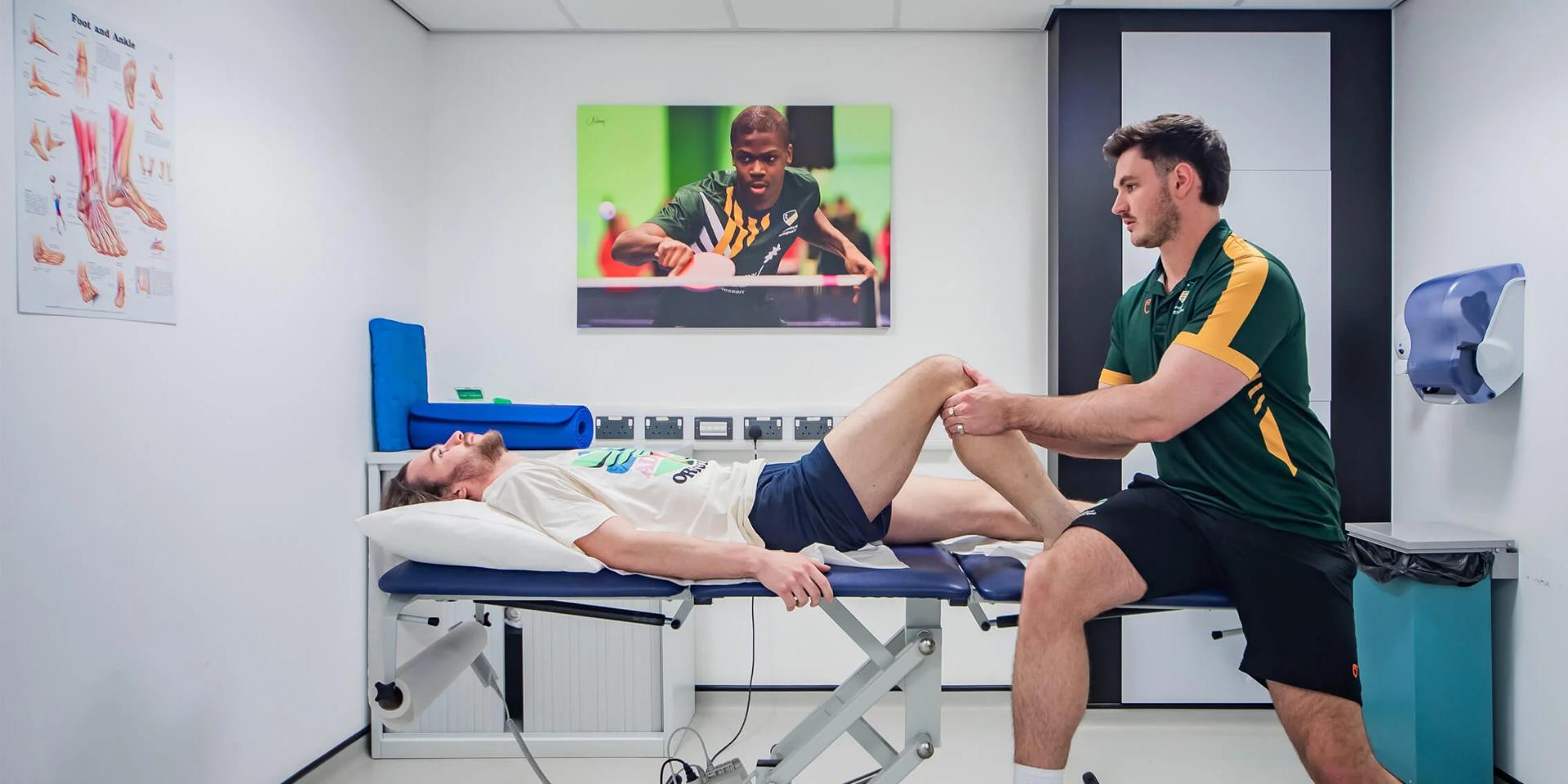
Can You See a Physiotherapist Without a Prescription in Quebec?
Wondering if you need a doctor's referral to see a physiotherapist in Quebec? Here is everything you need to know about direct access.

Can Physiotherapy Really Cure Sciatica?
The question almost every patient asks in the first session. Here is what physiotherapy can genuinely fix in sciatica, what it cannot, and exactly how a treatment plan unfolds in Côte Saint-Luc.

Shoulder Pain: How Physiotherapy Treats Rotator Cuff Injuries and Frozen Shoulder
A shoulder that hurts at night, catches when you lift your arm, or loses range month after month is almost never simple unavoidable wear. Here is how a structured physiotherapy plan restores strength and range in Côte Saint-Luc.
What Is the Difference Between Acupuncture and Physiotherapy?
Two approaches, two logics. Understand what acupuncture does, what physiotherapy does, and when to choose one, the other, or both.