
What Skin Lesions Can Be Treated with FreezPen Cryotherapy? The Complete Guide (Montreal)
Skin tags, sun spots, seborrheic keratosis, milia, sebaceous hyperplasia and some warts: the complete guide to what FreezPen cryotherapy can treat in Côte Saint-Luc — and which lesions must be medically assessed first.
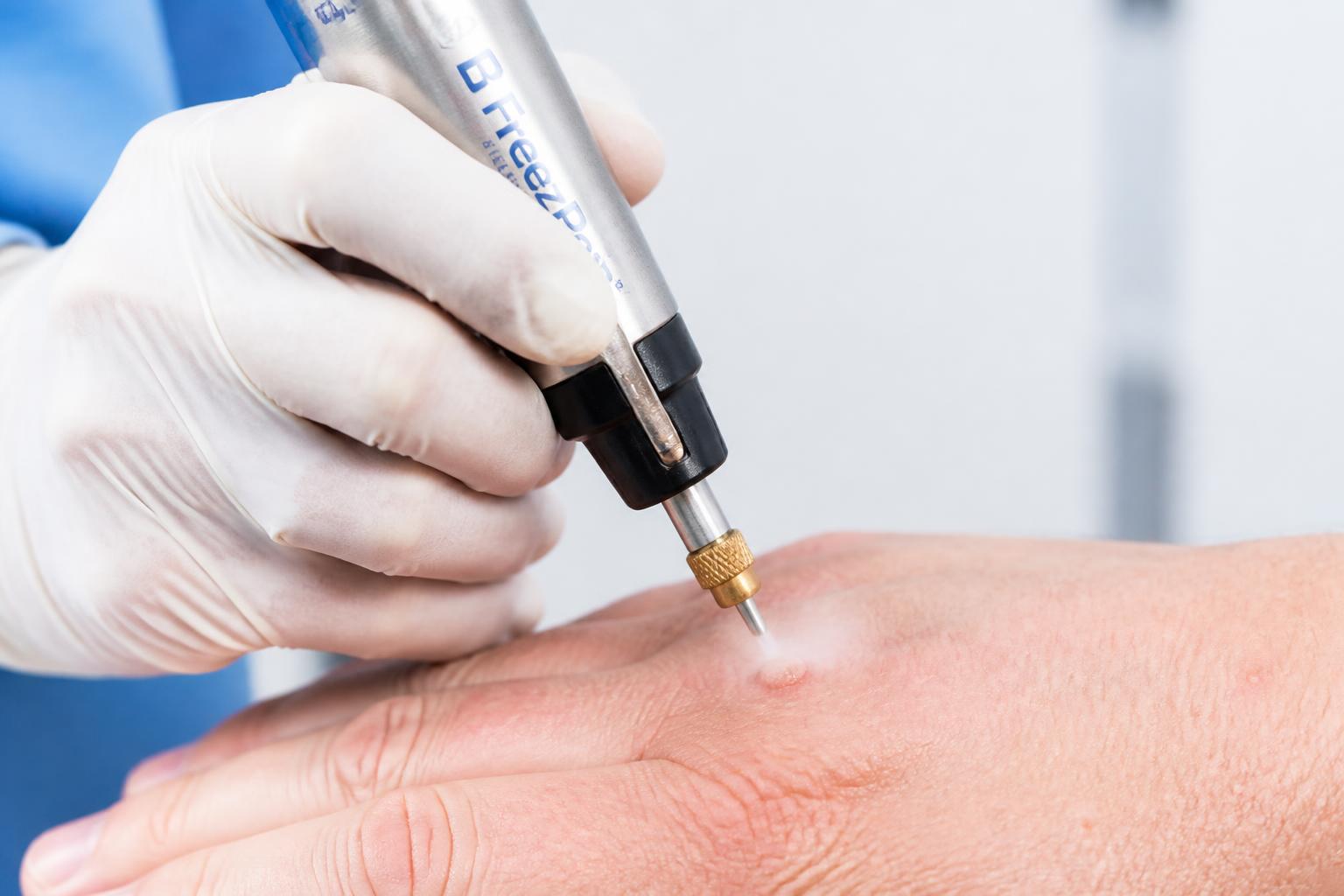
If you have ever stood in front of the mirror wondering what that little raised bump on your neck actually is, whether the brown spot on your hand is "just age", or why small white grains keep appearing under your eyes — you are asking the exact question this guide answers: what skin lesions can actually be treated with FreezPen cryotherapy, and which ones should never be frozen before a doctor has looked at them?
How FreezPen cryotherapy actually works
Cryotherapy is one of the oldest ideas in dermatology executed with modern precision. The principle is simple: cool a small volume of tissue fast enough and the water inside its cells turns to ice. Ice crystals rupture cell membranes, the tiny blood vessels feeding the lesion collapse, and the treated tissue dies and is shed as the skin renews itself over the following days and weeks.
What makes FreezPen, distributed in Canada by DermaSpark, different from the cotton swab dipped in liquid nitrogen many people remember, is control. FreezPen emits a pressurized micro-jet of nitrous oxide at roughly -89°C through an applicator that can be as fine as a fraction of a millimetre. The practitioner controls three variables with real precision: the diameter of the jet, the distance from the skin, and the number of seconds of freeze. That means the destructive cold lands on the lesion and largely stops there, instead of spreading in an uncontrolled halo across the surrounding healthy skin.
This precision is the whole reason cryotherapy has moved from a purely medical procedure into carefully selected aesthetic use. It is also why the honest answer to "can you freeze this off?" is always: it depends entirely on what "this" is.
The lesions FreezPen treats well
1. Skin tags (acrochordons)
Skin tags are soft, flesh-coloured growths that hang from a narrow stalk, typically on the neck, eyelids, underarms, under the breasts and in the groin — anywhere skin rubs against skin or clothing. They are entirely benign. They are also the single most common reason clients ask us about cryotherapy in Côte Saint-Luc.
They respond beautifully. A small pedunculated tag has a narrow blood supply through its stalk; a few seconds of freeze interrupts it. Over 24 to 72 hours the tag darkens, then dries, then falls away on its own, usually within one to three weeks. Most small tags require a single session. Larger, thicker tags may need a second visit or may be better suited to another removal method — we will tell you which at the assessment.
2. Solar lentigines — age spots and sun spots
Those flat brown patches on the backs of the hands, the forearms, the décolleté and the temples are not really "age" spots. They are sun spots: clusters of pigment produced by melanocytes that were over-stimulated by decades of ultraviolet exposure. Montreal winters do not protect anyone from this; UVA passes through cloud and glass all year, and reflected light off snow adds a surprising dose.
Because the excess pigment sits in the upper epidermis, a brief, light freeze works well. The pigmented cells are damaged, the epidermis turns over, and the spot lifts away with the micro-crust. Results are often visible within two to three weeks. Two important caveats: first, a flat brown spot must genuinely be a lentigo, not an early lentigo maligna, which is why we examine before we treat; second, this approach is for discrete spots, not for diffuse pigmentation.
If your pigmentation is melasma — the symmetrical, hormonally driven brown mask across cheeks, upper lip and forehead — cryotherapy is the wrong tool. Freezing inflames the skin, and inflammation is precisely what makes melasma worse. Those cases belong with gentle, layered protocols such as our Dermalogica chemical peels combined with strict sun protection.
3. Seborrheic keratoses
These are the waxy, warty, "stuck-on" growths that start appearing after 40 and multiply over the years, especially on the trunk, back, chest and temples. They can be tan, brown or almost black, and they often alarm people far more than they should — they are entirely benign and have no relationship to skin cancer.
Thin, flat seborrheic keratoses respond very well to a controlled freeze; they crust and lift within one to three weeks. Thicker, heaped-up lesions may need two or three sessions, because the cold has to penetrate a bulkier mass of keratin. One rule is absolute: any seborrheic keratosis that has recently changed in colour, started to itch persistently, bleed, or grow rapidly, must be examined by a physician first. Rare lesions imitate seborrheic keratoses, and we do not gamble.
4. Milia
Milia are the small, firm, white or pearly grains that appear most often around the eyes, on the cheeks and along the jaw. They are tiny keratin cysts trapped just beneath the surface — not acne, and squeezing them at home rarely ends well.
The millimetric FreezPen applicator is well suited to this delicate area precisely because it does not need to freeze a wide field. A very brief freeze disrupts the cyst wall and allows the contents to be expelled as the skin renews. In some cases, especially superficial ones, a sterile extraction is the more efficient first step, and we will recommend that instead. Choosing correctly between the two is part of the assessment.
5. Sebaceous hyperplasia
Sebaceous hyperplasia looks like small, soft, yellowish bumps with a slightly sunken centre — a little doughnut — usually on the forehead, nose and cheeks, and more common in people over 40 and in those with oily skin. It is an enlarged oil gland, not a blemish, which is why it never responds to acne products.
A short, light freeze reduces the enlarged gland and the bump flattens over the following weeks. Because the underlying gland is not removed, recurrence is common over months to years, and many clients treat maintenance-style once or twice annually. This honesty matters: anyone promising permanent one-session eradication of sebaceous hyperplasia is overselling.
6. Cherry angiomas
Cherry angiomas are the tiny bright red domes that appear on the trunk and arms from mid-life onward. They are harmless clusters of dilated capillaries. Small ones can be treated with brief, precise freezing. Larger or more vascular ones are often better handled with light-based technology, and at Réhabital we can compare that option with our SharpLight laser treatments during the consultation.
7. Certain viral warts
Warts are caused by human papillomavirus infecting the top layer of skin. Freezing does not kill the virus directly; it destroys the infected tissue and, importantly, triggers a local immune response that helps the body recognise and clear the infection.
Common warts on hands and fingers, and thin filiform warts around the face and neck, respond well and often clear in one to three sessions. Plantar warts on the sole of the foot are the hardest: they grow inward under body-weight pressure and sit beneath a thick callus, so they typically require three to four sessions two to three weeks apart, sometimes with gentle debridement of the overlying callus first. We have written a dedicated article on this: removing warts with FreezPen cryotherapy.
Genital and mucosal lesions are explicitly outside our scope and must be managed by a physician.
Lesions we will not treat — and why that protects you
This section matters more than everything above it. The single most valuable thing a good cryotherapy provider does is know when to say no.
Cryotherapy destroys tissue. It does not preserve it for analysis. If a lesion turned out to be an early melanoma, a basal cell carcinoma or a squamous cell carcinoma, freezing it would erase what a pathologist needed to see while leaving the deeper disease untouched — and the client would walk away reassured for months while the real problem progressed. That is an unacceptable trade.
So we do not treat, and we refer to a physician or dermatologist, when a lesion shows any of the following:
- Asymmetry — one half does not mirror the other.
- Irregular borders — notched, blurred or scalloped edges.
- Multiple colours — mixed brown, black, red, white or blue within one lesion.
- Diameter greater than roughly 6 mm, especially if it is new or growing.
- Evolution — any change in size, shape, colour, texture or sensation over weeks or months.
- Bleeding, crusting or a sore that will not heal after several weeks.
- Persistent itch, tenderness or a pearly translucent surface with visible fine vessels.
- Any pigmented lesion the client cannot account for — "I don't remember it being there last year" is a reason to refer, not to freeze.
We also avoid or postpone treatment in specific contexts: cold urticaria or cryoglobulinemia, Raynaud's phenomenon in the area to be treated, active infection or open wound at the site, uncontrolled diabetes or significant peripheral vascular disease in the treatment zone, poor healing history with keloid formation, and pregnancy for elective cosmetic procedures. None of these are dramatic — they simply mean the timing or the method should change.
What a session at Réhabital actually looks like
Every cryotherapy request in our Côte Saint-Luc clinic starts the same way: with an assessment, not a treatment. We examine the lesion in good light, ask how long it has been there and whether it has changed, and confirm that it matches a benign pattern FreezPen is designed for. If there is any doubt at all, the visit ends with a referral rather than a freeze, and we consider that a successful appointment.
If the lesion is appropriate, the treatment itself is quick. The area is cleaned; the applicator is held a few millimetres from the skin; the freeze is delivered in cycles measured in seconds, often with a brief thaw between cycles because a freeze–thaw–freeze pattern is more effective than one long freeze. You will feel a sharp cold sting that peaks quickly and fades within a minute or two. Most people compare it to an ice cube held firmly against the skin. A single small lesion takes only a few minutes; plan 20 to 30 minutes for the whole visit.
Healing: a realistic timeline
- Minutes 0–30: the treated spot blanches white, then turns red with a small halo. Mild stinging.
- Hours 2–24: possible swelling, and sometimes a small blister. A blister is a normal cryotherapy response, not a complication — leave it intact.
- Days 2–7: the lesion darkens and a crust forms. This is the treated tissue dying and preparing to shed.
- Days 7–21: the crust detaches on its own, revealing pink new skin. Do not help it along; picking is the main cause of scarring.
- Weeks 3–12: the pink fades toward your normal tone. Temporary lightening can persist for a few months, particularly on darker skin.
Aftercare is straightforward and it genuinely changes the outcome: keep the area clean and dry, apply a healing ointment if we recommend one, never scrape the crust, avoid pools, saunas and hot tubs until the skin has closed, and use broad-spectrum SPF 30 to 50 daily on the treated area for at least a month. Sun on freshly healed skin is the fastest route to a dark post-inflammatory mark, which is a frustrating way to undo good work.
When another treatment is the better answer
Cryotherapy is excellent at what it does and poor at everything else. Being clear about that is part of good practice:
- Diffuse pigmentation, dullness and texture across a whole zone respond better to chemical peels, which resurface a field rather than a point.
- Vascular redness, rosacea and broad sun damage are usually better served by laser and IPL technology.
- Acne scarring and collagen loss call for microneedling, not freezing.
- Melasma requires the gentlest possible approach plus daily photoprotection — heat and inflammation both aggravate it.
For a broader comparison of these options on pigmentation specifically, see our article on chemical peels vs laser vs cryotherapy for dark spots, and our guide to cryotherapy compared with laser and electrocautery.
Cryotherapy in Côte Saint-Luc and the Montreal West End
Réhabital is located in Côte Saint-Luc, minutes from Cavendish Mall, and clients come to us for skin lesion treatment from Hampstead, Notre-Dame-de-Grâce, Snowdon, Montreal West, Westmount, Saint-Laurent and Côte-des-Neiges. Our aesthetic team assesses each lesion individually, explains what to expect in plain language, and states clearly when a medical opinion should come first.
You can read more about the technique on our dedicated targeted FreezPen cryotherapy page, or explore the full range of our aesthetic care services in Côte Saint-Luc.
The bottom line
FreezPen cryotherapy is a precise, fast and well-tolerated way to remove benign, superficial, clearly identified skin lesions: skin tags, sun spots, seborrheic keratoses, milia, sebaceous hyperplasia, small cherry angiomas and many warts. Sessions are short, downtime is minimal, and results on the right lesion are excellent.
What it is not, is a shortcut around diagnosis. Any lesion that is new, changing, asymmetric, multi-coloured, bleeding or simply unexplained deserves a medical assessment before anything is frozen. If you bring us a lesion like that, we will tell you honestly and help you get to the right professional — because the goal was never just to remove a bump. It was to make sure the right thing happened to your skin.
To have a lesion assessed at our Côte Saint-Luc clinic, contact Réhabital or book an aesthetic consultation online.
Continue exploring cryotherapy at Réhabital
Frequently asked questions
Related conditions we treat
Related articles
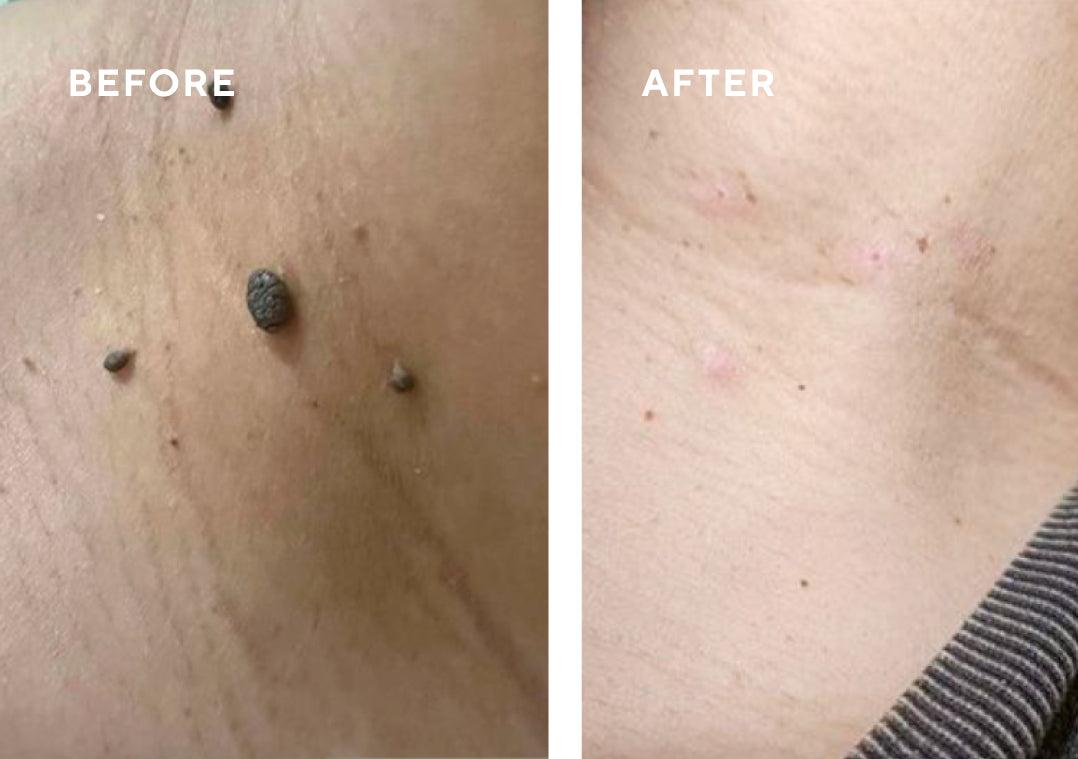
FreezPen Cryotherapy: Precise Skin Lesion Treatment in Montreal
Discover FreezPen cryotherapy, a cutting-edge technology used at Réhabital Côte Saint-Luc to gently remove warts, age spots, skin tags and benign skin lesions.
FreezPen vs. Liquid Nitrogen: What’s the Difference for Skin Lesion Removal?
Precision, treated area size, indications, treatment experience and recovery: an honest comparison of FreezPen cryotherapy and traditional liquid nitrogen for removing skin tags, spots and warts in Montreal.
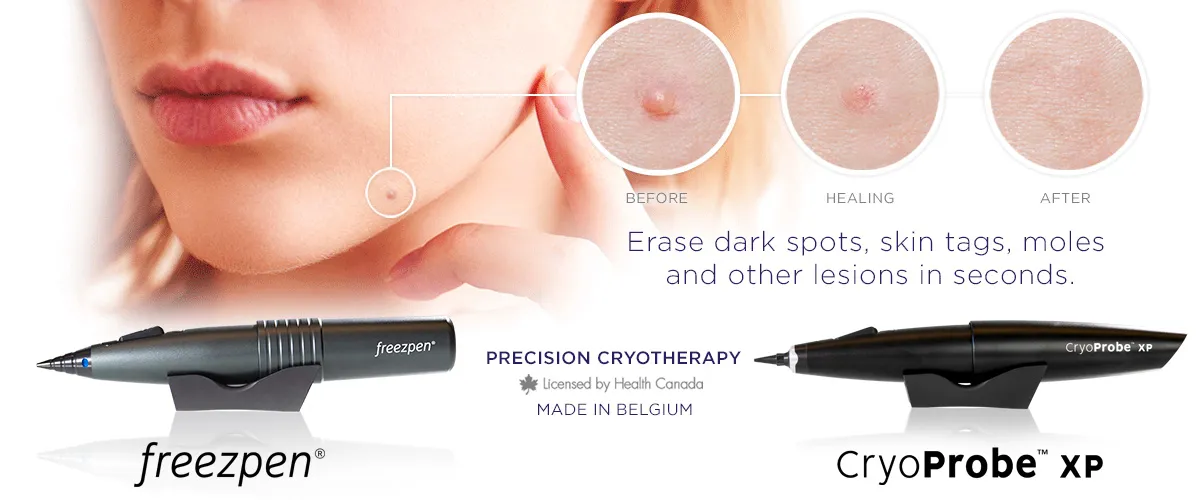
Cryotherapy for Skin Tags, Warts & Skin Lesions: A Safe Non-Invasive Solution in Côte Saint-Luc
How CryoProbe™ XP and FreezPen® technology removes skin tags, warts, molluscum, fibromas and other benign skin lesions in seconds — with Liliana Ciocoi at Réhabital.
Cryotherapy vs Laser vs Electrocautery: Which Is Best for Removing a Benign Skin Lesion?
A clear comparison of the three most-used methods for removing skin tags, warts, spots and angiomas — with the ABCDE rule and the recommendations of Liliana Ciocoi in Côte Saint-Luc.
Goodbye Age Spots & Solar Lentigo: How CryoProbe Cryotherapy Reveals Younger-Looking Skin
Why targeted cryotherapy often outperforms laser and chemical peels for sun-induced dark spots on the face, hands and décolleté — with Liliana Ciocoi in Côte Saint-Luc.
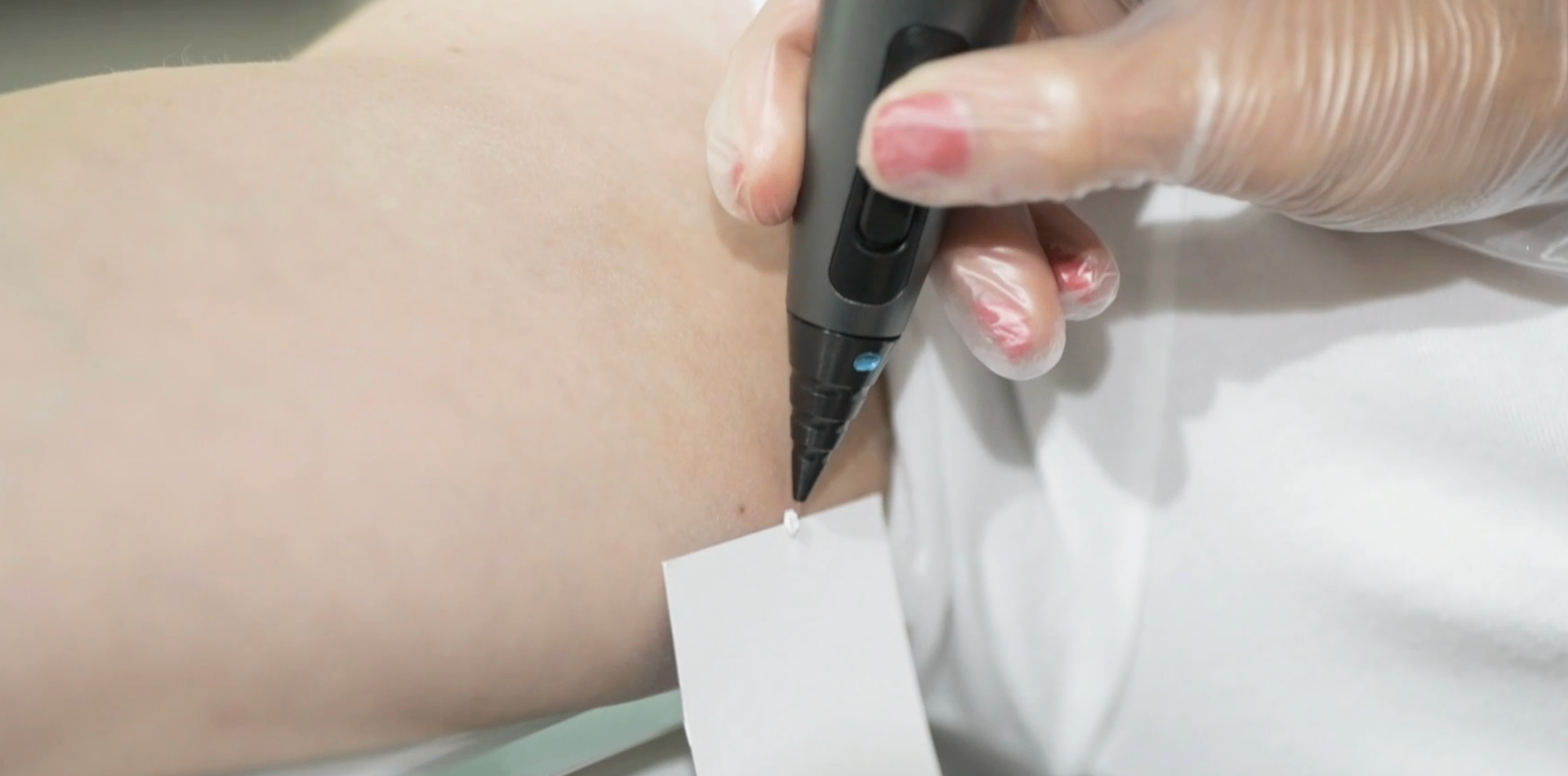
Removing Warts with FreezPen Cryotherapy (DermaSpark) in Côte Saint-Luc
How the FreezPen cryotherapy pen by DermaSpark removes common, plantar and filiform warts in seconds with medical precision at Réhabital clinic in Côte Saint-Luc.