
Cryotherapy vs Laser vs Electrocautery: Which Is Best for Removing a Benign Skin Lesion?
A clear comparison of the three most-used methods for removing skin tags, warts, spots and angiomas — with the ABCDE rule and the recommendations of Liliana Ciocoi in Côte Saint-Luc.
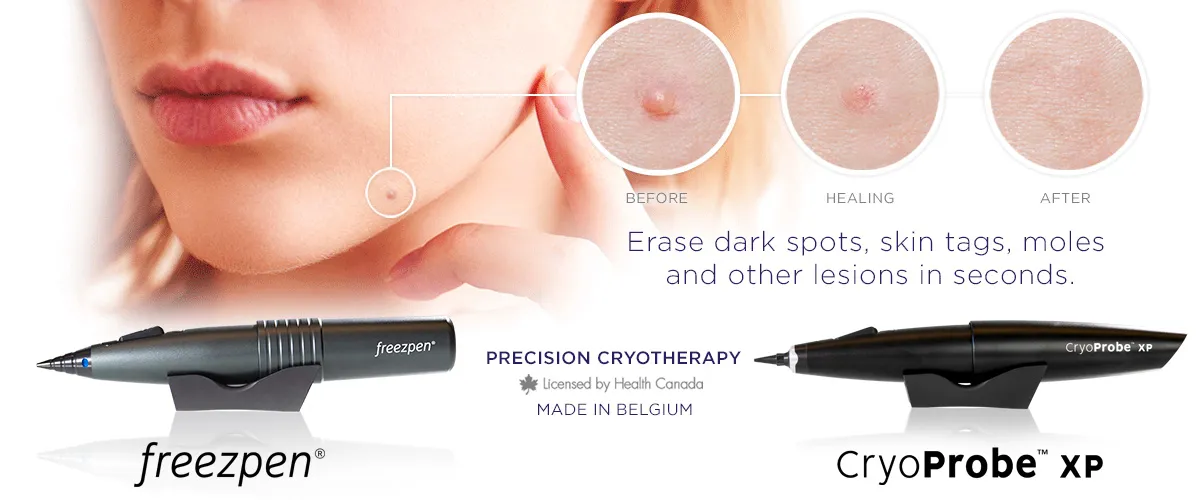
Three Tools, One Goal — But Very Different Logic
When someone walks into our Côte Saint-Luc clinic and says “I want this off,” they often arrive with a method already in mind: “I want laser,” or “my neighbor got it burned off.” The honest answer is that there are three mainstream tools for removing benign skin lesions and the right one depends entirely on the lesion. This article is a neutral comparison of cryotherapy, laser and electrocautery, written from the perspective of what produces the best cosmetic result with the least risk.
It also explains the ABCDE rule — the screening step that comes before any choice of tool — and how Liliana Ciocoi, our certified esthetician at Réhabital, uses it on every single client.
Before Any Tool: The ABCDE Rule
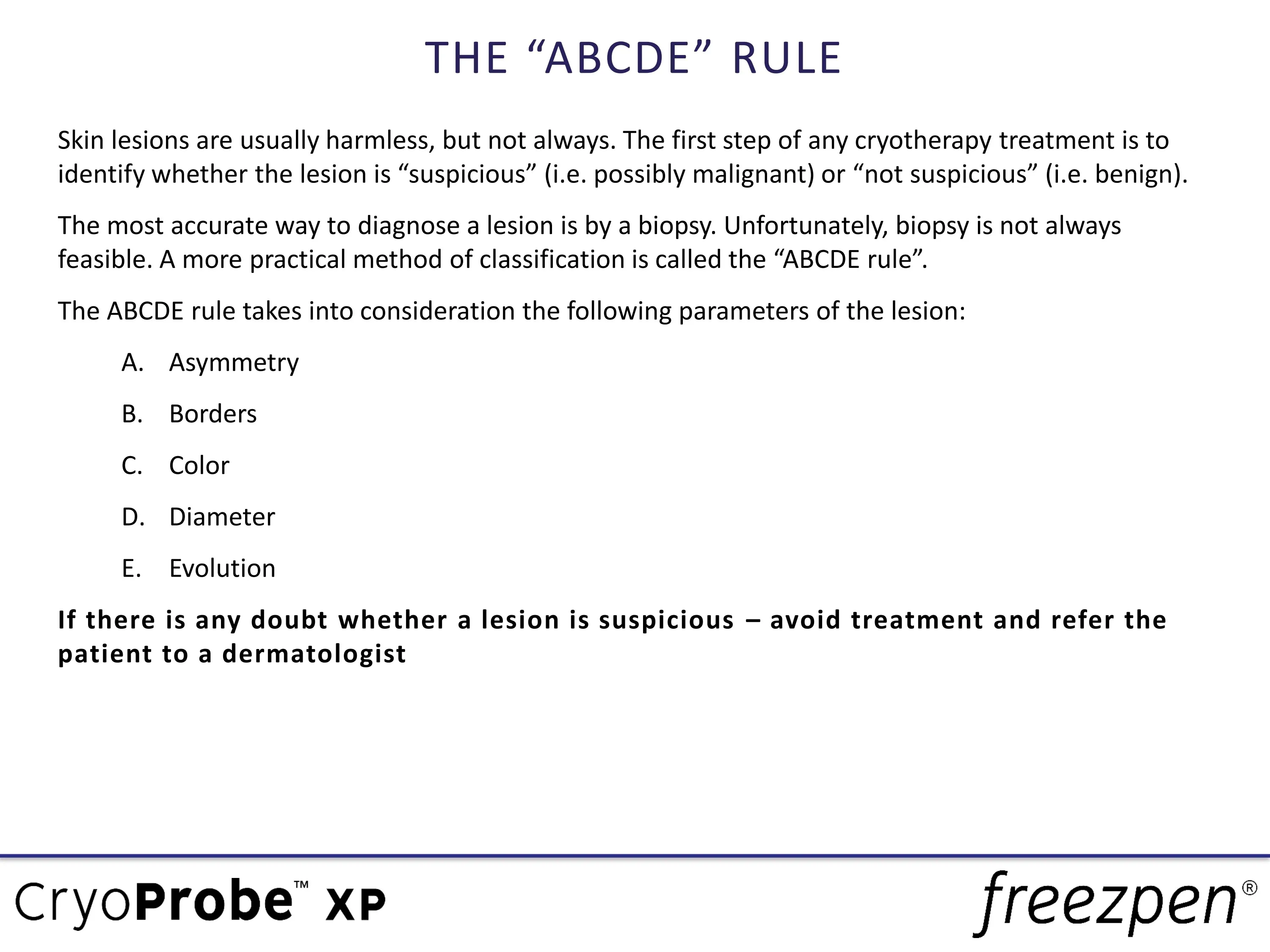
Skin lesions are usually harmless, but not always. The first step of any cryotherapy, laser or electrocautery treatment is to identify whether the lesion is “suspicious” (possibly malignant) or “not suspicious” (benign). The most accurate way to diagnose a lesion is a biopsy — unfortunately, biopsy is not always feasible. A more practical method of classification is the ABCDE rule:
- A — Asymmetry. Benign lesions are usually symmetrical; one half mirrors the other.
- B — Borders. Benign borders are smooth and regular. Jagged or fuzzy borders are a warning.
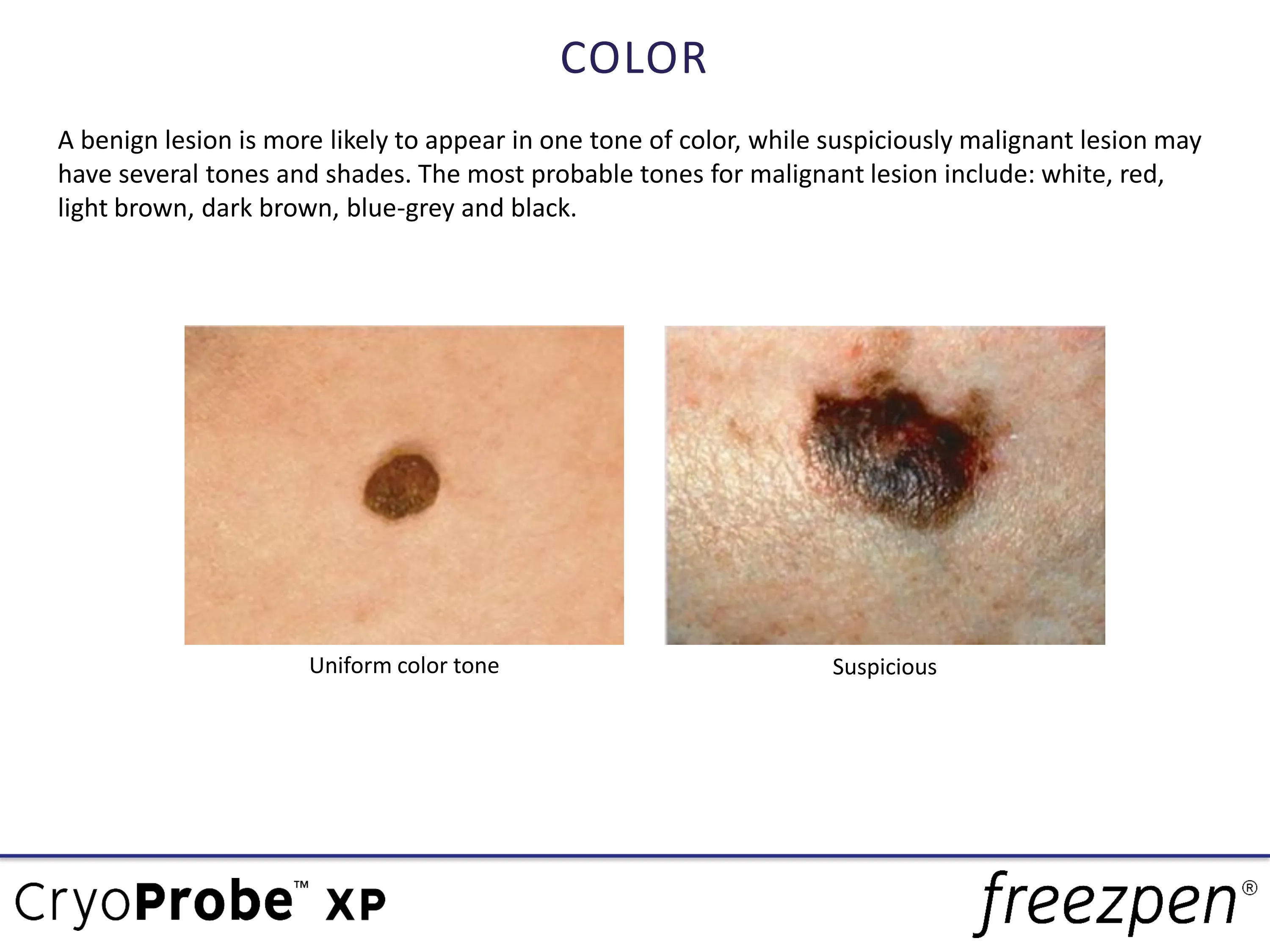
- C — Colour. A benign lesion tends to have one uniform tone. Several colours — white, red, light brown, dark brown, blue-grey, black — within the same lesion are suspicious.
- D — Diameter. Lesions larger than 6 mm warrant closer inspection.
- E — Evolution. Any lesion that changes in size, colour, shape, height or symptoms (itching, bleeding, crusting) needs medical evaluation.
If there is any doubt — we do not treat. The lesion is referred to a physician or dermatologist for evaluation and if needed, biopsy. This is a non-negotiable rule at Réhabital, regardless of which tool is being considered.
Method 1: Targeted Cryotherapy (CryoProbe™ XP)
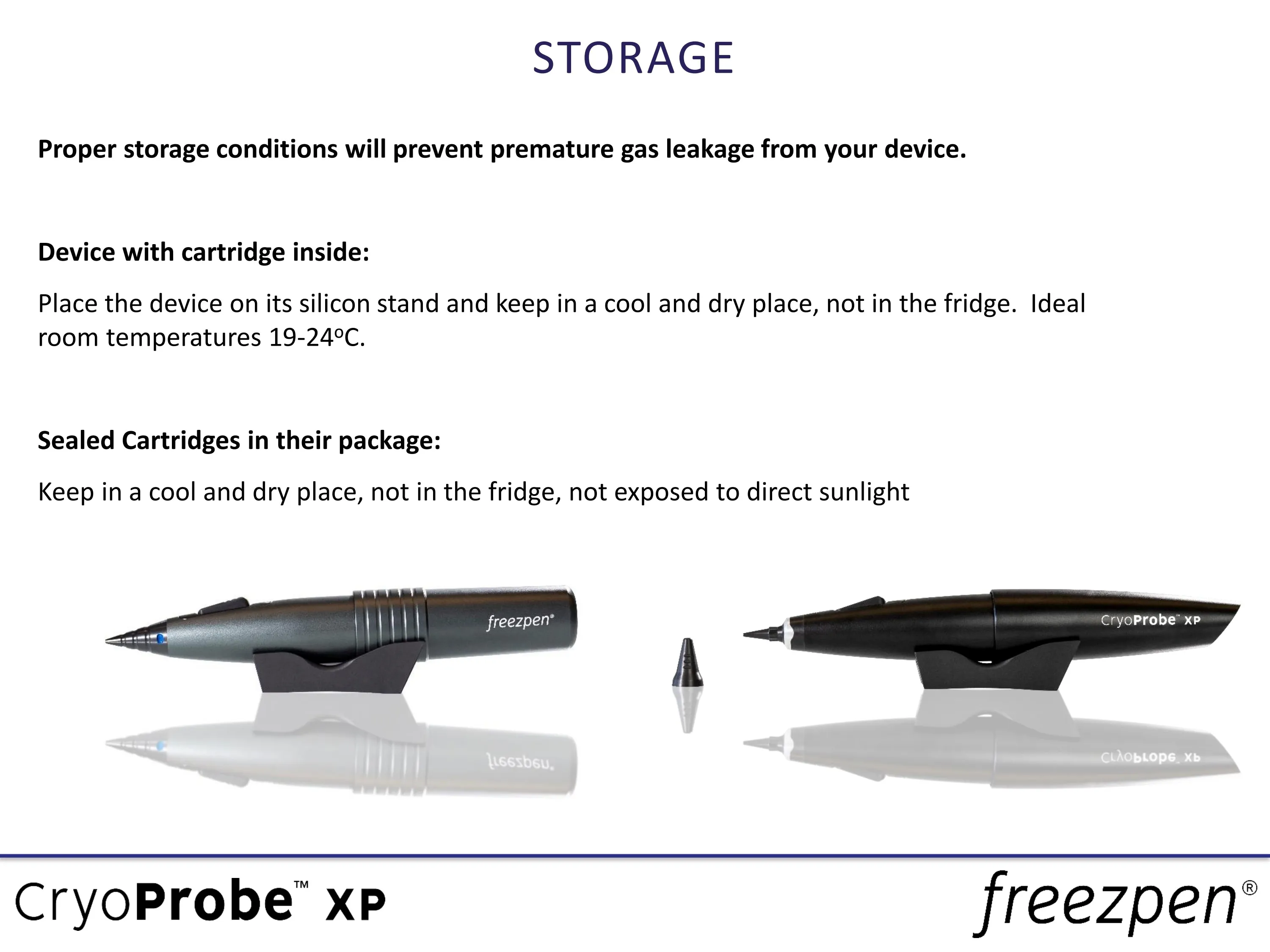
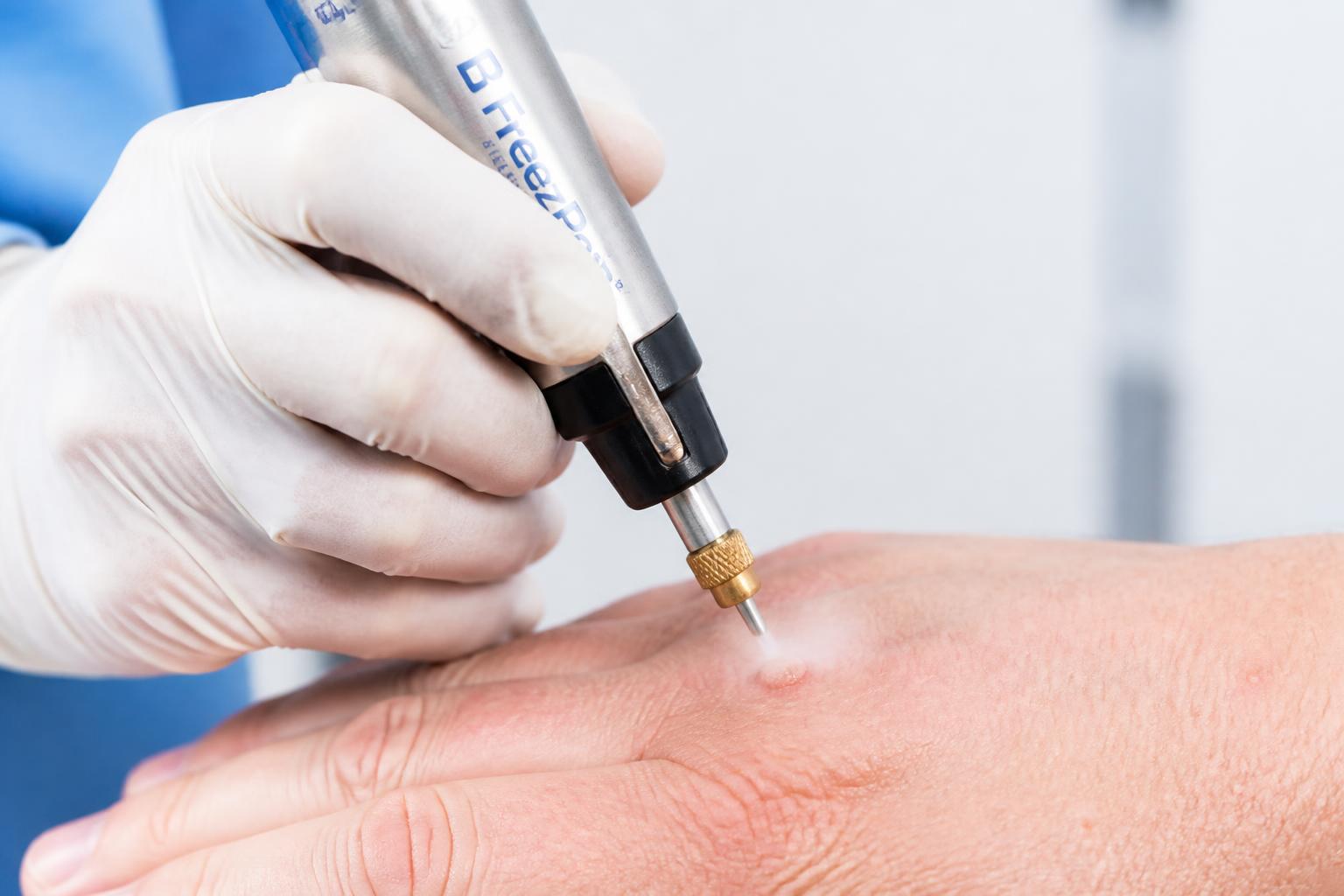
How it works. The CryoProbe™ XP delivers nitrous oxide at -89°C through a sub-millimetric jet. Ice crystals form inside the cells of the lesion, the membranes rupture and apoptosis is triggered. Healthy tissue 1 mm away is preserved.
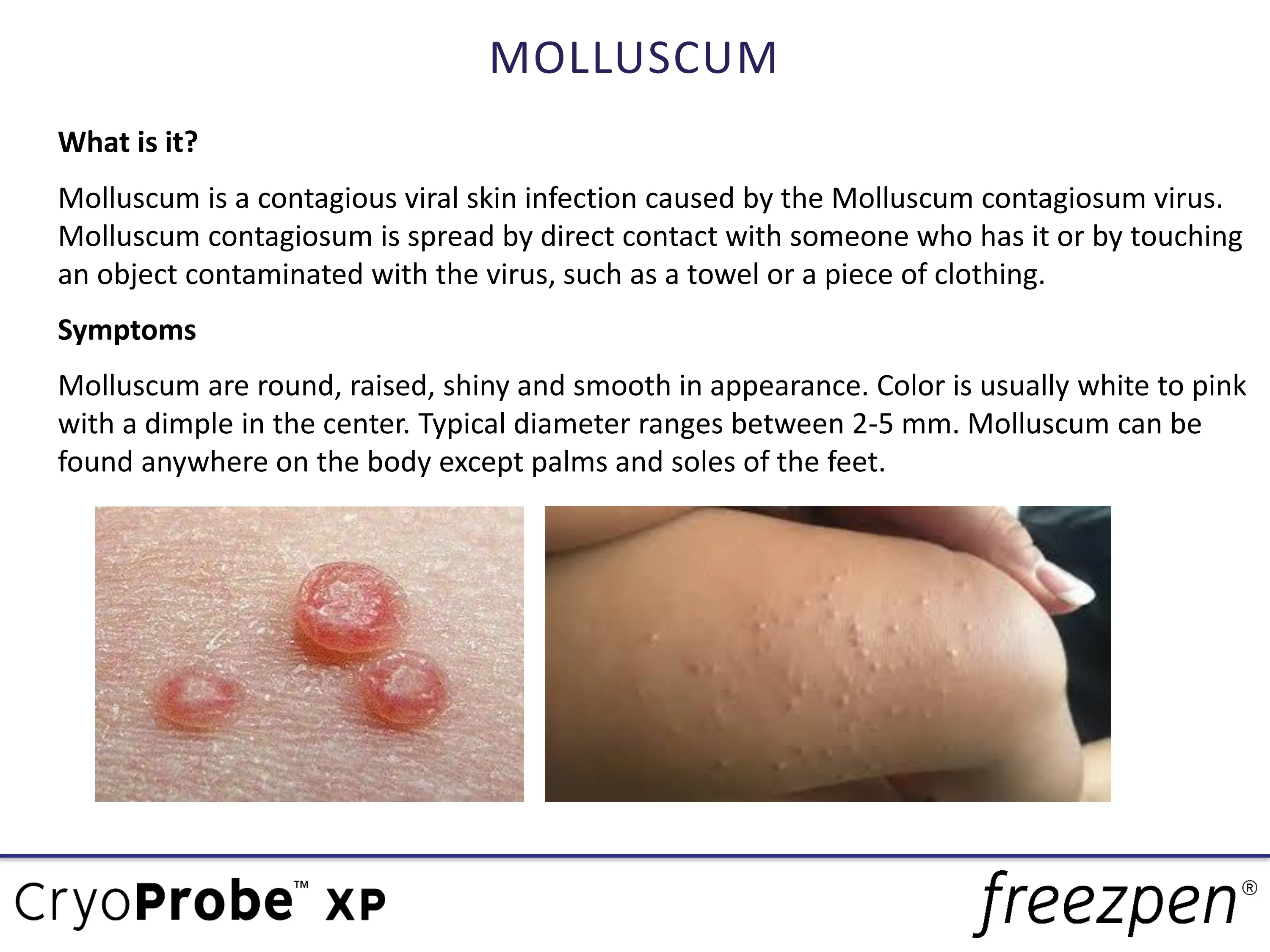
Best for: skin tags, common warts, plantar warts, filiform warts, molluscum, milia, cherry angiomas, solar lentigos, seborrheic keratosis, sebaceous hyperplasia, small fibromas.
Strengths:
- Most precise of the three (1 to 5 mm tip).
- Lowest pain — no anesthesia required for most lesions.
- Safe for all Fitzpatrick skin tones when timing is adapted.
- Excellent cosmetic outcome on face, hands, décolleté.
- Affordable per lesion.
Limits:
- Less efficient when there are 30+ scattered spots over a large area — multiple sessions add up.
- Cannot treat very deep or very vascularized lesions in one cycle.
- Healing involves a small scab for 1 to 3 weeks.
Method 2: Laser (Erbium, CO₂, Q-Switched, IPL)
How it works. A specific wavelength of light is selectively absorbed by a chromophore — water (erbium, CO₂), melanin (Q-switched, IPL) or hemoglobin (vascular lasers). The absorbed energy vaporizes or fragments the target.
Best for: diffuse hyperpigmentation across a large area (IPL), small vascular lesions like rosacea telangiectasias (vascular lasers), resurfacing of crepey skin (CO₂, erbium), tattoo removal (Q-switched).
Strengths:
- One session can treat a wide area with many small targets at once.
- Resurfacing lasers also improve skin texture and collagen.
- Vascular lasers are excellent for cherry angiomas in clusters and rosacea.
Limits:
- Risk of post-inflammatory hyperpigmentation on Fitzpatrick IV-VI if poorly calibrated.
- Strict pre and post sun avoidance, often 4 weeks each side.
- Higher cost per session — even though the per-lesion cost can be lower for large numbers.
- Topical anesthesia often needed.
Method 3: Electrocautery / Radiofrequency
How it works. A fine metal tip heated by electric current (or high-frequency radio waves) is touched to the lesion. The heat coagulates and vaporizes the tissue. It is the classic method physicians have used for decades on skin tags, larger warts and certain vascular lesions.
Best for: larger skin tags on the neck, pedunculated lesions with a thin stalk, certain vascular lesions in a medical setting.
Strengths:
- Very fast on pedunculated lesions.
- Hemostatic — controls bleeding at the same time.
- Effective on larger or thicker lesions where cryotherapy would need many cycles.
Limits:
- Physical burn of surrounding tissue is harder to limit than the freezing halo of a precision cryoprobe.
- Higher risk of small flat scar or pigment change, especially on the face.
- Requires topical or injected anesthesia in many cases.
- Performed primarily in physician offices, not aesthetic clinics.
Head-to-Head: A Practical Comparison
For the lesions our Côte Saint-Luc clients ask about most, here is how we typically advise:
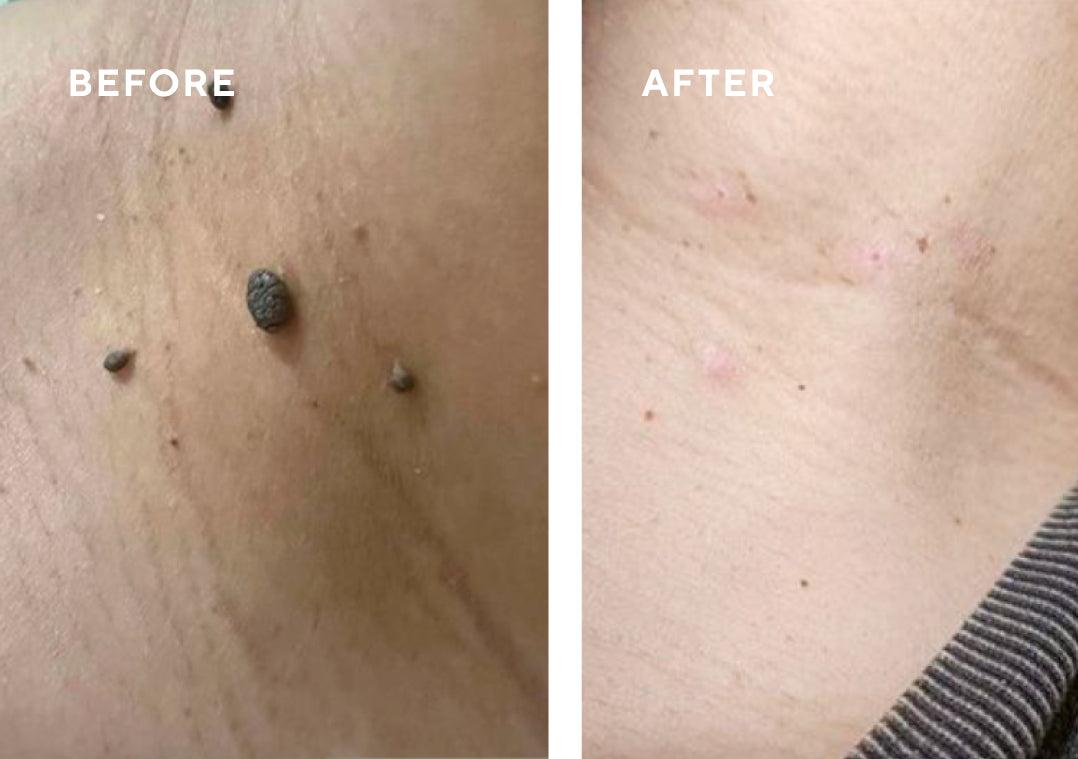
- Skin tags (small, multiple, neck): Cryotherapy is the cleanest, fastest option.
- Skin tags (large, pedunculated): Electrocautery in a physician setting can be faster.
- Common warts on hands: Cryotherapy, often 2 to 3 sessions.
- Plantar warts: Cryotherapy combined with at-home keratolytic care.
- Solar lentigos (few, defined): Cryotherapy.
- Solar lentigos (many, diffuse on chest): IPL or fractional laser.
- Cherry angiomas (isolated): Cryotherapy.
- Cherry angiomas (many on torso): Vascular laser if available.
- Sebaceous hyperplasia on face: Cryotherapy with short freeze times.
- Rosacea telangiectasias: Vascular laser — not cryotherapy.
- Texture and overall pigmentation: Fractional laser or chemical peel.
This is why no single method is universally “best.” The right answer is the one matched to your lesion, location and skin type.
How Liliana Builds Your Plan at Réhabital
When you book a consultation with Liliana Ciocoi, the first 15 minutes are spent doing exactly one thing: looking. Each lesion is examined under magnification and against the ABCDE rule. The lesions deemed clearly benign are photographed, measured and sorted into three columns: cryotherapy now, laser referral, or medical referral. You leave with a written plan, an honest estimate of how many sessions you’ll need and a clear understanding of recovery for each option.
Liliana is certified on the CryoProbe™ XP and FreezPen® systems, trained in Dermalogica Pro brightening protocols and works closely with our laser team — so the recommendation you receive is the one that fits your case, not a default to the one tool a practitioner happens to own.
Book your lesion assessment with Liliana →
Going Deeper
If you would like more detail on the cryotherapy device specifically, visit our targeted FreezPen cryotherapy page. For complete walkthroughs by lesion type, read our companion articles on cryotherapy for skin tags, warts and lesions and on cryotherapy for age spots and solar lentigo.
Frequently Asked Questions
1. Which method is the least painful?
Targeted cryotherapy is usually the least painful for small benign lesions — the cold partially numbs the area.
2. Which leaves the smallest scar?
Cryotherapy and erbium laser typically leave the smallest cosmetic mark on superficial benign lesions.
3. Can I remove a mole at the clinic?
No. Moles require medical assessment and sometimes biopsy — we refer those out.
4. What is the ABCDE rule?
Asymmetry, Borders, Colour, Diameter, Evolution — a quick screen applied to any pigmented lesion before treatment.
5. How do I choose between methods?
Liliana assesses the lesion, location, your skin tone and the number of lesions, then recommends the best option for your case.
6. Where is your clinic?
Réhabital is in Côte Saint-Luc, near Cavendish Mall, serving Hampstead, NDG, Snowdon, Montreal West, Westmount and the West End of Montreal.
Frequently asked questions
Related articles
Cryotherapy for Skin Tags, Warts & Skin Lesions: A Safe Non-Invasive Solution in Côte Saint-Luc
How CryoProbe™ XP and FreezPen® technology removes skin tags, warts, molluscum, fibromas and other benign skin lesions in seconds — with Liliana Ciocoi at Réhabital.
FreezPen vs. Liquid Nitrogen: What’s the Difference for Skin Lesion Removal?
Precision, treated area size, indications, treatment experience and recovery: an honest comparison of FreezPen cryotherapy and traditional liquid nitrogen for removing skin tags, spots and warts in Montreal.
What Skin Lesions Can Be Treated with FreezPen Cryotherapy? The Complete Guide (Montreal)
Skin tags, sun spots, seborrheic keratosis, milia, sebaceous hyperplasia and some warts: the complete guide to what FreezPen cryotherapy can treat in Côte Saint-Luc — and which lesions must be medically assessed first.
FreezPen Cryotherapy: Precise Skin Lesion Treatment in Montreal
Discover FreezPen cryotherapy, a cutting-edge technology used at Réhabital Côte Saint-Luc to gently remove warts, age spots, skin tags and benign skin lesions.
Goodbye Age Spots & Solar Lentigo: How CryoProbe Cryotherapy Reveals Younger-Looking Skin
Why targeted cryotherapy often outperforms laser and chemical peels for sun-induced dark spots on the face, hands and décolleté — with Liliana Ciocoi in Côte Saint-Luc.
Removing Warts with FreezPen Cryotherapy (DermaSpark) in Côte Saint-Luc
How the FreezPen cryotherapy pen by DermaSpark removes common, plantar and filiform warts in seconds with medical precision at Réhabital clinic in Côte Saint-Luc.