
FreezPen vs. Liquid Nitrogen: What’s the Difference for Skin Lesion Removal?
Precision, treated area size, indications, treatment experience and recovery: an honest comparison of FreezPen cryotherapy and traditional liquid nitrogen for removing skin tags, spots and warts in Montreal.
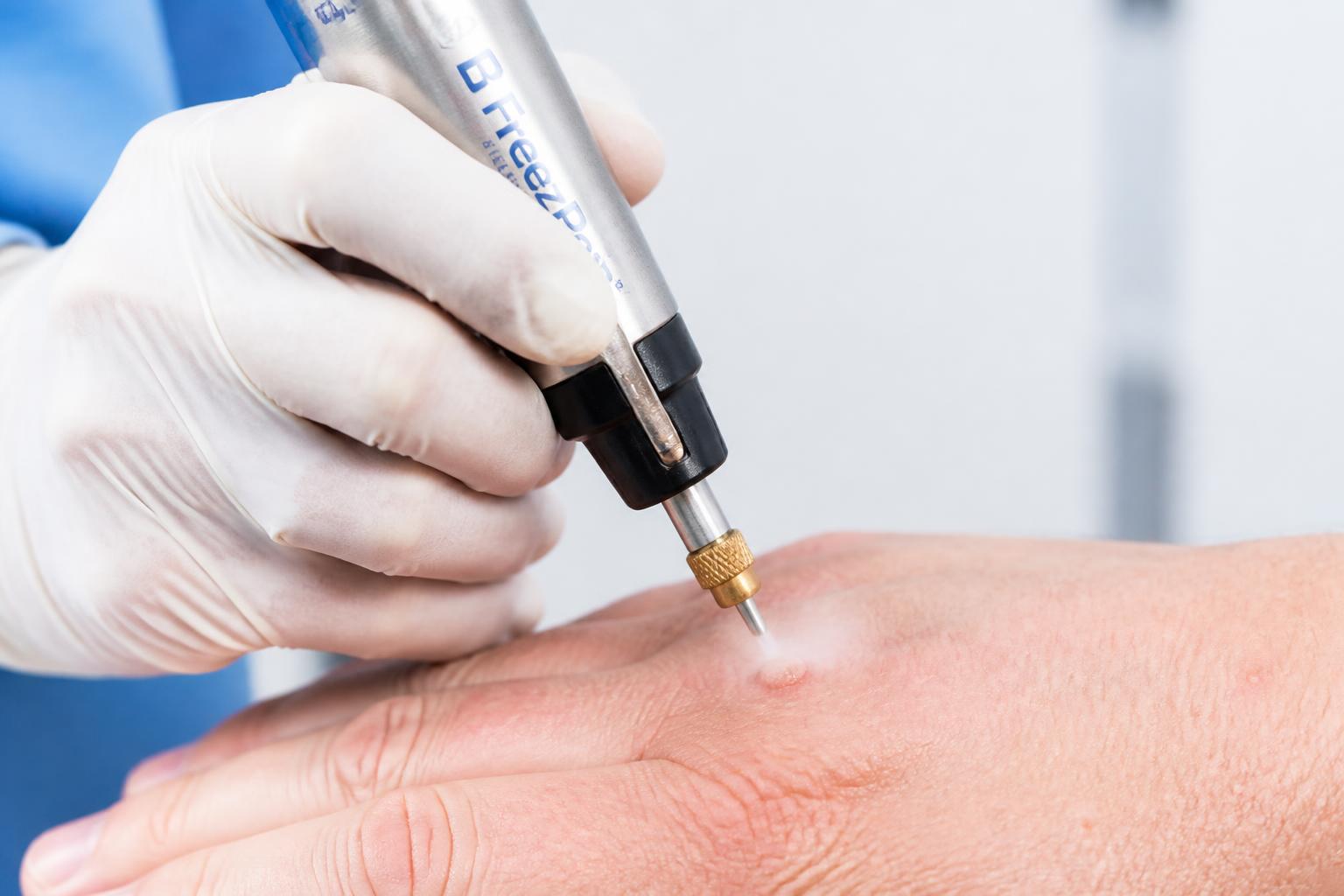
Almost everyone has heard of getting something "frozen off". For decades that meant one thing: a cotton swab dipped in liquid nitrogen, or a hissing spray gun in a doctor's office. So when a clinic offers FreezPen cryotherapy instead, the natural question is: what is the difference, and is one actually better?
The honest answer is that they are two different tools built around the same physics, and each one wins in different situations. This article explains the real differences — cryogen, temperature, precision, treated area, indications, what the treatment feels like, and recovery — without pretending one device is superior in every case.
The physics both methods share
Cryotherapy destroys tissue by cooling it fast. When a cell freezes rapidly, ice crystals form inside and outside it, membranes rupture, and the cell dies. At the same time, the microvessels supplying the lesion constrict and clot, cutting off the blood supply. Over the following days the dead tissue darkens, crusts, and is shed as the skin regenerates from below.
Both liquid nitrogen and FreezPen do exactly this. The differences are entirely about how cold, how deep, how wide, and how controllable the freeze is.
Liquid nitrogen: the traditional standard
Liquid nitrogen boils at -196°C. It is the coldest practical cryogen in clinical use and has been the backbone of dermatological cryosurgery for over half a century.
It is applied in three main ways: with a cotton-tipped applicator dipped in a flask, with an open spray gun that projects a cone of cryogen, or with a metal contact probe. The spray technique is fast and can cover a broad area in seconds.
Its strengths are real. Extreme cold penetrates thick keratin and bulky lesions efficiently, which is why nitrogen remains standard for actinic keratoses, thick hyperkeratotic warts and various medical indications requiring aggressive destruction. Field treatment — freezing a whole sun-damaged zone rather than one spot — is something only a broad spray can do practically.
Its limitations are equally real. A swab or spray does not stop precisely at the lesion border; cold spreads laterally through tissue, so a halo of healthy skin is frozen too. The dose is harder to quantify: how much nitrogen the swab holds, how fast it evaporates on the way to the skin, and how long the operator holds it are all somewhat variable. Blisters tend to be larger, healing zones wider, and the risk of a lasting pale mark higher — especially on deeper skin tones, where melanocytes are more vulnerable to cold.
There is also a logistics dimension. Liquid nitrogen must be stored in a cryogenic dewar, evaporates continuously whether used or not, and needs regular resupply. In a small clinic that means the cryogen can be at variable levels between deliveries.
FreezPen: precision cryotherapy
FreezPen, distributed in Canada by DermaSpark, uses nitrous oxide from a sealed pressurized cartridge, delivering roughly -89°C as a fine micro-jet through interchangeable applicators, some as narrow as a fraction of a millimetre.
It is warmer than liquid nitrogen. That sounds like a disadvantage until you consider what most aesthetic lesions actually need. A 2 mm skin tag on an eyelid does not need -196°C; it needs a few seconds of cold applied to exactly 2 mm and nowhere else. FreezPen makes that possible, because the operator controls jet diameter, working distance and freeze duration to the second, and the pressurized jet gives a consistent output from the first treatment of the day to the last.
Its strengths: millimetric targeting, minimal collateral freezing of healthy skin, better tolerance in delicate areas such as around the eyes, smaller blisters, faster and more contained healing, and lower risk of a wide pale halo. It is also more predictable to dose, which matters when treating several small lesions in one visit.
Its limitations: it is not the ideal tool for treating a broad field in one pass, and very thick, deep or heavily keratinised lesions may need more sessions than a nitrogen approach would require. It is also, correctly, not the tool for medical or pre-cancerous lesions, which belong with a physician.
Side by side
Temperature and depth
Liquid nitrogen at -196°C destroys deeper and faster. FreezPen at -89°C destroys effectively but more superficially per cycle. For a thin lentigo or a small skin tag, the extra 100 degrees add nothing but collateral damage. For a thick plantar wart, they help.
Precision and treated area
This is FreezPen's decisive advantage. A jet you can aim at a single millimetre is a fundamentally different instrument from a swab that wets a 5 to 10 mm patch. Conversely, if you need to treat a 4 cm field of sun damage, a nitrogen spray gun does in ten seconds what FreezPen would do lesion by lesion.
Predictability of dose
FreezPen delivers a consistent, pressurized output. Liquid nitrogen dosing depends on technique, swab saturation and evaporation. Experienced practitioners compensate for this well, but the device itself is less standardised.
The treatment experience
Most people describe liquid nitrogen as sharper and more prolonged — a deep, aching cold that lingers a little. FreezPen is usually described as a quick, contained sting that fades within a minute or two. Neither typically requires anesthesia for small lesions, and location matters as much as the device: the sole of the foot and the eyelid are sensitive regardless of the cryogen.
Recovery
With FreezPen, expect redness, sometimes a small blister within 24 hours, crusting by day three to seven, and separation of the crust between day seven and day twenty-one. With liquid nitrogen the same sequence occurs but often with a larger blister and a wider zone of redness, so the visible healing phase can be a little longer and more noticeable.
Pigment risk
Both can cause temporary hypopigmentation, because melanocytes are among the most cold-sensitive cells in the skin. Wider, deeper freezing raises that risk, so nitrogen carries the higher statistical risk — but an aggressively dosed FreezPen treatment can do it too. On deeper skin tones, both should be dosed conservatively and staged across visits.
Which lesions suit which method
- Small skin tags (neck, eyelids, underarms): FreezPen is usually the better fit — precise, comfortable, minimal halo.
- Flat sun spots and age spots: FreezPen handles discrete spots elegantly; nitrogen may be used for broader photodamaged fields under medical care.
- Thin seborrheic keratoses: both work; FreezPen gives a tidier treated area.
- Thick, heaped seborrheic keratoses: nitrogen's depth can be an advantage, though FreezPen succeeds over two to three sessions.
- Milia and sebaceous hyperplasia: FreezPen, comfortably — these are precision jobs on facial skin.
- Common and filiform warts: both are effective.
- Thick plantar warts: nitrogen penetrates faster; FreezPen works well with callus reduction first and a three to four session protocol.
- Actinic keratoses and pre-cancerous lesions: liquid nitrogen, medically, with a physician — never an aesthetic appointment.
- Any suspicious or undiagnosed lesion: neither. It needs assessment and possibly a biopsy first, because freezing destroys the tissue a pathologist would need.
That last point is not a formality. Cryotherapy of any kind removes the evidence. If a lesion is asymmetric, multi-coloured, growing, bleeding, itching persistently or simply new and unexplained, it must be evaluated by a physician before anyone freezes it. We hold that line at Réhabital regardless of how much a client would prefer a quick fix, and we explain the reasoning in detail in our guide to which skin lesions FreezPen cryotherapy can treat.
What this means practically in Montreal
In Quebec, liquid nitrogen cryosurgery is typically performed in a physician's office or dermatology clinic, often as part of medical care for keratoses, warts and pre-cancerous lesions. Precision cryotherapy with FreezPen is offered in aesthetic clinics for clearly benign cosmetic lesions.
Those two paths are complementary, not competing. Many of our clients in Côte Saint-Luc have seen their doctor for something medical and come to us for the benign cosmetic lesions that a busy medical practice reasonably does not prioritise. And when someone books with us for a lesion that turns out to need medical eyes, we say so and refer.
How we choose at Réhabital
Our decision rests on four questions asked in person, in good light:
- What is it? Does the lesion match a clearly benign pattern — skin tag, lentigo, seborrheic keratosis, milium, sebaceous hyperplasia, cherry angioma, common wart? If not, the visit becomes a referral.
- How thick is it? Thickness dictates the number of freeze cycles and sessions.
- Where is it? Eyelids, lips, fingertips and the sole of the foot all behave differently from the back or the forearm.
- What is your skin tone and healing history? Deeper phototypes and keloid tendencies call for shorter, staged, conservative treatment.
Only after those four answers do we discuss dosing and expected sessions — and we always describe the realistic healing sequence before you agree, not after.
Aftercare is identical, and it matters
Whichever cryogen was used, the rules are the same: keep the area clean and dry, do not pick or pop a blister, do not scrape the crust, avoid pools, saunas and hot tubs until the skin has closed, and apply broad-spectrum SPF 30 to 50 daily on the treated area for at least a month. Freshly healed skin pigments easily; a single unprotected sunny weekend can leave a brown mark that outlasts the lesion you removed.
The verdict
Liquid nitrogen is colder, faster over large areas, and remains indispensable in medical dermatology. FreezPen is more precise, gentler on surrounding tissue, easier to dose consistently, and generally more comfortable with more contained recovery on small benign lesions — which is exactly the category most people come to an aesthetic clinic to address.
Neither is universally "better". The better treatment is the one matched to your specific lesion, its thickness, its location and your skin. If you would like a lesion assessed with that logic — including an honest referral if it is not something we should treat — you can contact Réhabital in Côte Saint-Luc or read more about our targeted FreezPen cryotherapy and our full range of aesthetic care services.
Continue exploring cryotherapy at Réhabital
Frequently asked questions
Related conditions we treat
Related articles
What Skin Lesions Can Be Treated with FreezPen Cryotherapy? The Complete Guide (Montreal)
Skin tags, sun spots, seborrheic keratosis, milia, sebaceous hyperplasia and some warts: the complete guide to what FreezPen cryotherapy can treat in Côte Saint-Luc — and which lesions must be medically assessed first.
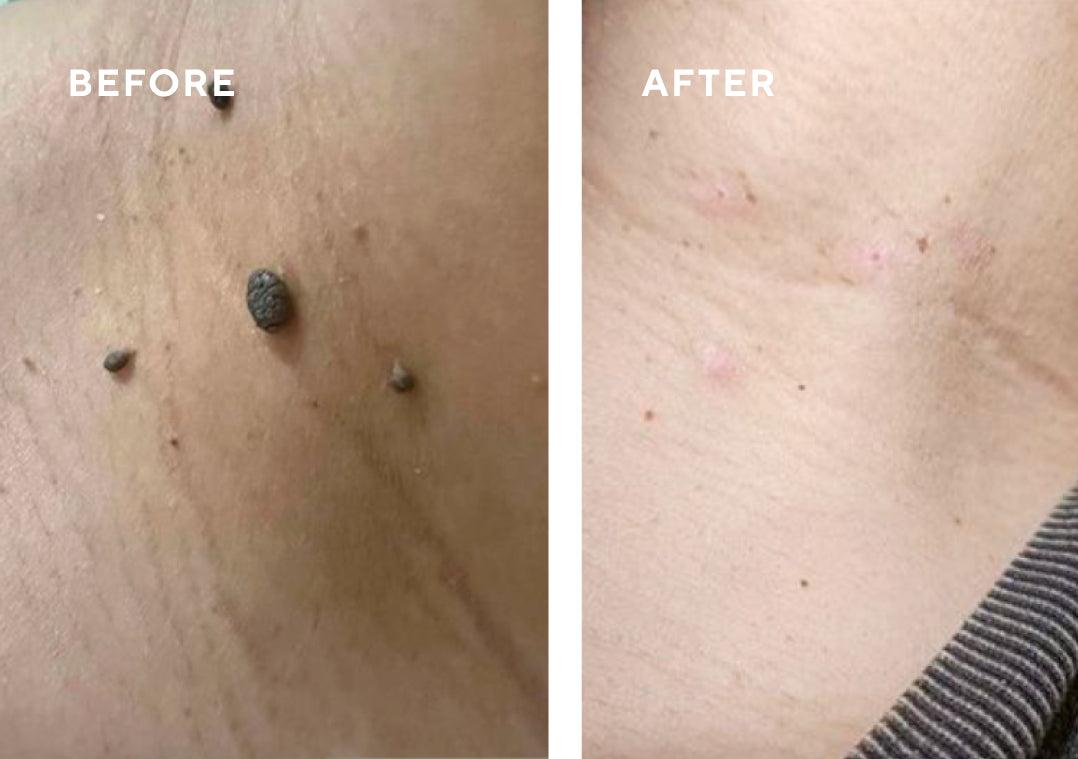
FreezPen Cryotherapy: Precise Skin Lesion Treatment in Montreal
Discover FreezPen cryotherapy, a cutting-edge technology used at Réhabital Côte Saint-Luc to gently remove warts, age spots, skin tags and benign skin lesions.
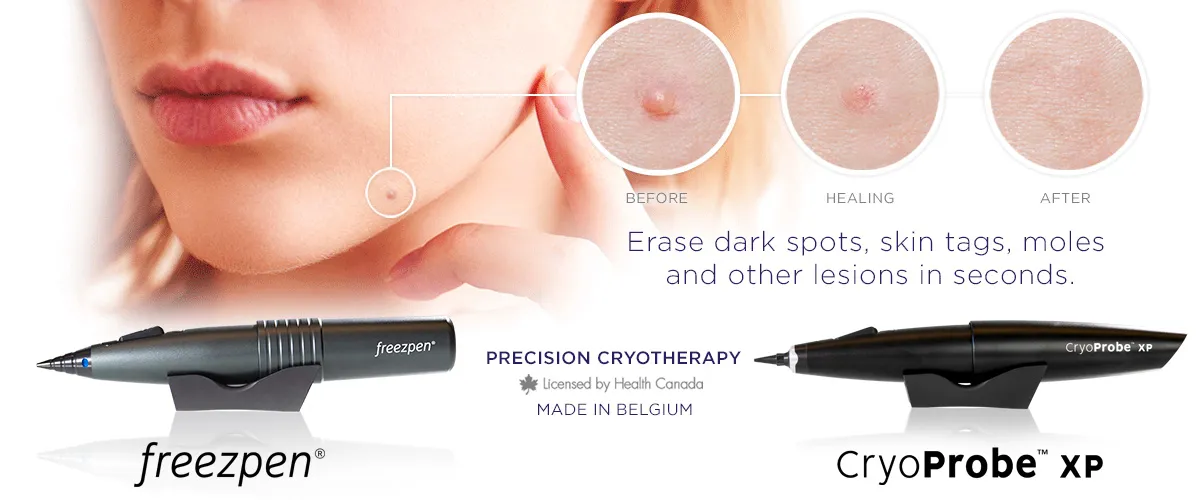
Cryotherapy vs Laser vs Electrocautery: Which Is Best for Removing a Benign Skin Lesion?
A clear comparison of the three most-used methods for removing skin tags, warts, spots and angiomas — with the ABCDE rule and the recommendations of Liliana Ciocoi in Côte Saint-Luc.
Cryotherapy for Skin Tags, Warts & Skin Lesions: A Safe Non-Invasive Solution in Côte Saint-Luc
How CryoProbe™ XP and FreezPen® technology removes skin tags, warts, molluscum, fibromas and other benign skin lesions in seconds — with Liliana Ciocoi at Réhabital.
FreezPen vs Cryolipolysis vs Traditional Cryotherapy: Which Cryotherapy Should You Choose in Montreal?
Three cryotherapy technologies, three different goals. A detailed comparison of FreezPen (skin lesions), cryolipolysis (localized fat) and whole-body cryotherapy — to help you choose the right one in Montreal.
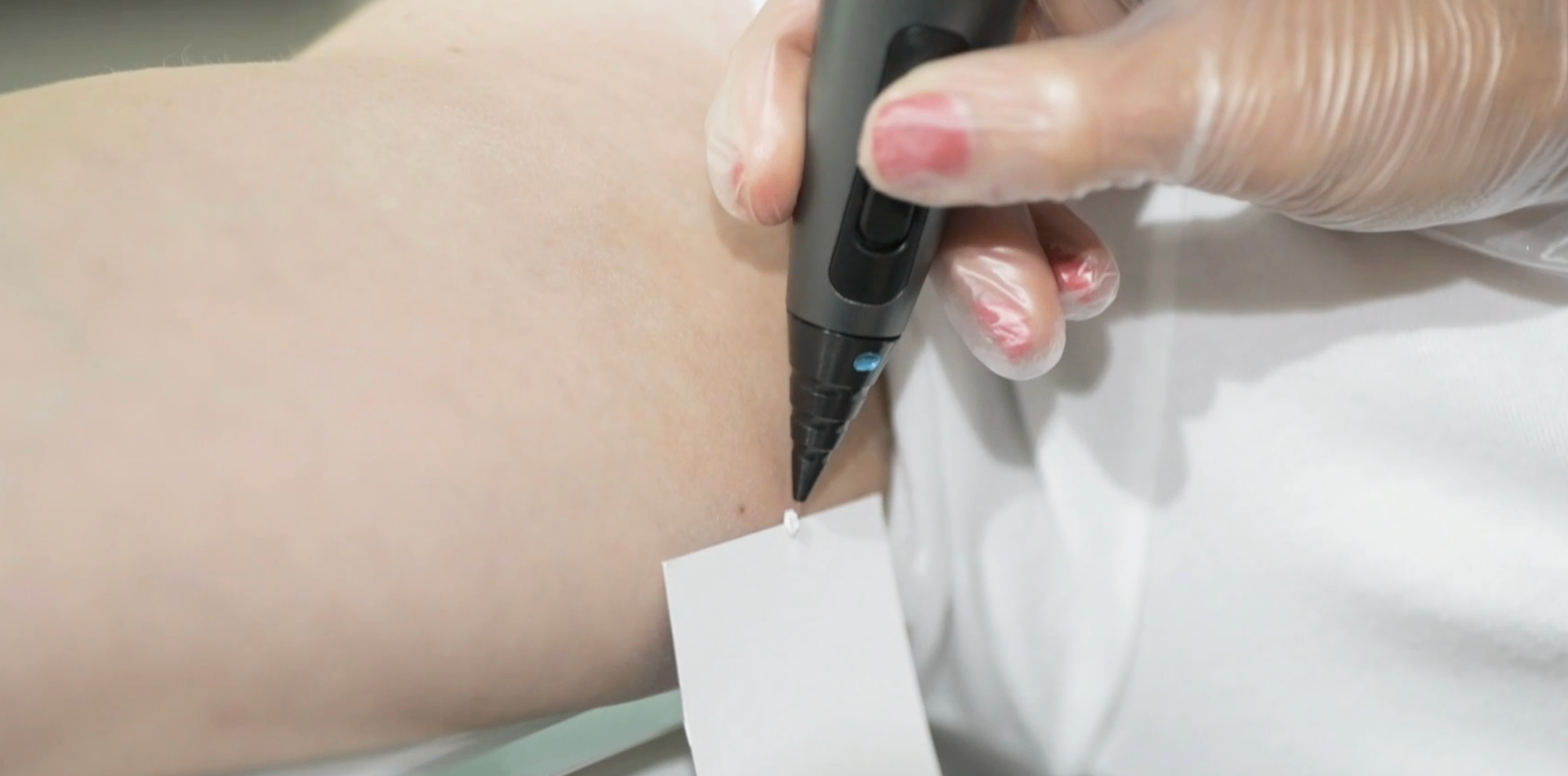
Removing Warts with FreezPen Cryotherapy (DermaSpark) in Côte Saint-Luc
How the FreezPen cryotherapy pen by DermaSpark removes common, plantar and filiform warts in seconds with medical precision at Réhabital clinic in Côte Saint-Luc.