
Spinal Deviation: What Osteopathy Can Genuinely Change
Structural scoliosis, functional curve or postural deviation: how to tell them apart, why they hurt, and what osteopathy can realistically improve in Côte Saint-Luc.
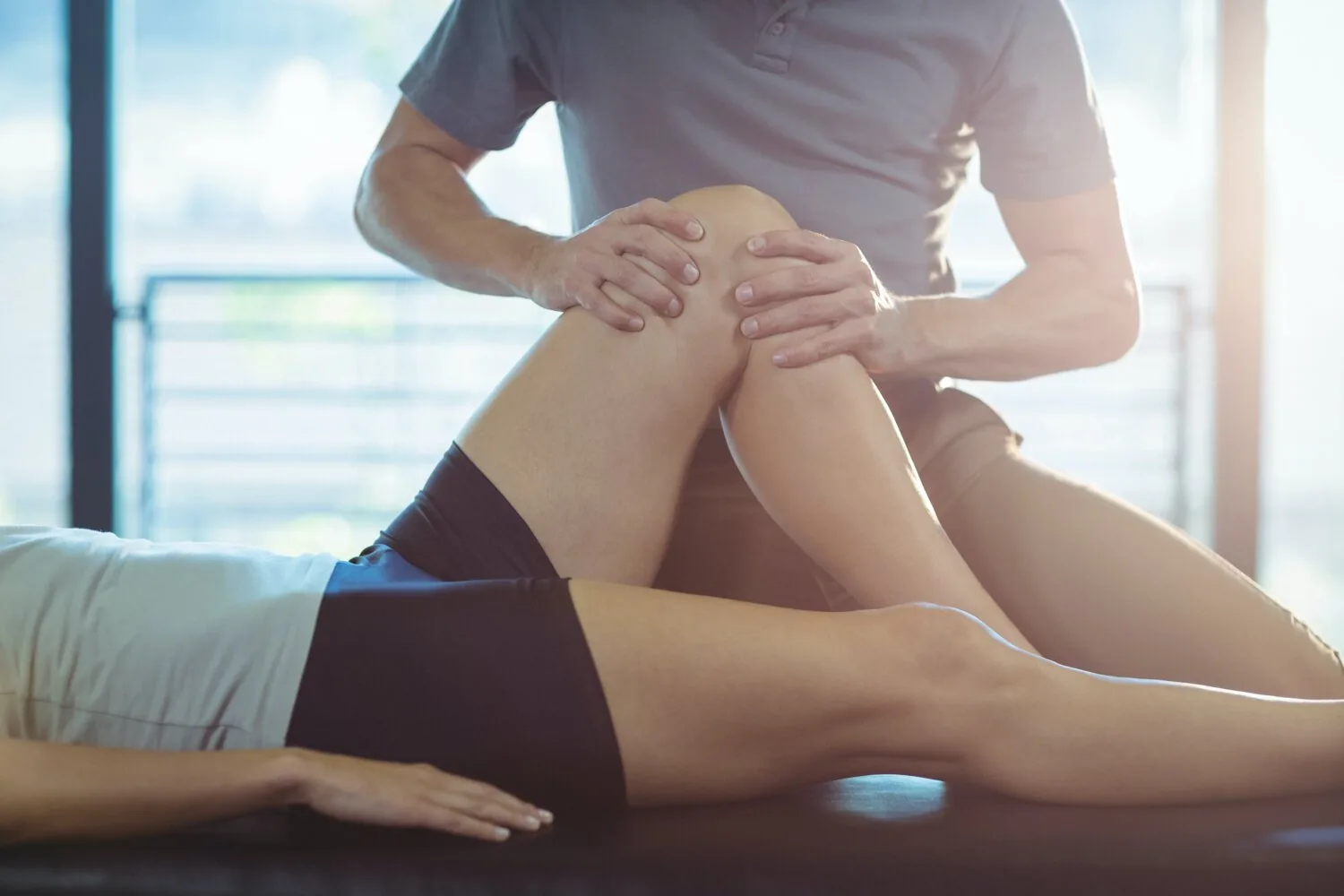
A spine is never a straight rod. Seen from the side it should carry three balanced curves, and seen from behind it should look essentially vertical. When that vertical alignment drifts — a shoulder that sits higher than the other, a waist crease deeper on one side, a rib hump that appears when you bend forward, a pelvis that feels permanently rotated — you are looking at what most patients call a spinal deviation. At Réhabital in Côte Saint-Luc, this is one of the most common reasons adults and teenagers come through our door, and it is one of the areas where osteopathy has the most to offer.
What people mean by "spinal deviation"
The term covers several very different situations, and telling them apart is the first job of the assessment.
- Structural scoliosis — a genuine three-dimensional deformity with vertebral rotation, confirmed on X-ray by a Cobb angle above 10 degrees. It does not disappear when you lie down or bend.
- Functional (non-structural) scoliosis — a lateral curve produced by something else: a leg-length difference, chronic muscle guarding after an injury, a rotated pelvis, or years of asymmetric loading. It reduces or disappears when the cause is removed.
- Postural deviation — increased thoracic kyphosis, a flattened or exaggerated lumbar lordosis, forward head posture, a habitually shifted pelvis. No fixed bony deformity, but real mechanical consequences.
- Compensatory deviation — the spine bending away from a painful hip, knee or foot, or from an old surgical scar or abdominal restriction.
Osteopathy does not straighten a structural scoliosis, and we say that plainly at the first visit. What it does extremely well is improve how a deviated spine behaves: mobility segment by segment, load distribution, breathing mechanics, pain, and the compensations that build up above and below the curve.
Why deviations hurt — and why they sometimes do not
Plenty of people carry a mild curve for decades with no symptoms at all. Pain appears when the system runs out of adaptive capacity. A curve concentrates compression on the concave side and stretch on the convex side; facet joints on one side work harder, paraspinal muscles on the other work longer. Over years this produces predictable findings: segmental stiffness at the apex of the curve, hypermobility at the transition zones, one-sided lumbar or thoracic pain, an aching interscapular band, and often headaches driven by the cervical compensation at the top of the chain.
Breathing is the underestimated part. A rotated thoracic cage changes rib excursion and diaphragm mechanics. Patients with significant thoracic curves frequently breathe higher and shallower than they should, which recruits the scalenes and upper trapezius, feeds neck tension, and keeps the nervous system in a low-grade alert state. Restoring rib and diaphragm motion is often what makes a treatment plan finally start moving.
How an osteopathic assessment approaches a deviated spine
The first appointment at Réhabital lasts about an hour and starts with history, not hands. When did you first notice it? Was it detected at school? Is there a family history? Did it follow a pregnancy, a fall, a surgery, a leg fracture? Is the pain constant, positional, or activity-dependent? Are there any red flags — night pain, neurological symptoms, rapid progression in an adolescent, unexplained weight loss?
Then the physical examination:
- Standing assessment — shoulder and pelvic levels, waist asymmetry, plumb-line deviation, head position over the sacrum.
- Adams forward-bend test — the classic screen. A rib hump that persists in flexion suggests true vertebral rotation; a curve that vanishes points to a functional cause.
- Seated re-test — if the curve corrects when seated but not when standing, the driver is very often below the pelvis: leg length, foot mechanics, hip restriction.
- Segmental palpation — vertebra by vertebra, looking for which levels have lost motion and which are compensating with too much.
- Rib and diaphragm assessment — excursion, rib spring, diaphragm tone, thoracolumbar junction mobility.
- Visceral and fascial screen — old scars, abdominal restrictions and post-surgical adhesions genuinely pull on the spine, a link we explore in detail in our article on visceral osteopathy and neck pain.
- Neurological screen — reflexes, strength, sensation, to rule out nerve root involvement.
If the picture suggests a progressing structural curve in a growing adolescent, or any neurological deficit, we refer for imaging and medical assessment before continuing. Osteopathy sits alongside that care, not instead of it.
The techniques we actually use
Treatment is chosen for the tissue and the person, not applied as a fixed protocol.
Articular mobilization
Slow, rhythmic mobilization of the stiff segments at the apex of the curve, and of the thoracolumbar and cervicothoracic junctions, which almost always carry extra strain. This is gentle, well tolerated, and usually where we start.
Myofascial and soft-tissue release
The concave side of a curve typically holds shortened, dense paraspinal and quadratus lumborum tissue; the convex side holds lengthened, fatigued muscle that keeps cramping. Fascial work restores glide between these layers. If you want the deeper mechanism, our piece on fascia, back pain and stiffness explains it thoroughly.
Muscle energy techniques
Active, patient-generated contractions against resistance to reset rotated vertebral segments and, very often, a rotated or side-shifted pelvis. Because the patient supplies the force, these techniques are safe in irritable spines and in older patients.
Diaphragm and rib work
Direct release of the diaphragm at the costal margin, rib mobilization on the restricted side, and breathing re-education. This is frequently the intervention that patients report as the most immediately relieving.
Cranial and sacral balancing
Gentle work at the two ends of the dural chain. Useful when tension patterns keep returning, and particularly well tolerated by patients who cannot handle more direct techniques.
Pelvic and lower-limb correction
Because a large share of functional curves are driven from below, we treat the sacroiliac joints, hip capsule and foot mechanics as part of the spine, not as an afterthought. Our article on hip, pelvis and lower back osteopathy covers this chain in depth.
What osteopathy realistically changes
Honest expectations matter more than optimistic ones. Here is what patients with spinal deviations typically obtain at our clinic:
- Reduced pain intensity and frequency, usually noticeable within three to five sessions.
- Better segmental mobility and a spine that tolerates sitting, standing and loading for longer.
- Improved rib excursion and easier, deeper breathing.
- Fewer secondary problems: tension headaches, interscapular burning, one-sided lumbar spasm.
- Better body awareness — patients start noticing the shift before the pain arrives.
- In functional curves, a measurable reduction in the deviation itself once the driver is treated.
What it does not do: change a Cobb angle in a mature structural scoliosis, replace bracing in an adolescent with a progressing curve, or substitute for surgery in severe cases. Anyone who promises those things is not being straight with you.
Osteopathy and physiotherapy together
Deviated spines respond best to a two-part strategy: restore mobility, then build the strength and endurance that holds the improvement. Osteopathy handles the first part; physiotherapy handles the second, with progressive core endurance work, scapular and hip strengthening, and — for scoliosis specifically — curve-specific exercise principles. At Réhabital both services are in the same building and the practitioners speak to each other, which means the exercise program reflects what was actually found on the table.
Massage therapy has a supporting role as well, mainly for the chronically overworked convex-side musculature and for nervous-system downregulation between sessions.
What you can do between sessions
- Stop chasing perfect posture. Rigid holding fatigues the same muscles that are already overworked. Frequent position change beats one ideal position.
- Break up sitting every 30 to 40 minutes, even for 60 seconds. This matters more than any chair purchase.
- Carry loads symmetrically — a backpack on both shoulders, not a heavy bag always on the same side.
- Breathe into the restricted side. Hand on the flatter side of the rib cage, slow inhale directing expansion into that hand, ten breaths, twice a day.
- Keep moving. Walking, swimming and controlled resistance training all help. Deviated spines get worse with inactivity, not with reasonable load.
- Sleep set-up matters. Side sleepers benefit from a pillow between the knees; back sleepers from a small support under the lumbar curve.
Adolescents: the time-sensitive case
Adolescent idiopathic scoliosis is the one situation where timing genuinely changes outcomes. Curves progress fastest during the growth spurt. If a parent notices asymmetry in a 10 to 15-year-old, the priority is a medical assessment with imaging to establish the Cobb angle and skeletal maturity. Osteopathy is a valuable companion to that pathway — improving mobility, comfort and breathing, and supporting brace tolerance — but it is not a substitute for orthopedic monitoring, and we will always say so.
Booking at Réhabital, Côte Saint-Luc
Assessments for spinal deviation are done by Shahram Ghasemi, MD (Iran), DOMP, founder of the clinic, whose medical background is a real asset when the question is whether a curve needs imaging or referral. Sessions are 60 minutes, receipts are issued for private insurance reimbursement, and the clinic is at 5555 Westminster Avenue in Côte Saint-Luc with free parking.
You can book online or read more about our osteopathy services. If back pain is the dominant symptom, our guides on sitting and sleeping posture and on postural syndrome are good next reads.
Frequently asked questions
Go deeper with our dedicated osteopathy pages
Osteopathy pages with Shahram Ghasemi, MD (Iran), DOMP in Côte Saint-Luc:
Related articles
Sciatica, Desk Posture and Bad Sleeping Positions: How Osteopathy Breaks the Cycle
Eight hours seated, then eight hours in a bad sleeping position: that is where most sciatica begins. Learn the exact mechanisms, the positions to correct, and how osteopathy in Côte Saint-Luc delivers lasting relief.
Can Osteopathy Relieve Sciatica?
What an osteopath is actually looking for when you arrive with pain running down your leg: pelvis, sacroiliac joint, diaphragm, fascia. Mechanisms, session structure and realistic outcomes in Côte Saint-Luc.
Osteopathy During Pregnancy: The Complete Guide to Natural Prenatal Pain Relief
How osteopathy relieves lower back pain, sciatica and pregnancy discomforts. Complete guide with tips from our specialized osteopaths.
Hip Pain: How Osteopathy Treats the Pelvis, Hip and Lower Back as One System
A painful hip is rarely an isolated problem. The pelvis, sacroiliac joints, psoas, diaphragm and foot all participate in hip mechanics. Here is the complete osteopathic approach, explained step by step.
Osteopathy vs Physiotherapy: Which One Is Right for You?
Compare osteopathy and physiotherapy: approaches, techniques and use cases to choose the right treatment in Montreal.
Hamstrings and Osteopathy: Strain, Proximal Tendinopathy and a Complete Rehabilitation Guide
Strain, proximal tendinopathy or referred pain? Our osteopath Shahram Ghasemi explains how to tell the four hamstring problems apart and the full rehabilitation progression we use in Côte Saint-Luc.