
Can Osteopathy Relieve Sciatica?
What an osteopath is actually looking for when you arrive with pain running down your leg: pelvis, sacroiliac joint, diaphragm, fascia. Mechanisms, session structure and realistic outcomes in Côte Saint-Luc.
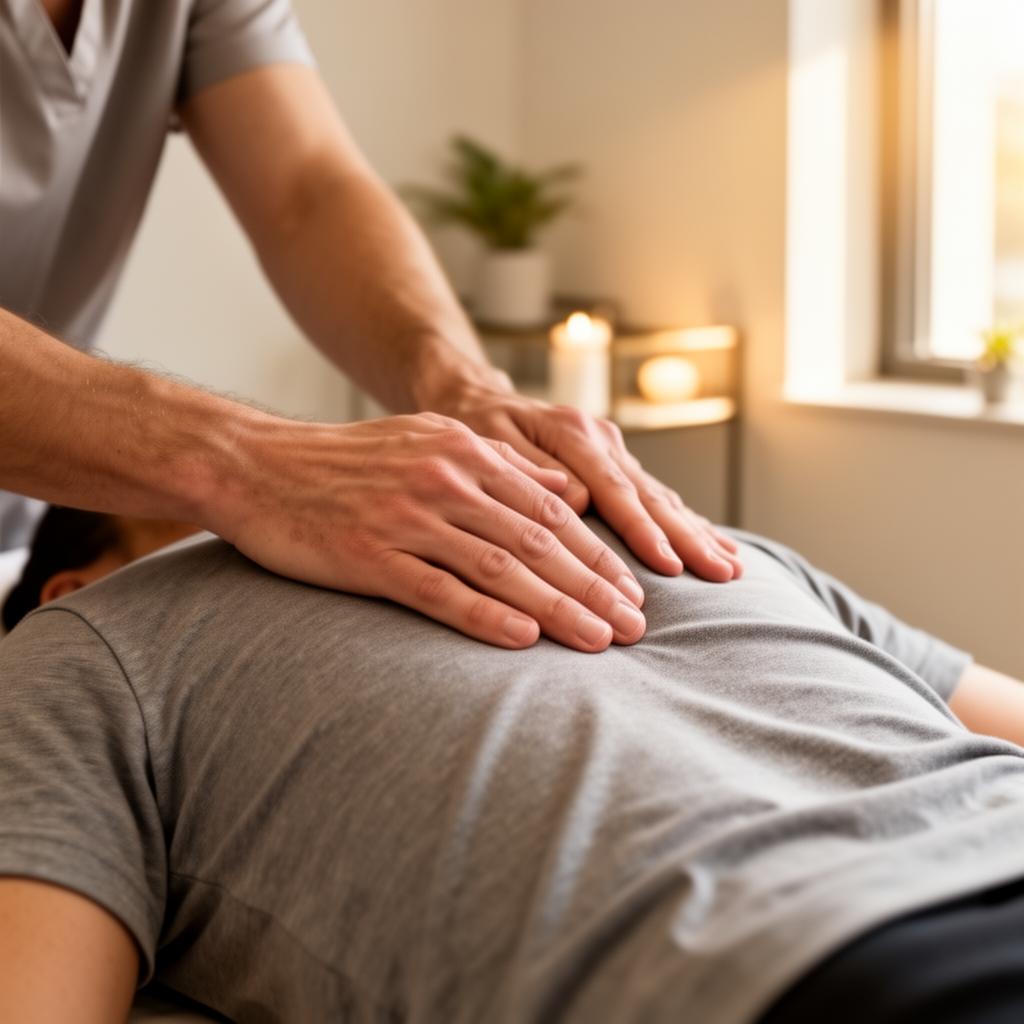
People rarely walk into an osteopathy clinic asking about the pelvis. They walk in describing a line of pain that starts somewhere near the belt line and runs down the back of the leg, sometimes as far as the outer ankle, and they want to know one thing: can this be fixed with hands rather than surgery? For mechanical sciatica, which is the overwhelming majority of cases, the answer is generally yes — but understanding why requires looking well beyond the point where it hurts.
The osteopathic view: the nerve is a passenger, not the driver
The sciatic nerve does not decide to hurt. It reacts to its environment. It leaves the spine through a small opening between two vertebrae, travels across the back of the pelvis, passes under (or occasionally through) the piriformis muscle, and then runs down the thigh inside sheaths of connective tissue. At every one of those points its environment can change: a joint can lose its normal glide, a muscle can shorten and thicken, a fascial plane can dry out and stick, a pelvis can rotate and stay rotated.
Osteopathy treats sciatica by treating that environment. The nerve itself is left alone as much as possible, because an inflamed nerve does not want to be stretched, pressed or mobilized aggressively. What it wants is space, movement around it, and better circulation. That is the entire strategy, and it explains why the osteopath spends time on regions that appear to have nothing to do with your leg.
The four regions we examine in every sciatica case
1. The lumbar spine and the involved segment
Almost every sciatica presents with one or two lumbar segments that have lost their rotational and side-bending glide, most commonly L4-L5 and L5-S1. A stiff segment forces its neighbours to overwork and keeps the local tissue congested and inflamed. Restoring segmental motion is often what produces the first noticeable drop in night pain.
2. The sacroiliac joint and the pelvis
The sacrum sits between the two ilia like a keystone, and the sciatic nerve passes directly in front of the sacroiliac ligaments. A pelvis that has been rotated for years — after a fall, a pregnancy, an ankle sprain that changed your gait — alters the tension of the sacrotuberous ligament and the deep gluteal fascia, and the nerve is squeezed in a space that is already narrow. Correcting pelvic mechanics frequently changes symptoms faster than any local work on the leg.
3. The deep gluteal space and the piriformis
In roughly one in six people the sciatic nerve passes through rather than under the piriformis. In everyone else the muscle still sits directly on top of it. Prolonged sitting shortens this muscle, weak gluteals overload it, and the resulting compression produces a pattern that mimics disc-related sciatica almost perfectly. Osteopathic release of this area, combined with gluteal strengthening later, is one of the highest-yield interventions in the whole plan.
4. The diaphragm, psoas and abdominal fascia
This is the part that surprises patients. The diaphragm attaches directly to the lumbar vertebrae via its crura, and the psoas runs from those same vertebrae to the inner thigh. Shallow, stressed breathing keeps the diaphragm tight; a tight diaphragm keeps the upper lumbar spine compressed; a compressed lumbar spine changes how force travels to L5-S1. Add post-surgical abdominal scars, chronic digestive tension or years of sitting, and the fascial pull on the lumbar spine becomes constant. Releasing it is often what stops sciatica from returning every few months.
What a session actually looks like
A first session at Réhabital runs about 60 minutes. It begins with a full history — the onset, what makes the leg worse, how you sleep, what your work looks like — followed by red-flag screening and a neurological check of reflexes, strength and sensation. Then comes a global assessment: standing posture, gait, forward bending, hip rotation, sacroiliac tests, lumbar segmental palpation, breathing pattern and abdominal tissue quality.
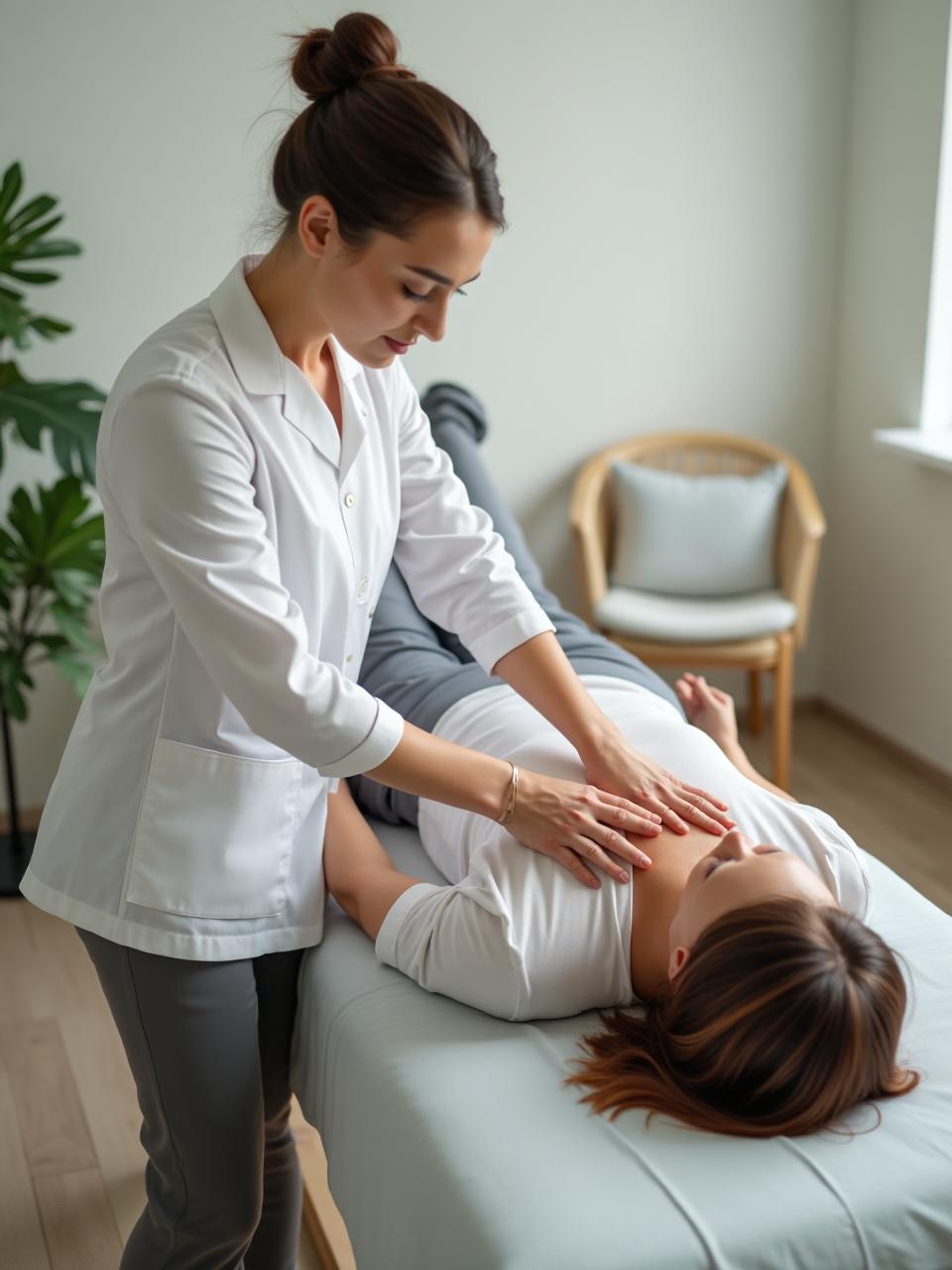
Treatment is built from what that assessment reveals. Typically it includes soft tissue work on the lumbar paraspinals and gluteals, articulatory mobilization of the restricted lumbar segments, correction of pelvic and sacral mechanics using muscle energy techniques, release of the piriformis and deep hip rotators, diaphragm and psoas work, and gentle fascial techniques along the posterior chain. High-velocity thrust techniques are used sparingly and never on an acutely irritated segment.
You leave with two or three specific things to do at home — usually a positioning strategy for sleeping, a decompression exercise, and clear instructions on sitting duration.
What results to expect, honestly
Acute sciatica that has been present for a few weeks typically responds within 3 to 5 sessions, with meaningful change after the first or second. Chronic sciatica present for a year or more usually needs 6 to 8 sessions over two to three months, and progress arrives as a series of small improvements: fewer night wakings, longer sitting tolerance, then finally the leg pain shortening its territory and retreating toward the buttock.
That retreat — clinicians call it centralization — is the single most reliable sign that the treatment is working, and it usually appears before the overall pain intensity drops.
If three sessions have produced no change at all, something in the working diagnosis is wrong. That is when we reassess, involve physiotherapy, or refer for medical evaluation. Continuing to treat without response is not persistence; it is inattention.
Why we almost always add physiotherapy
Osteopathy removes mechanical restriction quickly. It does not, on its own, build the strength that stops the restriction from reforming. A gluteus medius that cannot control the pelvis for a thousand steps will let the pelvis drift back into the pattern that irritated the nerve. That is why physiotherapy with Colin Teghen Tamuton is added around week two or three of most sciatica plans, and why massage therapy is used when gluteal and lumbar guarding is too intense for the patient to exercise comfortably.
Book with our osteopathy team in Côte Saint-Luc
Réhabital is at D4-5800 Cavendish Blvd, Côte Saint-Luc, serving Hampstead, NDG, Snowdon, Montreal West and Saint-Laurent. See our full osteopathy page for pricing and technique details.
Related reading
Frequently asked questions
Go deeper with our dedicated osteopathy pages
Osteopathy pages with Shahram Ghasemi, MD (Iran), DOMP in Côte Saint-Luc:
Related articles
Hip Pain: How Osteopathy Treats the Pelvis, Hip and Lower Back as One System
A painful hip is rarely an isolated problem. The pelvis, sacroiliac joints, psoas, diaphragm and foot all participate in hip mechanics. Here is the complete osteopathic approach, explained step by step.
Osteopathy During Pregnancy: The Complete Guide to Natural Prenatal Pain Relief
How osteopathy relieves lower back pain, sciatica and pregnancy discomforts. Complete guide with tips from our specialized osteopaths.
Osteopathy and sciatica: how to durably relieve sciatic nerve pain
How osteopathy identifies the mechanical cause of sciatica — disc, sacroiliac or piriformis — and relieves pain in a few sessions at Réhabital in Côte Saint-Luc.
Is It Really Sciatica? Sacroiliac Joint Pain and Other Causes of Leg Pain That Mimic It
Many people with buttock or leg pain are told they have sciatica when something else is behind it. We explain the look-alikes, how they differ and why the right diagnosis changes the treatment.
Is Osteopathy Good for Back Pain? A Complete Guide
Discover how osteopathy treats lower back, upper back and neck pain. Scientific studies, techniques used and expected results in Côte Saint-Luc.
Best Treatment for Back Pain: How Osteopathy Provides Lasting Relief
Discover why osteopathy is considered one of the best treatments for back pain. Evidence-based manual therapy for chronic and acute back pain in Montreal.