
Why You Wake Up With Back Pain Every Morning (And How to Fix It Without Medication)
Discover the hidden causes of your morning back pain and how osteopathy can provide lasting relief without relying on painkillers.

Do You Wake Up Every Morning With Back Pain?
You set your alarm, get a full night's sleep and yet the moment your feet touch the floor, your lower back screams in protest. The stiffness. The aching. The slow, painful process of straightening up. Sound familiar? You're not alone — and more importantly, you're not stuck with it.
Morning back pain is one of the most common complaints heard by healthcare practitioners across Montreal, Côte Saint-Luc, Hampstead, Westmount and NDG. According to the Canadian Chiropractic Association, approximately 85% of the population will experience back pain at some point in their lives. But here's what most people don't realize: waking up with back pain is not normal and painkillers are not the answer.
In this comprehensive guide, we'll explore the real reasons behind your morning back pain, why it keeps coming back despite medication and how osteopathy — a hands-on, drug-free approach — can provide lasting relief by treating the root cause, not just the symptoms.
The 7 Hidden Causes of Morning Back Pain
Understanding why you wake up in pain is the first step toward fixing it. Here are the most common culprits that osteopathic practitioners at Réhabital identify in patients from Côte Saint-Luc and the greater Montreal area:
1. Poor Sleeping Posture
Your sleeping position directly impacts spinal alignment. Stomach sleeping forces your lumbar spine into hyperextension for hours, compressing the facet joints and irritating surrounding tissues. Side sleeping without proper support creates lateral spinal curvature. Even back sleeping can be problematic if your mattress doesn't support the natural lordotic curve of your lower back.
2. Weak Core Muscles
Your core — the deep stabilizing muscles of your abdomen, pelvis and lower back — acts as a natural corset for your spine. When these muscles are weak (common in people with sedentary jobs across Montreal's office districts), your spine lacks the support it needs. During sleep, without active muscle engagement, the spine settles into positions that strain ligaments and discs.
3. Spinal Misalignment & Joint Restrictions
Vertebral segments that aren't moving properly create compensatory patterns throughout the spine. Osteopathic assessment often reveals restricted thoracic segments or sacroiliac joint dysfunction that manifests as morning lower back pain. These restrictions accumulate over time, especially in patients who sit at desks all day.
4. Stress & Chronic Muscle Tension
Psychological stress directly increases muscle tension through the sympathetic nervous system. The erector spinae, quadratus lumborum and psoas muscles become chronically shortened and hypertonic. During sleep, instead of relaxing, these muscles remain in a state of guarding, leading to that characteristic morning stiffness.
5. Your Mattress Is Working Against You
A mattress that's too soft allows your spine to sag; too firm and it creates pressure points. Most mattresses lose their supportive properties after 7-10 years. If your mattress is older than this, it could be a significant contributor to your morning back pain.
6. Disc Hydration & Overnight Swelling
Here's a fascinating fact most people don't know: your intervertebral discs absorb fluid overnight while you're lying down (this is why you're actually taller in the morning). This increased disc pressure can aggravate existing disc bulges or herniations, causing pain and stiffness upon waking that eases as you move and the discs decompress throughout the day.
7. Inflammatory Conditions
Morning stiffness lasting more than 30 minutes can indicate inflammatory conditions such as ankylosing spondylitis or rheumatoid-related spinal inflammation. While osteopathy cannot cure these conditions, it plays a crucial role in managing symptoms and maintaining mobility.
Why Painkillers Don't Fix Morning Back Pain
Let's be honest: when your back hurts, it's tempting to reach for ibuprofen, acetaminophen, or even prescription muscle relaxants. And yes, they'll mask the pain — temporarily. But here's the problem:
Painkillers only address the symptom, never the cause.
Anti-inflammatory medications reduce pain signals, but they don't correct spinal misalignment. They don't release chronically tight muscles. They don't restore proper joint mechanics. They don't strengthen your core. And with prolonged use, they carry risks: gastrointestinal issues, liver stress, kidney damage and the potential for dependency.
According to Health Canada, the overuse of over-the-counter pain medications is a growing concern, particularly for musculoskeletal conditions that respond well to manual therapy and active rehabilitation.
This is exactly where osteopathy steps in — offering a natural, evidence-based alternative that treats the root cause of your morning back pain.
How Osteopathy Fixes Morning Back Pain at the Root
Osteopathy is a regulated, hands-on healthcare profession that views the body as an interconnected whole. At Réhabital's osteopathy clinic in Côte Saint-Luc, our osteopathic manual practitioners (DOMPs) use a comprehensive approach to eliminate morning back pain:
Spinal Realignment & Joint Mobilization
Using gentle, precise techniques, your osteopath identifies and corrects vertebral restrictions that are disrupting normal spinal mechanics. Unlike forceful adjustments, osteopathic mobilization works with your body's natural range of motion, gradually restoring proper alignment to the thoracic, lumbar and sacral regions. Our myofascial release therapy techniques are particularly effective for deep-seated restrictions.
Myofascial Release & Soft Tissue Work
Your osteopath addresses the chronically tight muscles contributing to your pain — the psoas, quadratus lumborum, piriformis and erector spinae. Through myofascial release, muscle energy techniques and visceral manipulation, these tissues are encouraged to release their guarding patterns and return to a healthy resting tone.
Craniosacral Balancing
The connection between your cranium and sacrum through the spinal membranes means that tension at one end affects the other. Craniosacral therapy uses extremely gentle touch to release membranous restrictions, calm the nervous system and reduce the sympathetic overdrive that keeps muscles chronically tense during sleep.
Visceral Osteopathy
Surprisingly, internal organ restrictions can cause back pain. A restricted kidney, congested liver, or tight diaphragm can create fascial pulling patterns that manifest as lower back pain — especially in the morning when these organs haven't been mobilized by movement. Visceral osteopathy addresses these hidden contributors.
Postural Education & Movement Prescription
Your osteopath doesn't just treat you on the table — they empower you with knowledge. You'll receive specific guidance on sleeping positions, workplace ergonomics and targeted exercises to strengthen the muscles that protect your spine.
5 Quick Fixes You Can Try at Home Tonight
While osteopathic treatment addresses the root cause, these strategies can provide immediate relief:
1. The Supine Knee-to-Chest Stretch
Before getting out of bed, hug both knees to your chest and gently rock side to side for 30 seconds. This stretches the lumbar paraspinal muscles and reduces disc pressure before you load your spine with standing.
2. Optimize Your Sleep Position
If you sleep on your side, place a pillow between your knees to maintain pelvic alignment. If you sleep on your back, place a pillow under your knees to reduce lumbar extension. Avoid stomach sleeping entirely — it's the worst position for your spine.
3. The Cat-Cow Morning Routine
Spend 2 minutes doing cat-cow stretches before your morning shower. On all fours, alternate between arching your back (cow) and rounding it (cat). This mobilizes each spinal segment and warms up the intervertebral discs.
4. Reassess Your Pillow
Your pillow should keep your cervical spine in neutral alignment. If it's too high or too flat, compensatory tension travels down to your thoracic and lumbar spine. A medium-loft pillow works for most side sleepers; a thinner pillow for back sleepers.
5. The 90-90 Position Before Bed
Lie on your back and place your calves on the seat of a chair so your hips and knees are at 90-degree angles. Stay here for 10 minutes before sleep. This position decompresses the lumbar discs and relaxes the psoas muscle — a major contributor to morning stiffness.
When to See an Osteopath: Don't Wait Too Long
While occasional morning stiffness that resolves within minutes is normal, you should seek professional osteopathic assessment if you experience any of the following:
- Pain lasting more than 2 weeks — This suggests a structural or functional issue that won't resolve on its own
- Stiffness lasting more than 30 minutes — Prolonged morning stiffness may indicate inflammatory processes requiring assessment
- Pain radiating down your legs — Sciatica-like symptoms suggest nerve involvement that needs professional evaluation
- Numbness or tingling — Neurological symptoms require prompt assessment to rule out disc herniation
- Pain disrupting your sleep — Night pain that wakes you up differs from morning pain and may indicate a more serious condition
- Progressively worsening symptoms — Pain that gets worse over weeks or months is your body telling you something needs attention
The sooner you address the underlying cause, the faster you'll recover. What starts as morning stiffness can evolve into chronic pain if left untreated.
Osteopathy for Back Pain in Côte Saint-Luc & Montreal
If you're looking for osteopathy in Côte Saint-Luc or the greater Montreal area, Réhabital – Clinique de réadaptation et de santé offers expert osteopathic care at our clinic in the Cavendish Centre. Based on recent experiences shared by patients on Yelp, our patients consistently report significant improvement in back pain, mobility and overall quality of life after osteopathic treatment.
Our clinic serves patients from Côte Saint-Luc (CSL), Hampstead, Westmount, NDG (Notre-Dame-de-Grâce), Snowdon, Côte-des-Neiges, Mont-Royal, Montréal-Ouest, Saint-Laurent, LaSalle, Verdun and throughout the Island of Montreal. With convenient access from Highway 15 and the Cavendish Boulevard corridor, we're your neighborhood osteopathy destination.
Our osteopathic team — including Réhabital Team, the clinic's founder — brings decades of combined experience in treating back pain, neck pain, sciatica and musculoskeletal conditions. Every treatment plan is individualized based on a thorough assessment of your unique presentation.
Your Next Step: Wake Up Pain-Free
Morning back pain is not something you have to accept as part of aging or “sleeping wrong.” It's a signal from your body that something needs attention — and osteopathy is uniquely positioned to answer that call.
At Réhabital, we help patients across Côte Saint-Luc and Montreal relieve back pain naturally through expert osteopathic care. No drugs. No surgery. Just skilled hands and evidence-based treatment.
Ready to wake up without pain? Book your osteopathy appointment online or call us at (438) 842-3550.
Frequently Asked Questions About Morning Back Pain & Osteopathy
1. Is osteopathy effective for back pain?
Yes. Osteopathy is an evidence-based manual therapy that is highly effective for acute and chronic back pain. Studies show that osteopathic manipulative treatment (OMT) significantly reduces pain intensity and improves functional outcomes in patients with low back pain.
2. How many osteopathy sessions do I need for back pain?
Most patients at Réhabital notice improvement within 2-3 sessions. A typical treatment plan involves 4-6 sessions, depending on the severity and chronicity of your condition. Your osteopath will create an individualized plan based on your assessment.
3. Is osteopathy painful?
Osteopathic treatment is generally gentle and well-tolerated. Some techniques may produce mild discomfort during tissue release, similar to a deep massage, but treatment should never be painful. Our osteopaths always work within your comfort level.
4. Is osteopathy covered by insurance in Quebec?
Yes. Osteopathy is covered by most private insurance plans in Quebec. At Réhabital, we provide insurance receipts for osteopathic treatments. Check with your specific insurance provider for your coverage details.
5. What's the difference between osteopathy and chiropractic for back pain?
While both treat musculoskeletal conditions, osteopathy takes a whole-body approach, considering how organs, fascia and craniosacral rhythm contribute to your pain. Chiropractic tends to focus more specifically on spinal adjustments. Osteopathic techniques are generally gentler and broader in scope.
6. Can osteopathy help with sciatica?
Absolutely. Osteopathy is particularly effective for sciatica because it addresses the multiple structures that can compress or irritate the sciatic nerve — including the piriformis muscle, lumbar discs, sacroiliac joint and fascial restrictions.
7. Why does my back hurt more in the morning than at night?
Overnight, your intervertebral discs absorb fluid and swell slightly, increasing pressure on surrounding structures. Combined with hours of immobility and potential sleeping posture issues, this creates the perfect storm for morning pain.
8. Should I use heat or ice for morning back pain?
For morning stiffness, gentle heat (a warm shower or heating pad for 15-20 minutes) is generally more effective than ice. Heat increases blood flow, relaxes muscles and improves tissue elasticity. Ice is better for acute inflammatory pain.
9. Can stress cause morning back pain?
Yes. Chronic stress activates the sympathetic nervous system, keeping muscles in a state of constant tension. The psoas and erector spinae muscles are particularly affected, leading to stiffness and pain upon waking.
10. Is it better to sleep on a hard or soft mattress for back pain?
Research suggests a medium-firm mattress provides the best balance of support and comfort for most people with back pain. Too soft allows spinal sagging; too hard creates pressure points. Replace your mattress every 7-10 years.
11. Can osteopathy prevent back pain from coming back?
Yes. Regular osteopathic maintenance treatments (every 4-8 weeks) help maintain spinal alignment, prevent restrictions from accumulating and keep your body functioning optimally. Combined with prescribed exercises, osteopathy provides long-term prevention.
12. What should I do immediately when I wake up with back pain?
Before getting out of bed, gently hug your knees to your chest for 30 seconds, then slowly roll to your side and push yourself up with your arms. Avoid sitting straight up from a lying position, as this creates excessive spinal flexion under load.
13. Can a bad pillow cause back pain?
Yes. An improper pillow creates cervical misalignment that cascades down through the thoracic and lumbar spine. The compensatory muscle tension required to support a misaligned neck directly contributes to back pain.
14. How does osteopathy treat back pain differently than massage?
While massage therapy focuses on muscles and soft tissue relaxation, osteopathy addresses joints, vertebrae, fascia, visceral organs and the craniosacral system. Osteopaths are trained to diagnose the structural cause of pain and treat it at its source.
15. Is walking good for morning back pain?
Yes. Gentle walking is one of the best things you can do for morning back pain. It promotes disc decompression, increases blood flow to spinal structures and activates the core stabilizing muscles that protect your spine.
16. Can osteopathy help with back pain during pregnancy?
Yes. Osteopathy is safe and effective during pregnancy. As the body's center of gravity shifts, the lumbar spine takes on increased load. Gentle osteopathic techniques can relieve pregnancy-related back pain without medication.
17. How much does osteopathy cost at Réhabital?
At Réhabital in Côte Saint-Luc, the initial osteopathy assessment is $125, follow-up treatments are $110 and extended sessions are $150. Insurance receipts are provided for reimbursement through your private plan.
18. What should I wear to an osteopathy appointment?
Wear comfortable, loose-fitting clothing that allows your osteopath to assess and treat your spine and joints. Athletic wear or stretchy clothing is ideal. You may be asked to remove outer layers for proper assessment.
19. Can sitting at a desk all day cause morning back pain?
Absolutely. Prolonged sitting creates hip flexor tightness, weakens gluteal muscles and promotes thoracic kyphosis — all of which contribute to spinal dysfunction that manifests as morning pain. Your osteopath can provide ergonomic guidance.
20. How long does an osteopathy session last?
At Réhabital, an initial osteopathy assessment typically lasts 60 minutes, allowing thorough examination and treatment. Follow-up sessions are generally 45-60 minutes, focused on progressing your treatment plan.
21. Can exercises replace osteopathy for back pain?
Exercise is crucial for spinal health, but it cannot replace osteopathic treatment when structural restrictions are present. The most effective approach combines osteopathic treatment to restore proper mechanics with targeted exercises to maintain those improvements.
22. Is osteopathy safe for older adults with back pain?
Yes. Osteopathic techniques are adapted to each patient's age, condition and tolerance. Gentler approaches such as craniosacral therapy and indirect techniques are particularly well-suited for older adults.
23. Where is Réhabital's osteopathy clinic located?
Réhabital is located at D4-5800 Cavendish Boulevard in the Cavendish Centre, Côte Saint-Luc, Québec (H4W 2T5). We serve patients from CSL, Hampstead, Westmount, NDG, Snowdon, Côte-des-Neiges, Mont-Royal and all of Montreal.
24. Can osteopathy help with herniated disc pain?
Yes. Osteopathy can effectively manage herniated disc symptoms through gentle decompression techniques, myofascial release and visceral manipulation. While osteopathy cannot “push a disc back in,” it can reduce pressure on the affected nerve, decrease inflammation and restore surrounding tissue mobility.
25. How do I book an osteopathy appointment at Réhabital?
You can book online at rehabital.janeapp.com or call us at (438) 842-3550. Our clinic is open Monday to Saturday and we welcome patients from Côte Saint-Luc, Hampstead, Westmount, NDG and the entire Montreal region.
Frequently asked questions
Go deeper with our dedicated osteopathy pages
Osteopathy pages with Shahram Ghasemi, MD (Iran), DOMP in Côte Saint-Luc:
Related articles
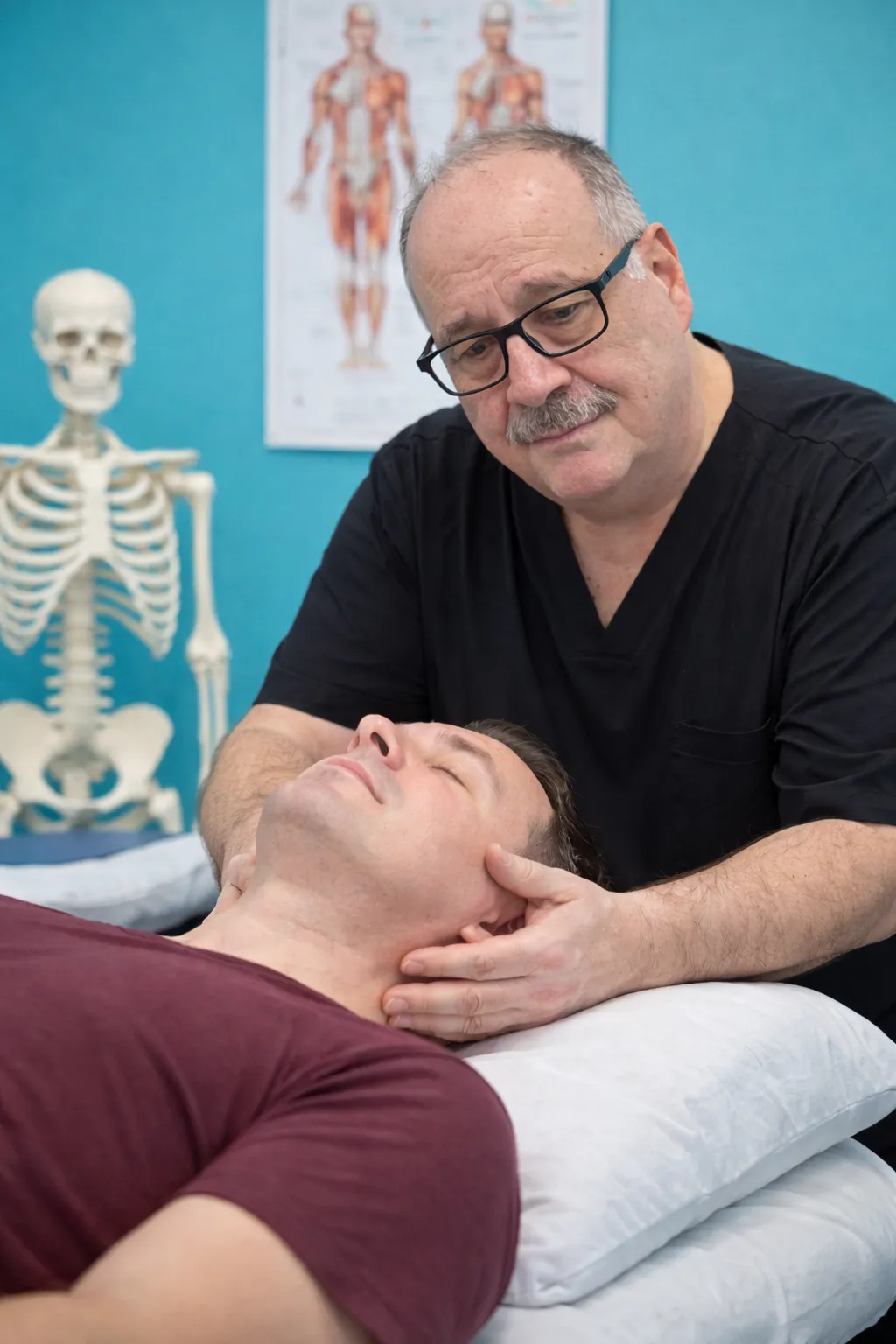
Does Osteopathy Help with Back Pain? (Montreal Guide)
Learn how osteopathy effectively treats back pain in Côte Saint-Luc. Causes, techniques, number of sessions and expected results.

Best Treatment for Back Pain: How Osteopathy Provides Lasting Relief
Discover why osteopathy is considered one of the best treatments for back pain. Evidence-based manual therapy for chronic and acute back pain in Montreal.
Is Osteopathy Good for Back Pain? A Complete Guide
Discover how osteopathy treats lower back, upper back and neck pain. Scientific studies, techniques used and expected results in Côte Saint-Luc.
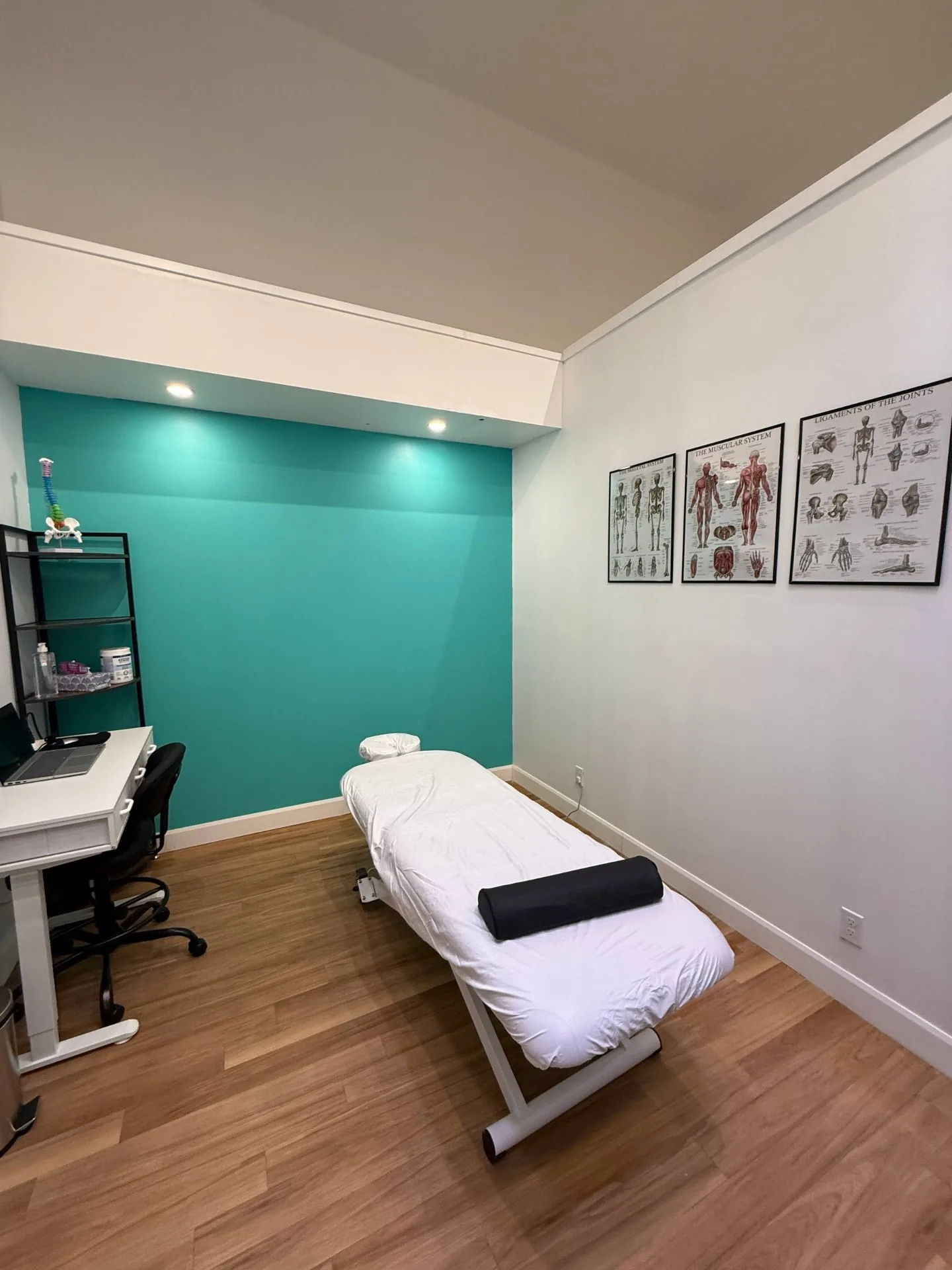
Low Back Pain and Osteopathy: The Complete Guide to Understanding, Relieving and Preventing It
Why your back pain keeps coming back, what osteopathy really does for lumbar pain, and the full treatment plan our osteopaths use in Côte Saint-Luc.

Hip Pain: How Osteopathy Treats the Pelvis, Hip and Lower Back as One System
A painful hip is rarely an isolated problem. The pelvis, sacroiliac joints, psoas, diaphragm and foot all participate in hip mechanics. Here is the complete osteopathic approach, explained step by step.

Fascia, Lower Back Pain and Stiffness: How Osteopathy and Physiotherapy Release Your Back in Côte Saint-Luc
Fascia — the connective-tissue web that wraps muscles and organs — is often the hidden driver of lower back pain and stiffness. Learn how osteopathy and physiotherapy at Réhabital release fascial restrictions and give your back its freedom back.