
Sports Massage: What It’s Used For and Who It’s For
Preparation, recovery, maintenance: the real uses of sports massage, what research says, who benefits and when to avoid it. A Réhabital guide from Côte Saint-Luc, Montréal.
Direct answer: what is sports massage used for?
Sports massage is massage therapy adapted to physical activity. It combines gliding strokes, kneading, friction, compression and gentle mobilization to help prepare the body for exertion, recover after training or competition and maintain flexibility during a demanding season. Research mainly shows modest effects on muscle soreness, perceived fatigue and flexibility; it does not show that massage directly increases speed, strength or jump height. It also does not replace the diagnosis of an injury. Used at the right time and with appropriate pressure, however, it can become a useful recovery tool for many active people, not only elite athletes.
At Réhabital, in Côte Saint-Luc on the Island of Montréal, sports massage is offered by Cedik Elaiba and Jeanne Andrea Rahantamalala, massage therapists who are members of the FQM. This guide explains its practical uses, who it suits, when it is better to avoid it and how to time it around your training. To learn more about Cedik’s approach with athletes, also read our sports massage introduction article. The information below is general and does not replace an individual assessment.
How sports massage differs from a relaxation massage
A Swedish massage focuses first on overall relaxation: long, flowing strokes, a slow rhythm and fairly even pressure across the whole body. Sports massage starts from your activity instead. The therapist asks about your sport, training volume, next event and the areas you load most. Treatment therefore focuses more on specific muscle groups: calves and hamstrings in runners, quadriceps and hips in cyclists, shoulders and forearms in tennis players or climbers, adductors and glutes in hockey players.
The pace can be brisker, the pressure more varied, and the session may include assisted stretching or gentle joint mobilization. That does not mean sports massage has to hurt. Very firm pressure the day before a competition or right after an intense effort can increase discomfort rather than reduce it. Compared with deep tissue massage, sports massage is not necessarily deeper; it is mainly oriented toward exertion, recovery and the person’s training calendar.
The four main uses of sports massage
1. Preparing before an event
A few days before a race, game or tournament, a moderate session can help ease stiff areas and show you how your body responds to manual work. It is best to avoid a very firm first-ever session the day before a competition, because you do not yet know how your body will react. So-called “pre-event” massage, done just before the start, is short, light and brisk; it is usually performed at the event venue rather than in a clinic.
2. Recovering after exertion
After a marathon, a tournament or a demanding training week, muscle soreness often peaks 24 to 72 hours later. A 2018 review comparing several recovery methods ranked massage among the most effective for reducing muscle soreness and perceived fatigue. In most cases, it makes sense to wait one to three days after a very hard effort and keep the pressure light to moderate.
Contrary to a common belief, massage is not needed to “flush out lactic acid.” The lactate produced during exercise is naturally reused and cleared by the body within hours, with or without massage. Next-day soreness is not caused by accumulated lactic acid; it is linked to the muscles adapting to unfamiliar effort. Massage can make that period more comfortable, without dramatically speeding up tissue repair.
3. Maintenance during the season
During a training block or a season, regular sessions help you notice early when an area is getting stiff, when one side is working harder than the other or when range of motion is shrinking. Your massage therapist can also tell you when unusual tenderness deserves an assessment by a physiotherapist, an osteopath or a physician. For many people, this regular appointment is also a mental break in a busy schedule, which helps them stay consistent with training.
4. Supporting a return to activity
After a minor muscle injury that has already been assessed, massage can complement a rehabilitation program by helping manage stiffness and comfort. It does not replace progressive exercise, which remains the foundation of a safe return to sport. For a hamstring strain or an ankle sprain, the return plan should first be set by a rehabilitation professional. Massage then fits into that plan at the recommended pace.
What the research says, without exaggeration
A systematic review and meta-analysis published in 2020 in BMJ Open Sport & Exercise Medicine pooled trials on sports massage. It found no demonstrated effect on strength, sprinting, jumping or endurance, but it did observe small improvements in flexibility and delayed-onset muscle soreness. The 2018 meta-analysis published in Frontiers in Physiology points in the same direction for soreness and perceived fatigue. Studies are often small, short and of variable quality.
In practice, sports massage is mostly a tool for comfort, recovery and mental preparation. It is not a way to shave seconds off a stopwatch. Still, feeling less stiff and better recovered often helps people train more consistently, and consistency is one of the most important drivers of progress. We would rather state these limits clearly than promise results that research does not support.
Who is sports massage for?
The word “sports” can suggest that you need to be a competitive athlete. In reality, this massage suits anyone whose body handles repeated physical load and who wants to recover better. Here are the profiles we see most often at the clinic.
Runners
From a first 5K to a marathon, the calves, hamstrings, glutes and the tissues along the outside of the thigh absorb significant repetitive load. Massage can help during weeks of increasing mileage and after a race. Localized pain along the shin, at the Achilles tendon or on the outside of the knee does need an assessment, though: see our pages on shin splints, Achilles tendinopathy and IT band syndrome.
Hockey, soccer, basketball and team sports
Sprints, sudden stops, changes of direction and contact load the adductors, hip flexors, quadriceps and lower back. Sports massage is especially appreciated between games of a weekend tournament, during playoffs or when returning after a summer break, when muscles need to get used to intensity again.
Cyclists and triathletes
Long hours in the saddle load the quadriceps, hip flexors, neck, shoulders and forearms. For triathletes, combining swimming, cycling and running multiplies the areas to watch. A targeted session during the heaviest training blocks often helps preserve a feeling of mobility.
Tennis, pickleball, golf and racquet sports
Repeated rotation loads the shoulders, forearms, trunk and lower back. Massage can ease the tension that builds over an intense pickleball or golf season. Persistent pain on the inside of the elbow does deserve an assessment, however; our page on golfer’s elbow explains the options.
Weight training, CrossFit and functional fitness
New programs and heavier loads often cause marked soreness. Massage does not block training adaptations; we simply avoid very firm pressure on a muscle that is still very sore and adjust the session to your training cycle. People who train several times a week often book during planned deload weeks.
Dance, yoga, climbing and movement arts
These disciplines demand a lot of mobility and precision. Hips, feet and calves work hard in dance; forearms, fingers and shoulders work hard in climbing. Sports massage adapts to these needs, with pressure that respects existing flexibility rather than trying to “force” a stretch.
Weekend athletes and people returning to activity
They often benefit the most. A week spent sitting at a desk, followed by an intense effort on Saturday, frequently leaves stiffness for several days. Massage can help you through that period, but the best prevention remains a gradual return and some activity during the week. If you are restarting after a long break, mention it: the session will be more moderate.
Physically demanding jobs
Movers, construction workers, healthcare staff, couriers, warehouse workers: this is not sport, but the principles are the same. Repeated loads, demanding postures and little recovery time between shifts create tension similar to what athletes experience. Sports massage adapts very well to these realities.
Active seniors
Walking, swimming, aquafitness, golf or gardening: many seniors in Côte Saint-Luc, Hampstead and Snowdon remain very active. Massage is then adapted with moderate pressure, comfortable positioning and particular attention to fragile skin, osteoporosis and blood thinners. Always mention your medications and health conditions before the session. For balance and fall prevention, see our fall prevention page.
Young athletes
Teenagers who train intensively can also benefit from an adapted session, with gentler pressure and simple explanations. In Québec, consent from a parent or guardian is required for a minor under 14, and a parent may be asked to be present. In young people, pain that returns at every practice should be assessed rather than simply massaged.
When to avoid or postpone a sports massage
Some situations call for postponing the session or seeing a clinician first: a recent injury with significant swelling, extensive bruising or inability to bear weight; a suspected fracture or tear; fever, infection or acute illness; a wound, burn or skin infection in the area to be treated; concussion symptoms after a blow to the head.
A swollen, warm, red or painful calf without a clear reason, especially after a long trip, surgery or immobilization, can suggest a blood clot (deep vein thrombosis). It must not be massaged and needs prompt medical attention. Sudden shortness of breath or chest pain warrants a call to 911. If you take blood thinners, have a bleeding disorder, are pregnant or live with a chronic health condition, say so before the session so pressure and techniques can be adapted. Our when to see a doctor guide summarizes the main warning signs.
Sports massage, physiotherapy or osteopathy?
These approaches are not in competition. Sports massage is well suited to recovery, muscle tension and maintenance. When there is an injury, pain that returns at every training session, a loss of strength or a feeling of instability, a physiotherapy assessment makes it possible to build a rehabilitation plan with progressive exercise. Osteopathy can be considered for a global manual approach to mobility, without replacing a medical diagnosis. Our sports injury page shows how these services can complement each other at the clinic.
Timing your massage around training
- First session: choose a normal training week, never the day before an important competition.
- Before an event: a moderate session two to five days before; nothing very firm in the preceding 24 to 48 hours.
- After a race or game: usually wait one to three days and favour light to moderate pressure.
- During a training block: one session every two to four weeks is a common rhythm; more often during heavy blocks if your budget allows.
- Same day: avoid a very deep session right before a speed or strength workout.
What a session at Réhabital looks like
The session starts with a few questions: your sport, training volume, goals, upcoming events, past injuries, medications and sensitive areas. The therapist then checks a few simple ranges of motion before working on the priority areas. You can ask to change the pressure at any time, or to skip an area. Mild tenderness for 24 to 48 hours can follow firm work (see our article on soreness after deep tissue massage). Sharp pain, numbness or swelling, on the other hand, are not expected and should be reported.
After the session, hydration, sleep and light movement remain the foundations of recovery. For knots and cramps, also read our article on muscle knots and cramps and our muscle cramps page.
Fees, insurance receipts and booking
Sports massage is billed at the therapeutic massage rate: $90 (45 min), $125 (60 min), $150 (75 min), $180 (90 min) and $225 (120 min), plus applicable taxes. For a first session, 60 or 75 minutes leaves time to discuss your training and treat two or three areas. Insurance receipts are issued; reimbursement depends on your private insurance plan. CNESST and SAAQ claims are not accepted for treatment. Réhabital offers 10% off your first visit to the clinic, excluding physiotherapy. All fees are listed on our fees page.
Book online through Jane App or call 438-842-3550. The clinic is located in the Cavendish Mall, D4-5800 Cavendish Boulevard, Côte Saint-Luc, close to Hampstead, NDG, Snowdon and Montréal-Ouest.
Sources and limitations
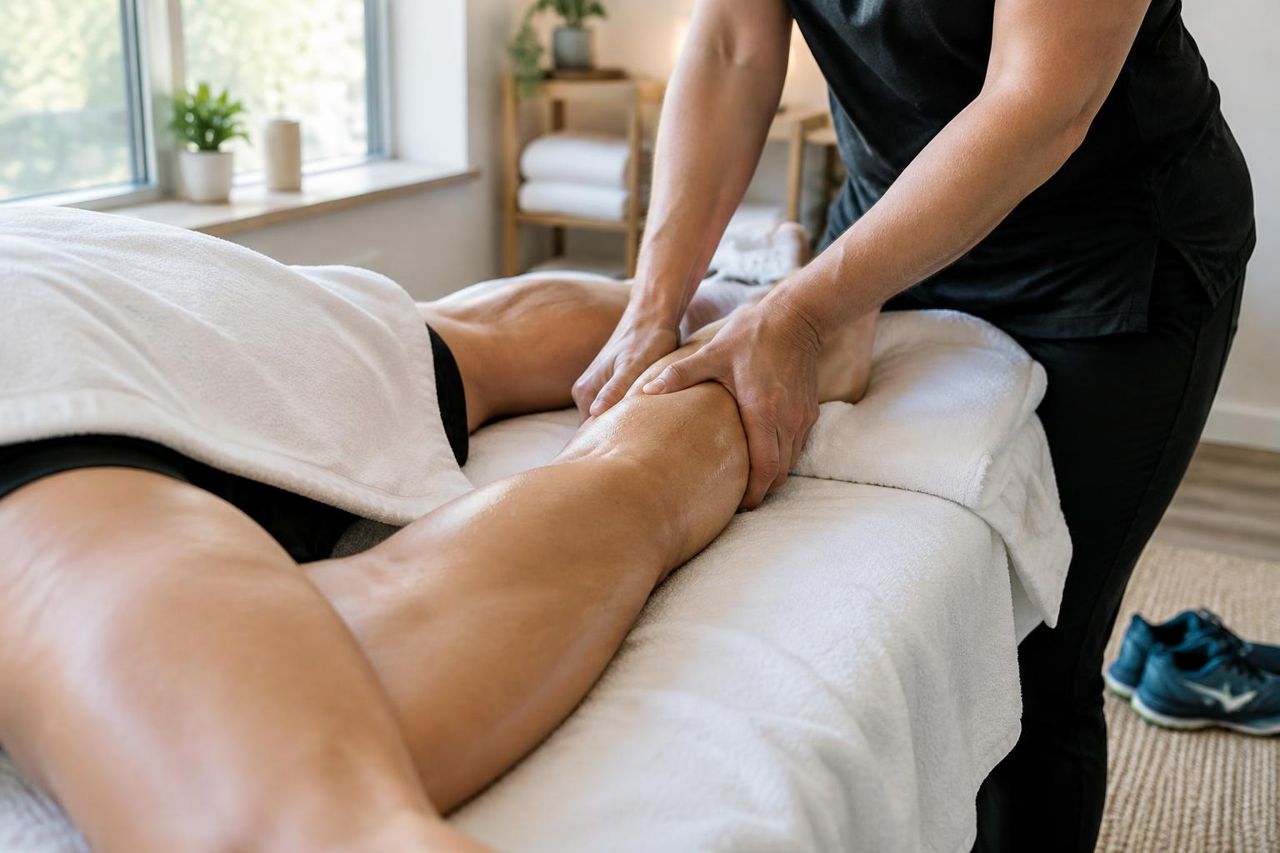
These sources inform the general effects of massage and its limits. They do not validate clinic-specific outcomes. The image is a generated illustration and does not depict an actual session or a member of our team.
Frequently asked questions
Related articles
Sports Massage in Côte Saint-Luc: a specialized treatment for athletes with Cedik Elaiba starting in July
Starting in July, Cedik Elaiba joins the Réhabital team to deliver a specialized sports massage: recovery, injury prevention and performance for athletes of every level.
Deep Tissue Massage: Your Comprehensive Guide to Unlocking Relief at Réhabital in Côte Saint-Luc
Explore the world of Deep Tissue Massage. Learn what it is, its benefits, who can benefit and what to expect from a session at Réhabital, your trusted clinic in Côte Saint-Luc, Montreal.
Therapeutic Massage in Côte Saint-Luc: Relieve Pain, Tension and Stress
Discover how therapeutic massage at Réhabital Clinic relieves muscle pain, improves circulation and restores your body's balance.
Prenatal and Postnatal Massage: Our Complete Protocol, From Pregnancy to the Fourth Trimester
Exactly what we do at each trimester, how we prepare the pelvis and nervous system for birth, and how we support recovery after delivery — including after a caesarean — at our Côte Saint-Luc clinic.
How Does Reflexology Work? Pressure Points Explained
Discover the science behind reflexology: how reflex points on the feet correspond to internal organs, what research actually says and what to expect at your first session.
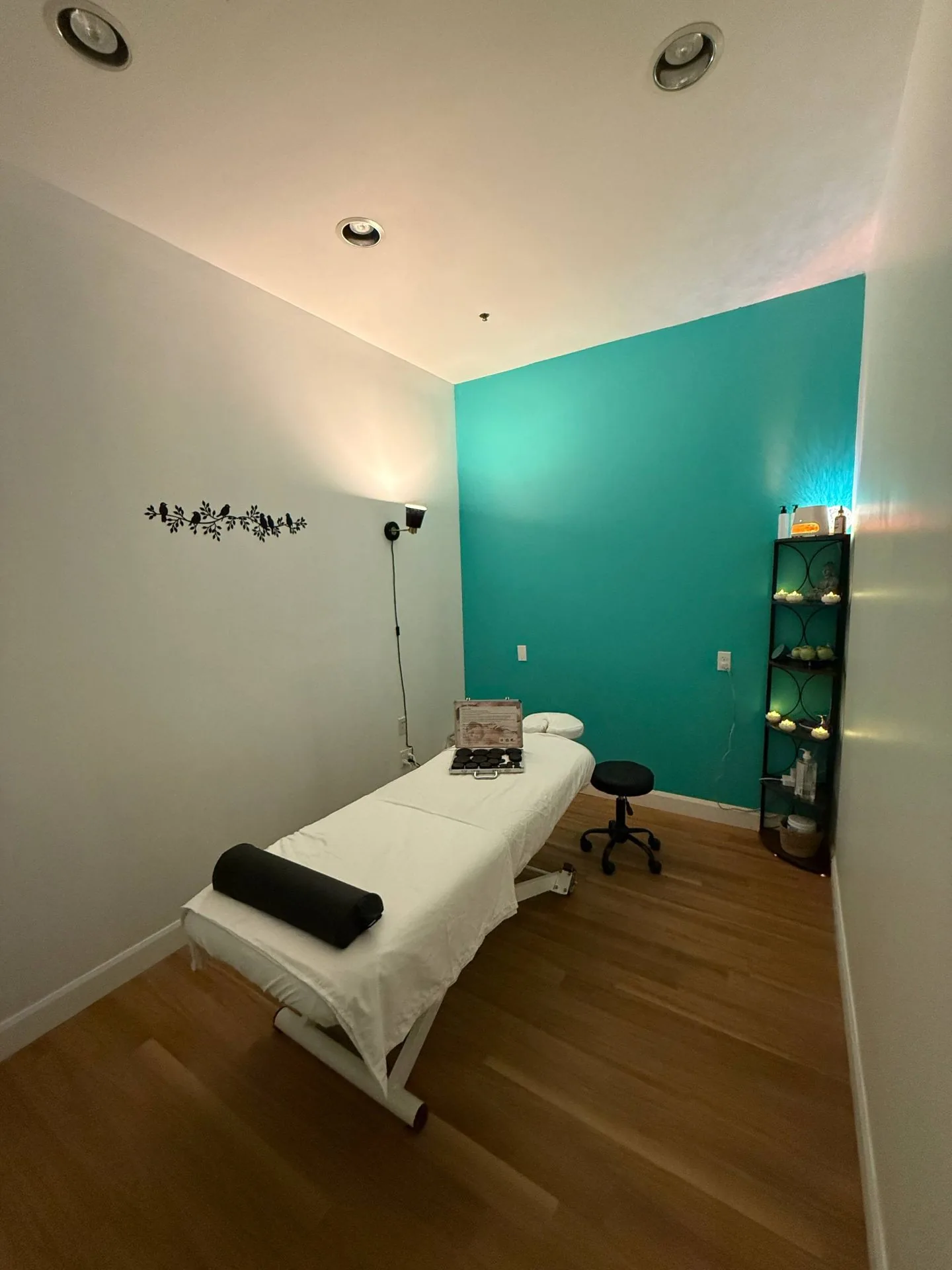
Every Type of Massage Therapy We Offer in Côte Saint-Luc — and Who Each One Is Really For
A complete guide to the 10 massage therapy modalities offered at Réhabital in Côte Saint-Luc: therapeutic, Swedish, deep tissue, prenatal, hot stone, Himalayan salt, lymphatic drainage, reflexology, belly massage and Ayurvedic. Who is each one really right for?