
Sports Massage in Côte Saint-Luc: a specialized treatment for athletes with Cedik Elaiba starting in July
Starting in July, Cedik Elaiba joins the Réhabital team to deliver a specialized sports massage: recovery, injury prevention and performance for athletes of every level.
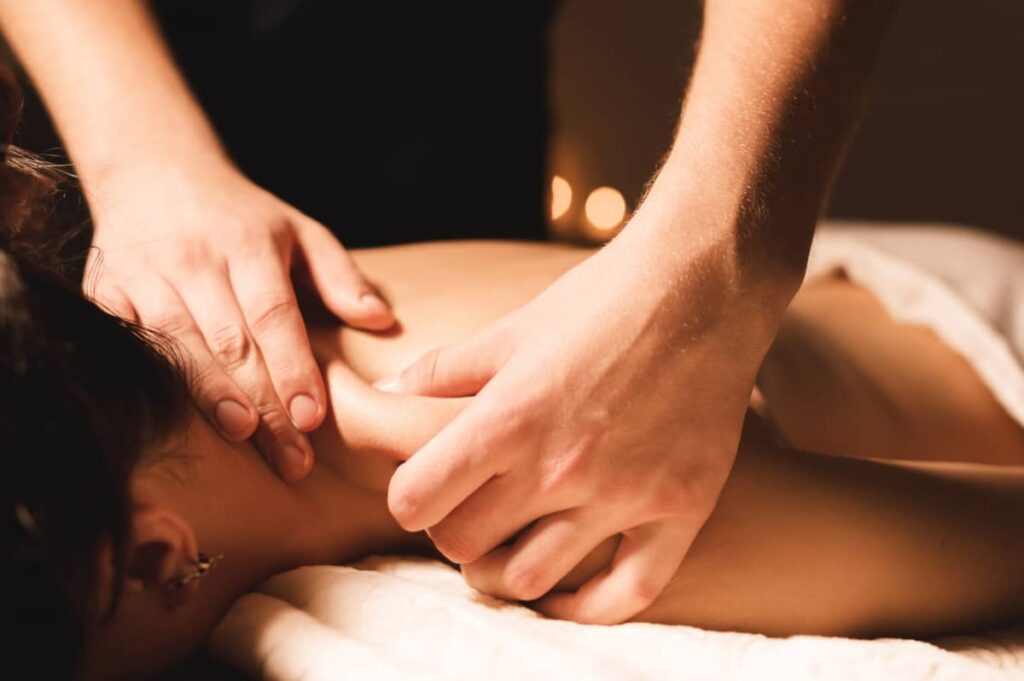
Starting in July 2026, Réhabital in Côte Saint-Luc welcomes Cedik Elaiba, a massage therapist specialized in sports massage. This new service is built for athletes of every level — distance runners, cyclists, triathletes, hockey players, tennis players, strength athletes, dancers and serious amateurs who want to recover faster, prevent injuries and raise their performance in a measurable way. This is great news for the West Montreal sports community, who will now have a dedicated, high-quality service right next door, without having to commute downtown.
The service officially launches in July — bookings opening soon.
1. What is a specialized sports massage?
Sports massage is not just a deep muscle rub. It is a structured approach, tailored to the sport practiced, the training phase (pre-competition, post-effort, off-season, return from injury) and the specific biomechanical demands of each athlete. A marathon runner does not have the same needs as a weightlifter, a hockey player is not treated the same way as a climber, and a middle-distance swimmer has a completely different shoulder mechanic than a golfer. Cedik Elaiba precisely adapts pressure, speed, target chains and duration to your discipline and your moment in the season.
Sports massage belongs to a wider philosophy of performance and athletic longevity. The goal is not only to relieve a one-off soreness, but to maintain a body capable of sustaining a high training load, week after week, without breaking down.
2. The four main goals
• Faster recovery: clearing metabolites accumulated during effort, reducing DOMS, returning to full training intensity sooner. Good recovery shortens the post-effort fatigue window by 24 to 48 hours.
• Injury prevention: early identification of chronic tight zones, stiff muscle chains or left/right asymmetries which, left uncorrected, eventually evolve into tendinopathy, strain or tear.
• Performance prep: muscular priming before competition, targeted neuromuscular activation, increased local vascularization and sharper proprioception.
• Micro-tension treatment: trigger points, fascial adhesions, early-stage tendinopathies, restricted glide between muscle layers.
3. Techniques used by Cedik Elaiba
• Deep tissue work on the muscle chains most loaded by your sport.
• Trigger point therapy for referring pain patterns and strength loss.
• Assisted myofascial stretching to restore joint range and tissue quality.
• Light recovery drainage massage after competition or very intense training.
• Pre-event stimulating massage, about 20 to 30 minutes, targeting the key muscles of the upcoming effort.
• Diaphragmatic release techniques for endurance athletes, where breathing mechanics are central.
4. Which sports?
Running (from 5K to marathon and ultra-trail), road and mountain cycling, triathlon, swimming, ice hockey, soccer, football, tennis, squash, badminton, alpine and cross-country skiing, climbing and bouldering, CrossFit, weightlifting, powerlifting, martial arts (karate, judo, BJJ, boxing), classical and contemporary dance, gymnastics, golf, rowing — any sport that loads the body intensely benefits from regular sports massage. The protocol is always tailored to your discipline, your level and your competition calendar.
5. Periodization: aligning massage with the season
One of the major strengths of a specialized sports therapist is the ability to periodize sessions:
• In general preparation phase (far from competitions), priority on deep, sometimes uncomfortable work to undo old tensions and restore tissue quality.
• In pre-competitive phase (4 to 8 weeks before an objective), intensity is reduced to avoid disturbing neuromuscular adaptation, while maintaining fluidity.
• In tapering (the final 7 to 10 days before the event), short, draining, stimulating massages. No new techniques.
• In post-event recovery, drainage session 24 to 72 hours after the effort, then gradual return to deeper work.
6. How often?
During heavy training blocks: one session every 1 to 2 weeks. Off-season maintenance: monthly. Before a major competition: one targeted session 2 to 4 days before the event, then a recovery session 24 to 48 hours after. For athletes in very heavy loads (marathon prep, hockey camp, intensive CrossFit block), a weekly rhythm for 4 to 6 weeks is sometimes optimal.
7. Combine sports massage with other care
Sports massage fits perfectly into a broader plan with physiotherapy for rehabilitation of an existing injury, osteopathy for posture and chain rebalancing, and naturopathy to optimize nutrition, inflammation and sleep. This multidisciplinary synergy is one of the strengths of Réhabital's team: one place, several expertises that talk to each other.
8. Common mistakes by amateur athletes
• Waiting for injury before consulting — prevention always costs less than rehab.
• Scheduling a very deep massage the day before a competition — almost always counter-productive.
• Underestimating the importance of sleep and hydration in the 24 hours around a deep session.
• Believing that “feeling pain” during a massage is necessarily a good sign — excessive pain creates reflex contractions that cancel the intended effect.
• Neglecting self-release work between sessions (foam roller, lacrosse ball, targeted stretching).
9. Who else benefits?
Even though the service targets athletes, recreational active adults who train 3 to 5 times a week benefit fully: gym regulars, hikers, recreational league players, running parents, sporty remote workers. Sports massage is also very well suited to young growing athletes (with parental consent), particularly in asymmetric sports (tennis, golf, hockey) where compensations set in early.
10. Frequently asked questions about sports massage
Does sports massage always hurt?
No. It can be deep and intense in the general preparation phase, but becomes light and draining in the pre-competitive or post-event phase.
How long before a competition should I book?
Avoid a deep session within 72 hours of an event. Prefer a short, stimulating, superficial session 2 to 4 days before.
Is sports massage covered by insurance?
Yes, when performed by a massage therapist who is a member of a recognized association. An official receipt is issued after every visit.
Do I have to be an elite athlete?
No. Sports massage is just as relevant for a recreational runner, a cycling parent or a friendly-league player as for a competitive athlete.
What to wear during the session?
Comfortable sports underwear or shorts depending on the areas to be treated. Professional draping ensures comfort and privacy.
11. Typical case studies
The marathon runner in preparation. Weekly volume of 60–90 km, chronic tension in the hamstrings and tensor fasciae latae. Program: deep session every 10 days during the build phase, gradual lightening 3 weeks out from race day, short stimulating session 3 days before, drainage session 48 hours after the race.
The recreational hockey player. Marked asymmetry between support leg and push leg, tight hip flexors, compensated low back. Bi-weekly work during the season, focus on hip flexors, internal rotators and quadratus lumborum.
The advanced indoor climber. Overloaded shoulders, saturated forearms, reduced thoracic mobility. Sessions every 2 weeks, integration of myofascial techniques on pectorals and latissimus, specific elbow work (early epicondylitis).
12. What to do before and after a session
Before: hydrate well in the hours before, avoid a large meal in the hour before, arrive in comfortable clothing. After: drink generously, avoid intense training for 24 hours after a deep session, prioritize sufficient sleep, and report to your therapist any unusual pain lasting beyond 48 hours.
13. Integrating sports massage into your training plan
Sports massage is not a standalone intervention: it is part of a recovery ecosystem that includes sleep (absolute priority, 7 to 9 hours), nutrition (sufficient protein, well-periodized carbohydrates, rigorous hydration), daily mobility (10 to 15 minutes of specific exercises), and ideally a physiotherapy follow-up in case of injury or return from injury. Cedik Elaiba's role will be to help you structure this overall plan, in collaboration with your coach if you have one, and with the other Réhabital therapists when needed.
14. For local sports teams and clubs
Cedik will also offer packages adapted to teams and sports clubs in West Montreal — adult hockey leagues, junior soccer teams, running clubs, CrossFit boxes, dance schools, martial-arts dojos and high-school athletic programs. A regular, season-long team follow-up significantly reduces injury rates, absences and time lost to recurring soft-tissue problems, while improving overall team availability for key competitions. We can come on-site for pre-game preparation or post-tournament recovery blocks, or set up dedicated time slots in clinic. Contact our administrative team to discuss a custom agreement tailored to your club's calendar, budget and athlete count.
15. Recovery is a skill, not a luxury
The athletes who progress the most over the years are rarely the ones who train the hardest — they are the ones who recover the smartest. Sports massage is one of the most accessible and powerful tools in that recovery toolbox. Paired with intelligent training planning, restorative sleep, balanced nutrition and a healthy stress hygiene, it builds the kind of durable body that keeps performing year after year, decade after decade.
16. Stay tuned for the July launch
Cedik Elaiba's schedule and booking opening will be announced shortly. To stay in the loop, visit our massage therapy in Côte Saint-Luc page regularly, follow our communications, or call us at 438-842-3550. Réhabital is located at the Cavendish Mall (D4-5800 boulevard Cavendish), Côte Saint-Luc, and welcomes athletes from across West Montreal — Côte Saint-Luc, NDG, Snowdon, Hampstead, Montréal-Ouest and Saint-Laurent — as well as local sports clubs looking to offer their members quality follow-up.
Related articles
Deep Tissue Massage: Your Comprehensive Guide to Unlocking Relief at Réhabital in Côte Saint-Luc
Explore the world of Deep Tissue Massage. Learn what it is, its benefits, who can benefit and what to expect from a session at Réhabital, your trusted clinic in Côte Saint-Luc, Montreal.
Therapeutic Massage in Côte Saint-Luc: Relieve Pain, Tension and Stress
Discover how therapeutic massage at Réhabital Clinic relieves muscle pain, improves circulation and restores your body's balance.
Anti-Stress Massage in Côte Saint-Luc: a specialized treatment coming soon to Réhabital
Discover the Anti-Stress massage, a specialized approach coming soon to Réhabital, designed with Jeanne Andrea Rahantamalala, Elena Caliniuc and Irina Kushnir to deeply calm the nervous system.
Sports osteopathy: Optimize performance and prevent injuries
Discover how osteopathy helps athletes improve performance, accelerate recovery and prevent injuries.
Therapeutic Massage and Hot Salt Stones: Clearing Back and Low Back Pain
How our massage therapists combine clinical therapeutic massage with the mineral heat of Himalayan salt stones to release back muscles, calm the nervous system and produce lasting relief from low back pain in Côte Saint-Luc.
Sports Massage: What It’s Used For and Who It’s For
Preparation, recovery, maintenance: the real uses of sports massage, what research says, who benefits and when to avoid it. A Réhabital guide from Côte Saint-Luc, Montréal.