
Tension Headaches: How Massage Therapy Relieves the Neck, Shoulders and Recurring Head Pain
A tight band around the head, a rock-solid neck, shoulders hiked to the ears: tension-type headache is the most common headache in the world and one of the most responsive to targeted massage therapy.
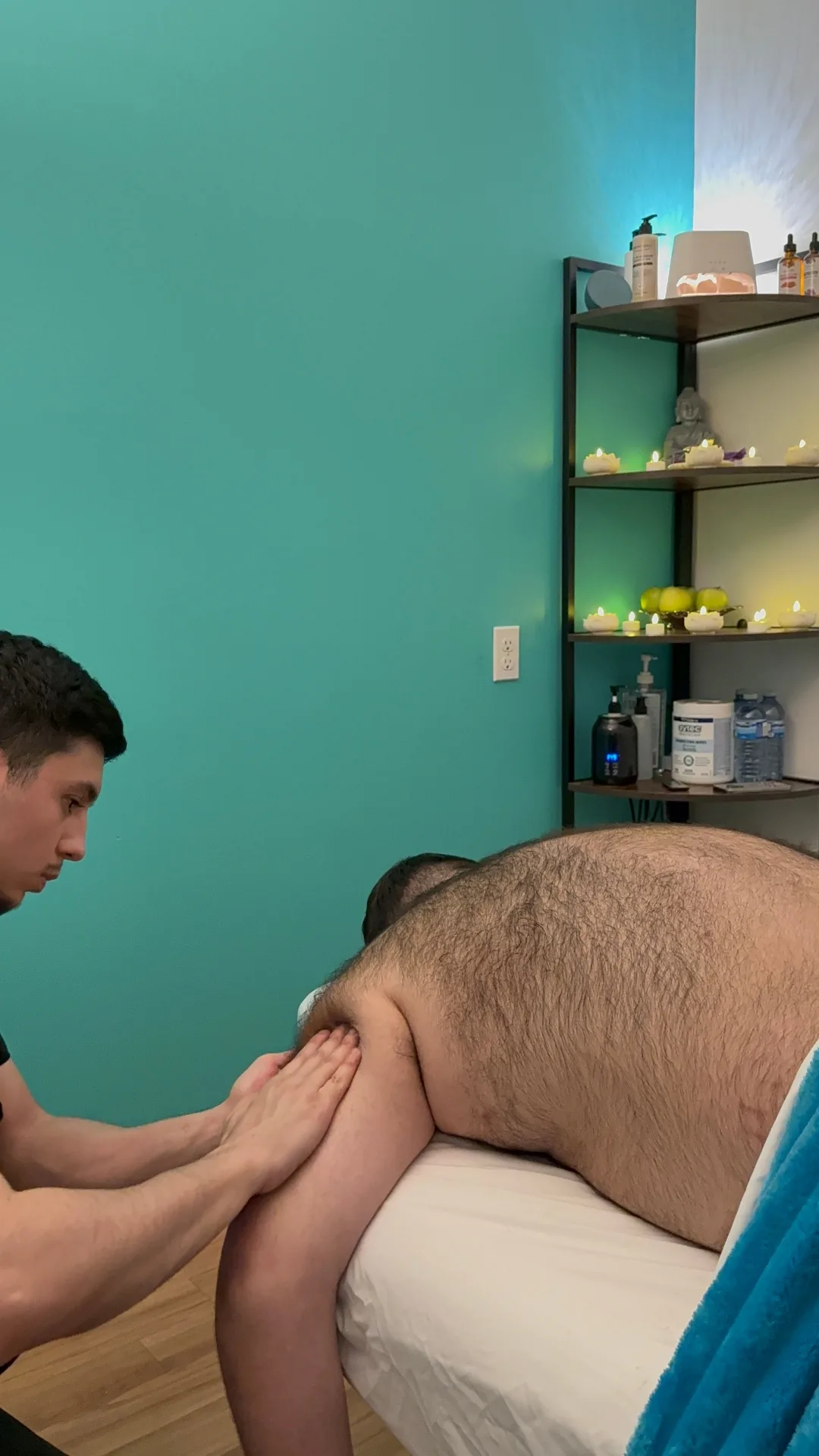
By late afternoon it starts: a dull pressure at the base of the skull, a band tightening around the head, shoulders that have crept up toward the ears without permission. You take a painkiller, it half works, and tomorrow the same thing happens. Tension-type headache is the most common headache disorder in the world, and for a large proportion of people it is driven by muscular and fascial tension in the neck and shoulder girdle — which is exactly where targeted massage therapy does its best work.
This guide explains the mechanism, what a therapeutic session actually addresses, and how to make the relief last. For a clinical overview of the condition, see our tension headache treatment page, our broader headache treatment page, and our neck pain page if the neck is your dominant symptom.
1. Where a tension headache really comes from
Tension-type headache is defined by what it feels like: pressing or tightening rather than throbbing, on both sides rather than one, mild to moderate rather than disabling, and not worsened by walking up stairs. Nausea and light sensitivity are usually absent or minimal. That description separates it from migraine, and it matters, because the treatment logic is different.
The current understanding is that peripheral myofascial input — sustained contraction and sensitised trigger points in the cervical and pericranial muscles — feeds the trigeminocervical complex in the brainstem, where nerve input from the upper neck and from the head converge. Over months, that ongoing input lowers the threshold at which the system reports pain. This is why an episodic headache that used to appear on stressful days can gradually become an almost daily companion.
Two consequences follow. First, treating the muscles genuinely can change the headache, not just mask it. Second, the earlier this is addressed, the easier it is, because chronic sensitisation takes longer to reverse than fresh tension.
2. The four muscles behind most headaches
Referred pain patterns from myofascial trigger points have been mapped in detail, and four regions account for the majority of tension headaches we see.
The upper trapezius refers pain up the side of the neck, behind the ear and into the temple — the classic comma-shaped pattern. It is the single most commonly involved muscle, kept loaded by shoulder elevation at the desk, heavy bags on one shoulder, and stress.
The suboccipitals, four small muscles between the skull and the top two vertebrae, produce a deep, hard-to-localise ache that patients describe as being inside the head, often spreading from the base of the skull over the crown toward the eye. They have fascial attachments to the dura mater, which helps explain how localised tension there produces such diffuse head pain.
The sternocleidomastoid refers to the forehead, behind the eye, the cheek and the top of the head, and can also produce dizziness and a feeling of visual disturbance. It is overloaded by forward head posture and by upper-chest breathing.
The temporalis and masseter — the jaw muscles — refer to the temple, the teeth and above the eyebrow. Clenching, often nocturnal and often unnoticed, is a major driver, and this is where headache overlaps with jaw dysfunction. Our TMJ disorder page covers that presentation.
3. Why desk work is such a reliable trigger
The head weighs about five kilograms. Held directly over the shoulders, the neck extensors have an easy job. Tilt it forward by a few centimetres, as every laptop user does, and the effective load on those muscles multiplies. Now hold that for six hours, five days a week, with the shoulders slightly elevated because the desk is too high and the forearms are unsupported.
Add the breathing pattern. Focused screen work reliably produces shallow, upper-chest breathing, sometimes with brief breath-holding during concentration. Upper-chest breathing recruits the scalenes and sternocleidomastoid as accessory muscles roughly 20,000 times a day. Those are neck muscles doing a lung's job, and they fatigue exactly the way you would expect.
This is why massage that only addresses the shoulders provides two days of relief. Lasting change requires reducing the tension, then removing the daily input that recreates it.
4. What a therapeutic massage session addresses
At Réhabital, a headache-focused massage session is not a generic back massage. It begins with a short intake: where the pain sits, when it appears, what your workstation looks like, whether you clench, how you sleep, and whether there is any history of trauma or whiplash.
Treatment then works systematically through the involved chain: broad warming work over the upper back and shoulders; sustained pressure and ischemic compression on trigger points in the upper trapezius and levator scapulae; careful, slow release of the suboccipital group with the head supported; work along the sternocleidomastoid and scalenes; scalp and temporalis work, which patients are often surprised to find is the moment their head pain changes; and jaw muscle work externally when clenching is part of the picture.
Pressure is calibrated throughout. Deep does not mean better. On a highly sensitised neck, excessive pressure increases guarding and can provoke a post-treatment headache. The goal is enough input to change tissue tone without triggering a protective response.
5. Which type of massage to choose
Patients often ask whether they should book deep tissue or Swedish. In practice the best headache session usually blends them. Deep tissue and therapeutic work provides the specific trigger point and myofascial release that changes the peripheral input. Swedish work, with its slower rhythm and broader strokes, drives the parasympathetic shift that lowers overall muscle tone and stress reactivity — and stress reactivity is half the problem in chronic tension headache.
Hot stone work can be an excellent choice for people whose neck is too sensitive to tolerate strong pressure, because heat reduces tone before any deep work is attempted. If you want a comparison of the modalities we offer, our massage therapy page details each one, and our article on massage for nervous system calming explains the relaxation mechanism in depth.
6. How quickly it works and how long it lasts
Many patients notice a change in the same session — the pressure lifts, the neck rotates further, and the head feels lighter. That immediate effect commonly lasts two to five days at first. With a series of weekly or biweekly sessions over four to six weeks, the pattern usually shifts: headaches become less frequent, less intense, and shorter, and the relief between sessions extends.
If nothing changes after three or four well-targeted sessions, that is useful information rather than a failure. It suggests either a significant joint or fascial restriction that manual soft tissue work alone will not resolve, a strong jaw or dental component, or a headache type that is not primarily tension-driven. In those cases we reassess and often involve osteopathy or recommend medical evaluation.
7. What to do between sessions
Four habits make massage results last. Raise your screen so the top of it is at eye level and use an external keyboard with a laptop; this single change removes more daily neck load than any exercise. Set an hourly reminder to drop the shoulders, roll them back, and take three slow breaths into the lower ribs. Apply heat to the neck and shoulders for ten to fifteen minutes in the evening rather than reaching first for a painkiller. And review your pillow: it should keep the neck in line with the spine, which usually means thinner for back sleepers and thicker for side sleepers.
Hydration and caffeine deserve a mention. Dehydration and caffeine withdrawal are both common headache triggers, and both are easy to fix. Consistency matters more than quantity: the same amount of coffee at the same time each day is easier on the system than a large weekday intake and none on weekends.
8. When massage should be combined with something else
Recurrent headaches usually have more than one driver. Massage lowers the muscular and stress component brilliantly, but if the upper cervical joints are genuinely restricted, if the thoracic spine is stiff, or if the diaphragm is not doing its job, the tension keeps being recreated. That is the domain of osteopathy, and our article on visceral osteopathy and neck pain explains how tension below the neck keeps reloading it.
Physiotherapy adds the third piece: endurance of the deep neck flexors and scapular stabilisers. Trials of deep neck flexor training in cervicogenic and tension-type headache show meaningful reductions in frequency, and the training takes about five minutes a day. Many Réhabital patients with long-standing headaches follow exactly this sequence — massage for immediate relief, osteopathy for the mechanics, physiotherapy to keep it.
9. Headaches that are not tension headaches
Correct identification protects you. Migraine is typically one-sided, throbbing, worse with activity, and accompanied by nausea or light and sound sensitivity; see our migraine page. Cervicogenic headache is one-sided, starts in the neck and is provoked by neck positions. Headache with dizziness may involve the vestibular system — our vertigo page covers that.
And some headaches are medical emergencies. A sudden severe headache peaking within seconds, headache with fever and a stiff neck, headache after head injury, headache with new neurological symptoms such as weakness, slurred speech or visual loss, a headache that progressively worsens over weeks, or a brand-new headache pattern after age 50 all require prompt medical assessment rather than massage.
10. Booking massage therapy at Réhabital
Réhabital is located at D4-5800 Cavendish Boulevard, Côte Saint-Luc, inside Cavendish Mall, with free indoor parking, a bilingual team and evening availability. Our massage therapists issue receipts for private insurance reimbursement. We accept private insurance plans and SAAQ files; we do not accept CNESST files.
Book online 24/7 on Jane App or call 438-842-3550. Learn more on our massage therapy page, and continue with massage for stress and anxiety or our guide to deep tissue massage for chronic pain. Related conditions include upper back pain, whiplash and stress and anxiety.
This article is educational and does not replace an individual assessment. Sudden, severe or progressively worsening headaches require medical evaluation.
Frequently asked questions
Related articles
Muscle Knots and Cramps: Which Massage Type Actually Relieves Each Symptom?
A complete guide to muscle knots, trigger points and cramps: why they form, which massage types relieve them, and when to see a therapist in Côte Saint-Luc.
Therapeutic Massage in Côte Saint-Luc: Relieve Pain, Tension and Stress
Discover how therapeutic massage at Réhabital Clinic relieves muscle pain, improves circulation and restores your body's balance.
Tension Headaches: How Osteopathy Delivers Lasting Relief from Chronic Head Pain
Recurring tension headaches? Osteopathy at Réhabital in Côte Saint-Luc targets the real cause — neck, jaw, diaphragm and stress — for lasting relief.
Can Massage Therapy Help Sciatica — or Make It Worse?
The wrong massage can flare sciatica for three days. The right one makes exercise possible and calms the nerve. Here is how our massage therapists adapt pressure, technique and timing.
Therapeutic Massage and Hot Salt Stones: Clearing Back and Low Back Pain
How our massage therapists combine clinical therapeutic massage with the mineral heat of Himalayan salt stones to release back muscles, calm the nervous system and produce lasting relief from low back pain in Côte Saint-Luc.
Himalayan Hot Salt Stone Massage: Heat, Minerals and Real Low Back Relief
Why the mineral heat of Himalayan salt stones releases tight muscles, calms the nervous system and eases chronic low back pain — and what a session looks like in Côte Saint-Luc.