
Cranial Osteopathy and Facial Puffiness: A Gentle Approach to Reducing Facial Swelling in Côte Saint-Luc
Discover how cranial osteopathy helps reduce facial puffiness and morning swelling by releasing cranial sutures, stimulating lymphatic drainage and balancing the autonomic nervous system — by our team of osteopaths in Côte Saint-Luc.
Why Does My Face Look Puffy? A Question We Hear Every Week in Côte Saint-Luc
You wake up, glance in the mirror and your face looks heavier than the person who went to bed the night before. Your cheeks feel fuller, your eyelids look swollen, your jawline has lost its definition and the area under your eyes has the unmistakable shadow of fluid retention. For some people this fades within an hour. For many others, the puffiness lingers for half the day — and over time it becomes a chronic, frustrating pattern.
At Réhabital's osteopathy clinic in Côte Saint-Luc, facial puffiness is one of the most underestimated complaints we hear. Patients from CSL, Hampstead, NDG, Westmount and across Montreal usually try every cream, jade roller, ice cube, antihistamine and “lymphatic” gadget before realising that the swelling is not a skin problem at all — it is a fluid and tension problem rooted in the head, neck and upper thorax.
This is exactly where cranial osteopathy shines. Using extremely gentle, precise contact on the bones of the skull, the face, the cervical spine and the surrounding fascia, a trained osteopath can restore the natural mobility of the cranial sutures, free the venous and lymphatic outflow from the head and calm the autonomic nervous system that keeps tissues swollen. The result, for many patients, is a visibly lighter, more defined face — and a quieter, calmer head.
In this in-depth guide, our osteopathic team at Réhabital — including clinic founder Shahram Ghasemi (MD Iran, DOMP) (DOMP), who has a special interest in cranial and visceral techniques — explains why facial puffiness happens, how cranial osteopathy works at the anatomical level, what a session looks like and how to combine treatment with lifestyle changes for lasting results.
Understanding Facial Puffiness: It's a Drainage Problem, Not a Skin Problem
Facial puffiness, medically referred to as facial edema, is the visible accumulation of interstitial fluid in the soft tissues of the face. The skin itself is rarely the cause. The face is drained by a dense network of veins and lymphatic vessels that travel through narrow anatomical corridors — the cranial sutures, the foramina at the base of the skull, the temporomandibular joint (TMJ), the cervical fascia and the thoracic outlet — before returning fluid to the heart through the subclavian veins.
Anything that mechanically compresses these corridors or slows the autonomic systems that govern fluid flow will cause fluid to pool. The most common contributors we identify in clinical practice are:
- Cervical and upper thoracic restrictions compressing the jugular and subclavian outflow
- TMJ dysfunction and chronic jaw clenching, which restricts the temporal bones and lymphatic flow around the parotid and submandibular nodes
- Restricted cranial sutures after old whiplash, dental work, orthodontics, falls or birth trauma
- Sinus congestion and chronic mouth breathing, which slow venous return through the cavernous sinus and pterygoid plexus
- Sympathetic nervous system overdrive from stress, poor sleep and screen overuse — keeping vessels constricted and fascia tense
- Hormonal fluctuations, sodium-rich diets, alcohol and a sedentary lifestyle, which all increase total body fluid retention
Notice that almost every one of these factors involves structure and tone — exactly what manual osteopathy is designed to assess and treat. This is why facial puffiness is so often resistant to creams and serums: the cause is one or two floors below the skin.
What Is Cranial Osteopathy? A Gentle Science of the Head, Face and Sacrum
Cranial osteopathy is a refined branch of manual osteopathy that focuses on the subtle mobility of the bones of the skull, the membranes that line them (the dura mater), the cerebrospinal fluid that circulates within them and the connection between the cranium and the sacrum through the spinal column. It was developed by William Garner Sutherland in the early 20th century after he observed that the cranial sutures are not fused — they remain mobile throughout life and respond to compression and release.
To learn more about this approach as part of a wider clinical toolkit, you can read our overview “Osteopathy: a global approach to body health” and our deeper article on what an osteopath actually does.
Cranial techniques use a touch pressure of less than five grams — about the weight of a Canadian nickel. There are no cracks, no thrusts, no forceful movement. Instead, the practitioner listens through their hands to the rhythm and quality of tissue motion in the head, identifies areas of restriction or strain and uses precise contact to encourage the tissues to release. Patients almost always describe the experience as deeply relaxing, often falling asleep on the table.
How Cranial Osteopathy Reduces Facial Puffiness: The Mechanisms
Reducing facial swelling with cranial osteopathy is not a cosmetic trick — it is the logical consequence of restoring four interconnected systems. Here is what your osteopath is actually working on during a session at our Côte Saint-Luc clinic.
1. Releasing the cranial sutures and freeing venous outflow
The veins of the face drain primarily through the internal jugular vein, which exits the skull through the jugular foramen — a narrow opening between the temporal and occipital bones. When these bones lose their micro-mobility (after whiplash, jaw clenching or chronic upper neck tension), outflow slows and fluid backs up into the face. Cranial techniques on the occiput, temporal bones and upper cervical spine restore the geometry of this corridor and allow venous blood to drain efficiently.
2. Stimulating cervico-facial lymphatic drainage
The face is drained by the parotid, submandibular, submental and deep cervical lymph nodes, which all empty into the thoracic duct at the base of the neck. Restrictions in the cervical fascia, the clavicles and the upper ribs act like a closed valve at the bottom of a sink. By releasing the upper thorax, the cervical fascia and the SCM/scalene complex, your osteopath reopens the drainage pathway. This is why you may feel the urge to swallow or visit the bathroom shortly after a session — the lymphatic system literally starts moving again.
3. Decompressing the TMJ and the temporal bones
Chronic jaw clenching and bruxism — extremely common among patients with stressful Montreal lifestyles — compress the temporal bones and restrict the parotid lymph nodes that sit just in front of the ear. Specific intra-oral and extra-oral cranial techniques release the TMJ, the masseter, the temporalis and the pterygoid muscles. The result is a more defined jawline, less puffiness in the cheeks and often a dramatic reduction in tension headaches.
4. Calming the autonomic nervous system
Cranial osteopathy has a profound regulating effect on the vagus nerve and the broader autonomic nervous system. By shifting the body from a sympathetic (“fight-or-flight”) state into a parasympathetic (“rest-and-digest”) state, vessels dilate, fluid moves, breathing deepens and inflammation decreases. This is the same nervous-system pathway we describe in our article on massage therapy for nerve calming and relaxation and it explains why patients often look brighter and more rested by the end of the session.
5. Addressing sinus and nasal congestion
Many patients with facial puffiness also report chronic sinus pressure, blocked noses or recurrent sinusitis. Cranial techniques on the frontal, maxillary, ethmoid and sphenoid bones — combined with gentle work on the falx cerebri and tentorium cerebelli — improve sinus ventilation and drainage. The face becomes lighter, breathing becomes easier and the dark circles under the eyes (which are often venous, not pigmentary) start to fade.
Who Is a Good Candidate for Cranial Osteopathy at Réhabital?
Cranial osteopathy is exceptionally safe and well-tolerated, which means almost anyone can benefit — from newborns to seniors. In our Côte Saint-Luc clinic, the typical patient seeking help for facial puffiness falls into one of these profiles:
- Adults who wake up with consistently puffy eyes and cheeks despite good sleep and hydration
- Patients with a history of jaw clenching, bruxism or TMJ dysfunction
- People recovering from whiplash, concussion or dental/orthodontic work
- Chronic mouth breathers and patients with recurrent sinus congestion
- Office workers from Montreal's downtown and West-End districts dealing with “tech neck” and forward head posture
- Women experiencing cyclical facial swelling linked to hormonal fluctuations
- Patients with chronic stress, anxiety or sleep disturbances driving sympathetic overdrive
- Anyone who has tried lymphatic facials, gua sha and creams without lasting results
If your puffiness is sudden, painful, accompanied by fever, or strictly one-sided, please consult your physician first to rule out infection, allergy or vascular conditions before booking osteopathy.
What a Cranial Osteopathy Session Looks Like at Our CSL Clinic
A first session at Réhabital lasts about 60 minutes and follows the same rigorous structure as any osteopathic consultation. Your osteopath begins with a detailed health history — sleep, stress, diet, dental work, past traumas, hormonal cycle — and a global postural assessment. We pay close attention to the upper neck, the clavicles, the jaw and the breathing pattern, because these zones almost always hold the key to facial drainage.
You then lie comfortably on your back, fully clothed (apart from heavy sweaters or scarves). Your osteopath places their hands very gently on your head, jaw, neck and upper thorax and works through several layers:
- Release of the upper thorax, clavicles and first ribs to reopen the lymphatic outlet
- Decompression of the upper cervical spine (occiput–C1–C2)
- Balancing of the temporal and occipital bones to free the jugular foramen
- Gentle work on the maxilla, frontal, ethmoid and sphenoid bones for sinus drainage
- TMJ and intra-oral release if indicated and consented to
- Cranial-sacral balancing to integrate the whole system
Most patients describe the experience as floating, deeply restful and somewhat dream-like. It is common to feel warmth, gentle pulsations, the urge to sigh deeply, or even mild emotional release. Many patients see a visible difference in the mirror within minutes of standing up.
For more on what to expect more generally, see our guides on how many osteopathy sessions you need and when you should see an osteopath.
Meet the Osteopaths Treating Facial Puffiness at Réhabital Côte Saint-Luc
Two osteopaths share this work in our Côte Saint-Luc clinic and both have specific training in cranial techniques.
Shahram Ghasemi, Physical Medicine & Rehabilitation Specialist (Iran), DOMP, Member of ACMA — Founder of Réhabital, Shahram brings more than 30 years of clinical experience in pain management, rehabilitation and integrative manual therapy. His cranial work is informed by his medical background, which makes him particularly thorough in screening for underlying causes of facial swelling and in coordinating care with your physician or dentist when needed.
Both practitioners are bilingual and welcome patients in English, French, Persian, Azeri and several other languages spoken in the CSL community.
Lifestyle Habits That Multiply the Benefits of Cranial Osteopathy
Manual treatment is most effective when it is supported by daily habits that protect facial drainage between sessions. Our practitioners typically recommend the following at the end of a first appointment:
- Sleep slightly elevated. Use a medium pillow that keeps the head 5–10 cm above the heart to support venous return overnight.
- Hydrate consistently. Counter-intuitively, dehydration increases facial puffiness because the body retains sodium. Aim for 1.5–2 L of water spread through the day.
- Reduce evening sodium and alcohol. Both worsen morning facial swelling.
- Breathe through your nose. Nasal breathing improves sinus ventilation and activates the parasympathetic system.
- Move your upper body. Gentle daily neck rotations, shoulder rolls and thoracic mobility drills keep the lymphatic outlet open.
- Manage jaw clenching. Be aware of daytime clenching and discuss a night guard with your dentist if you grind your teeth.
- Combine with manual lymphatic drainage massage when indicated — see our article on lymphatic drainage massage for the rationale.
How Cranial Osteopathy Compares to Other Approaches
Patients often ask how cranial osteopathy compares to other treatments they have already tried. Here is the short version, drawn from our daily practice in Côte Saint-Luc.
Cranial osteopathy vs. lymphatic facial massage: Both improve drainage, but cranial osteopathy works one level deeper. A lymphatic facial mobilises fluid that has already accumulated in the skin; cranial osteopathy addresses why the fluid is accumulating in the first place — restricted sutures, compressed jugular foramen, tight cervical fascia. They combine beautifully.
Cranial osteopathy vs. chiropractic: Chiropractic care focuses primarily on spinal adjustments. Cranial osteopathy works on the cranial bones, the dural membranes and the autonomic nervous system, with extremely gentle pressure. For more detail, read chiropractor vs. osteopath in Montreal.
Cranial osteopathy vs. physiotherapy: Physiotherapy is excellent for active rehabilitation and exercise prescription. Cranial osteopathy is uniquely suited to the subtle, fluid-related and autonomic dimensions of facial puffiness. The two approaches are complementary, not competing — see our analysis in osteopathy vs. physiotherapy.
Cranial osteopathy vs. aesthetic medicine: Injectables and energy-based devices treat the surface; cranial osteopathy treats the architecture and the drainage underneath. Many of our patients combine cranial sessions with skin-focused care from our aesthetic team for a comprehensive result.
Realistic Expectations: How Many Sessions and How Fast?
Most patients notice a visible reduction in facial puffiness after a single cranial osteopathy session. For lasting change, however, our team typically recommends a short series of 3 to 5 sessions over 6 to 8 weeks, followed by maintenance every 4 to 8 weeks if needed. Patients with significant TMJ dysfunction, chronic sinus issues, or post-whiplash patterns may need slightly more sessions.
This rhythm matches what we describe in our broader article on treatment frequency in osteopathy — slow, cumulative, deeply integrated change rather than dramatic one-off fixes.
Booking Cranial Osteopathy in Côte Saint-Luc
Réhabital – Clinique de réadaptation et de santé is located at D4–5800 Cavendish Boulevard, Côte Saint-Luc, H4W 2T5, inside the Cavendish Centre. We welcome patients from CSL, Hampstead, NDG, Snowdon, Westmount, Côte-des-Neiges, Mont-Royal, Montréal-Ouest and Saint-Laurent. Free on-site parking, evening slots and bilingual care in French and English are standard.
Book an osteopathy appointment online with Shahram, or call us at (438) 842-3550. Insurance receipts are issued on request.
Frequently Asked Questions About Cranial Osteopathy and Facial Puffiness
1. Can cranial osteopathy really reduce facial puffiness?
Yes. By releasing cranial and cervical restrictions, restoring venous and lymphatic outflow from the head and calming the autonomic nervous system, cranial osteopathy directly addresses the mechanical and physiological causes of facial swelling. Most patients see a visible difference within one to three sessions.
2. Is cranial osteopathy safe?
Cranial osteopathy is one of the gentlest manual therapies that exists. It uses very light contact, no cracking and no forceful manipulation. It is suitable for adults, seniors, pregnant women, infants and post-surgical patients, provided the practitioner is properly trained.
3. How long does a cranial osteopathy session last at Réhabital?
A first session is approximately 60 minutes, including assessment. Follow-up sessions are typically 45–60 minutes depending on clinical needs.
4. How many sessions will I need to see a difference in puffiness?
Most patients notice a difference after a single session. For lasting change, a short series of 3–5 sessions over 6–8 weeks is usually recommended, followed by occasional maintenance.
5. Will I see results immediately after the session?
Often yes. Patients frequently report a lighter, more defined face within minutes of standing up. The full effect continues to develop over the following 24–72 hours as the lymphatic system processes the released fluid.
6. Does cranial osteopathy hurt?
No. The pressure used is extremely light — less than five grams. Patients describe the experience as deeply relaxing and many fall asleep during treatment.
7. Can cranial osteopathy help with TMJ dysfunction and jaw clenching?
Yes. TMJ dysfunction is one of the strongest indications for cranial osteopathy. By releasing the temporal bones, the masseter, the pterygoids and the upper cervical spine, the jaw can recover normal mechanics, which also reduces facial puffiness around the cheeks and jawline.
8. Can cranial osteopathy help with sinus congestion and dark circles?
Yes. Improving venous and lymphatic drainage from the face is exactly what fades many “venous” dark circles and reduces chronic sinus pressure. This is one of the most appreciated effects of cranial work.
9. Is cranial osteopathy covered by insurance in Quebec?
Most private insurance plans in Quebec cover osteopathy, including cranial techniques, when performed by a qualified DOMP. Réhabital provides receipts for reimbursement; please check your specific plan for coverage details.
10. Can I combine cranial osteopathy with massage therapy or aesthetic treatments?
Absolutely. Many of our patients pair cranial osteopathy with manual lymphatic drainage massage, deep tissue work or clinical facials. The approaches work on different layers and amplify each other when sequenced correctly. Our team will coordinate a plan that fits your goals.
11. Is cranial osteopathy suitable during pregnancy?
Yes. Cranial osteopathy is one of the safest and most appreciated manual therapies during pregnancy, helping to manage facial puffiness, sinus congestion, headaches and overall stress, all without forceful manipulation.
12. Who performs cranial osteopathy at Réhabital in Côte Saint-Luc?
Cranial osteopathy is performed by our osteopath: Shahram Ghasemi (MD Iran, DOMP, Member of ACMA), founder of the clinic (DOMP, Member of NMOS), who has a special interest in cranial and visceral techniques and TMJ-related conditions.
13. How can I book a cranial osteopathy session at Réhabital?
You can book online through our Jane App portal or call us at (438) 842-3550. Our clinic is located at D4–5800 Cavendish Boulevard, Côte Saint-Luc, H4W 2T5, with free parking and evening availability.
Frequently asked questions
Go deeper with our dedicated osteopathy pages
Osteopathy pages with Shahram Ghasemi, MD (Iran), DOMP in Côte Saint-Luc:
Related conditions we treat
Related articles
Why You Wake Up With Back Pain Every Morning (And How to Fix It Without Medication)
Discover the hidden causes of your morning back pain and how osteopathy can provide lasting relief without relying on painkillers.
Treating Sciatica with Osteopathy: Shahram Ghasemi's Approach in Côte Saint-Luc
Pain shooting down the leg, tingling, trouble sitting? Discover how osteopath Shahram Ghasemi approaches sciatica at Réhabital in Côte Saint-Luc — assessment, manual techniques and a realistic recovery plan.
Osteopathy: A Whole-Body Approach to Restoring Your Body's Balance
Discover how osteopathy treats the root cause of your pain by restoring your body's structural, visceral and cranial balance.
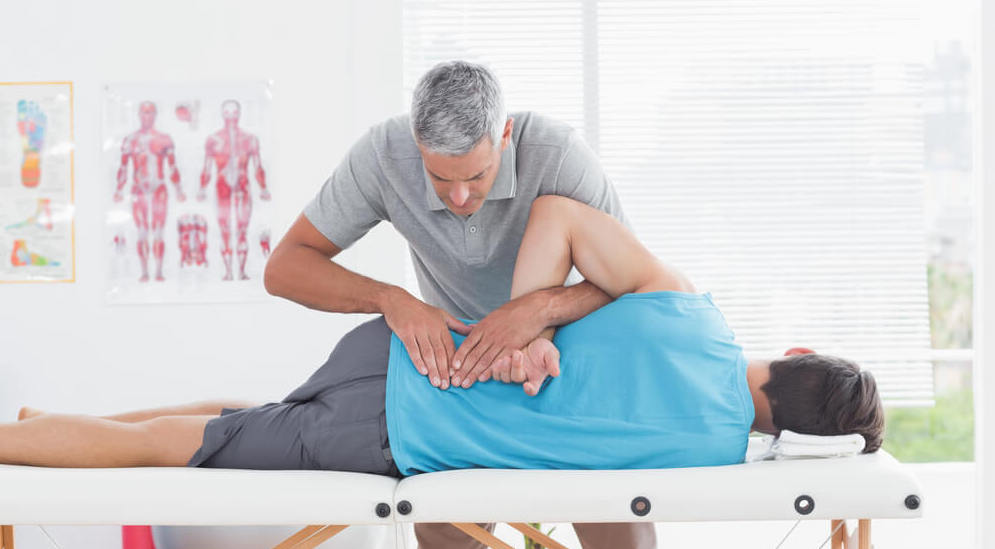
Tension Headaches: How Osteopathy Delivers Lasting Relief from Chronic Head Pain
Recurring tension headaches? Osteopathy at Réhabital in Côte Saint-Luc targets the real cause — neck, jaw, diaphragm and stress — for lasting relief.
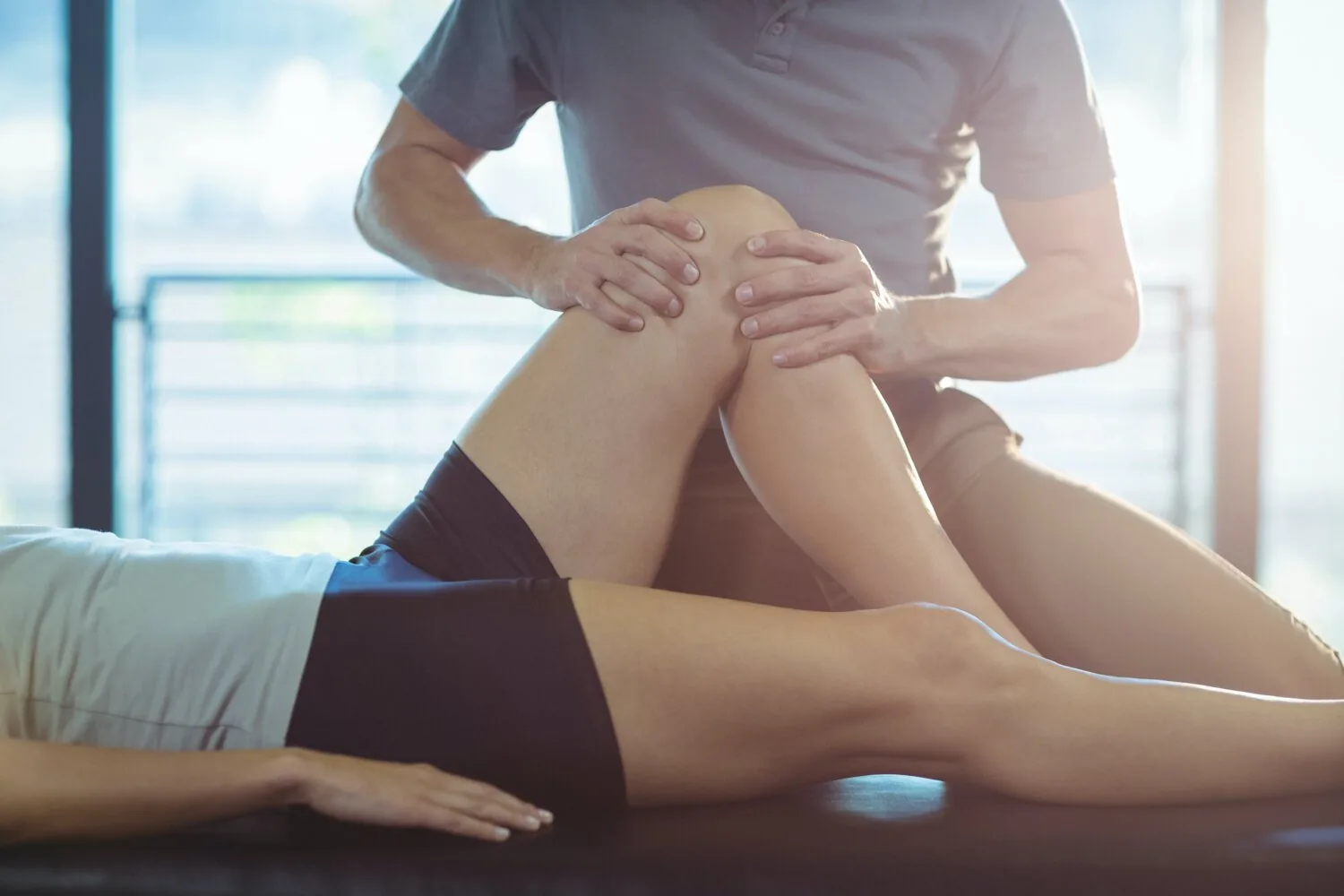
Osteopathy and Neck Pain: How Visceral Osteopathy Treats the Neck Pain That Keeps Coming Back
Neck pain does not always come from the neck. The diaphragm, stomach, liver, pericardium and chest fascia can pull on the cervical spine through precise anatomical chains. Here is how visceral osteopathy fits into chronic neck pain care in Côte Saint-Luc.
Osteopathy vs Physiotherapy: Which Approach Should You Choose in Côte Saint-Luc?
Complete comparison between osteopathy and physiotherapy: differences, indications, training, insurance reimbursement and how to choose based on your condition in Côte Saint-Luc, Hampstead, NDG and across Montreal.