
Osteopathy and Neck Pain: How Visceral Osteopathy Treats the Neck Pain That Keeps Coming Back
Neck pain does not always come from the neck. The diaphragm, stomach, liver, pericardium and chest fascia can pull on the cervical spine through precise anatomical chains. Here is how visceral osteopathy fits into chronic neck pain care in Côte Saint-Luc.

Few complaints are as stubborn as chronic neck pain. Patients come to our Côte Saint-Luc clinic with the same story: the massage feels wonderful, the stretch helps for an afternoon, the new pillow made a difference for a week, and then the same tight band across the top of the shoulders returns. They have been treated at the site of the pain many times. What has rarely been examined is why the neck keeps being pulled back into tension.
That is the question osteopathy is built to answer, and it is where visceral osteopathy — the assessment and treatment of the mobility of the internal organs and the fascia that suspends them — turns out to be surprisingly relevant to a symptom that appears to live entirely in the cervical spine.
This guide explains the anatomy that connects the abdomen and chest to the neck, what actually happens during an assessment and treatment at Réhabital, who benefits, who should not be treated this way, and what a realistic recovery timeline looks like. For the general picture of what we do, see our osteopathy service page.
1. Why the neck is rarely the whole story
The cervical spine is the most mobile and least mechanically protected region of the spine. It carries a 4.5 to 5.5 kg head on seven small vertebrae, and it must constantly adjust that head so the eyes stay level and the inner ear stays oriented. This is not a negotiable function: the visual and vestibular systems demand a horizontal gaze, and the neck will deform itself as much as necessary to deliver it.
That last point is the key to chronic neck pain. If anything below the neck changes the orientation of the thorax — a depressed ribcage, a rotated upper abdomen, a hip that no longer extends, a diaphragm stuck in inhalation — the neck compensates. It becomes the final adjuster in a chain of compensations, and adjusters wear out. The muscles that most people call "knots" (upper trapezius, levator scapulae, scalenes, sternocleidomastoid) are not misbehaving; they are working overtime holding a head that has been displaced by something further down.
This is why treating only the painful tissue produces relief that lasts days rather than months. The tissue was never the driver.
2. What visceral osteopathy actually is
Visceral osteopathy is often misunderstood as "massaging the organs." It is not. The target is mobility and motility: the ability of an organ to glide against its neighbours during breathing and movement, and the fine intrinsic rhythm practitioners palpate within it.
Every organ in the abdomen and thorax is suspended and separated by connective tissue — peritoneum, mesentery, ligaments, sliding surfaces lubricated by serous fluid. The liver moves several centimetres with every deep breath. The stomach, kidneys, bladder and intestines all displace with respiration, posture and movement. When inflammation, surgery, infection, prolonged poor posture, pregnancy or chronic stress alter that connective tissue, the glide is reduced. The organ becomes fixed to its surroundings, and the surroundings must now move around a fixed point.
An osteopath trained in visceral techniques evaluates that glide with the hands and restores it with slow, sustained, low-force contacts that follow tissue tension rather than force through it. The purpose is mechanical, not medical: visceral osteopathy does not treat organ disease and never replaces medical care.
3. The three anatomical routes from the trunk to the neck
Route one: fascial continuity
The deep cervical fascia does not stop at the base of the neck. It continues downward as the pretracheal and prevertebral fascia into the mediastinum, becomes continuous with the fibrous pericardium surrounding the heart, and via the pericardiophrenic ligaments attaches to the central tendon of the diaphragm. Upward, the same fascial system attaches to the cervical vertebrae, the hyoid, the styloid processes and the base of the skull.
Anatomically, therefore, there is an uninterrupted tissue line from the diaphragm to the occiput. Tension anywhere along that line is distributed along the whole of it. A patient with a chronically restricted mediastinum has a mechanical reason for a neck that will not stay loose.
Route two: shared innervation
The diaphragm is innervated by the phrenic nerve, which arises from the C3, C4 and C5 nerve roots — the same segments that supply large parts of the neck and shoulder. This is why irritation of the diaphragm refers pain to the top of the shoulder and side of the neck. It is a well-established clinical phenomenon (the classic example is shoulder-tip pain after abdominal surgery or with gallbladder irritation).
The practical implication in clinic is subtler and more common: a diaphragm working poorly for years generates persistent low-grade afferent input into the C3-C5 segments, which increases resting muscle tone in the neck and lowers the threshold at which those tissues report pain.
Route three: postural compensation
A restricted upper abdomen — often around the liver on the right or the stomach and hiatus on the left — pulls the lower ribs down and inward. The ribcage loses its natural expansion. The thoracic spine flexes slightly more. The shoulders roll forward, the scapulae protract, and to keep the eyes level, the head translates forward.
Forward head posture is not a cosmetic issue. Load on the cervical extensors rises steeply as the head moves anteriorly; muscles designed for postural endurance are asked to work at effort levels they cannot sustain. The result is exactly the presentation we see daily: burning between the shoulder blades, a rigid band across the upper trapezius, headaches at the base of the skull, and a neck that feels tired by 2 p.m.
4. The clues that point to a visceral component
Not every neck deserves an abdominal assessment. These are the patterns that make us look below the diaphragm:
- Pain that returns within a few days of every manual treatment, no matter how good the treatment was.
- Symptoms clearly worse after large meals, or predictably worse in the evening.
- A history of reflux, hiatal issues, irritable bowel, gallbladder problems, or repeated abdominal infections.
- Abdominal surgery, laparoscopy, appendectomy or a C-section — even many years ago.
- Visibly restricted lower rib expansion, or an inability to breathe into the lower ribs on request.
- Chronic stress, anxiety or a long-standing shallow, upper-chest breathing pattern.
- Neck rotation that improves markedly after a full exhalation — a simple bedside indicator of diaphragmatic involvement.
- One-sided neck and shoulder tension that matches the side of a known organ history (right-sided with liver or gallbladder, left-sided with stomach or hiatus).
5. What the first appointment looks like at Réhabital
The first session is 60 minutes and is mostly assessment.
History. We map the pain (location, behaviour over 24 hours, aggravating and easing factors), then take a broader history: digestion, breathing, sleep position, surgeries, pregnancies, injuries including whiplash, work ergonomics, screen hours, stress, and previous treatment and its results.
Red flag screening. Before any hands-on work, we screen for conditions that require medical rather than manual care: trauma, unexplained weight loss, fever, progressive neurological signs, unrelenting night pain, vascular symptoms with head movement, or an undiagnosed abdominal mass. We refer without hesitation when indicated.
Standing and seated observation. Head position relative to the shoulders, thoracic curve, rib angle, shoulder height, breathing pattern at rest, and how the whole system reorganizes when you breathe deeply, turn your head, or reach overhead.
Cervical and thoracic examination. Active and passive range, segmental mobility from C0 to T6, first-rib position, scalene and suboccipital tone, and, where relevant, neurological screening of the upper limbs.
Visceral and diaphragmatic assessment. Palpation of diaphragmatic excursion, lower rib mobility, the hiatal region, liver and stomach mobility, and the tissue quality of any abdominal scars. This is done with the patient fully clothed or with the abdomen exposed only as needed, always with explicit consent, and can be declined at any point.
6. What the treatment involves
Treatment is layered and follows the assessment findings. A typical session for chronic neck pain with a visceral component looks like this:
- Local cervical work first. Soft tissue and fascial release of the upper trapezius, levator scapulae and scalenes; gentle articulation of the cervical segments; suboccipital release to relieve the C0-C1-C2 complex that drives most cervicogenic headaches.
- Thoracic and rib work. Mobilization of the thoracic segments and the costovertebral joints, with specific attention to the first and second ribs, which are frequently elevated and locked in chronic neck pain.
- Diaphragm release. A sustained contact under the costal margin, following the tissue as the patient breathes, to restore excursion and reduce the guarding that keeps the accessory neck muscles employed.
- Visceral techniques as indicated. Liver and stomach mobility work, hiatal release, and scar tissue release when abdominal scars restrict glide.
- Reassessment. We re-test cervical rotation and breathing at the end of the session, so both the practitioner and the patient can see whether the intervention changed anything measurable.
- Home plan. Two or three targeted items — never a long list. Usually diaphragmatic breathing, one thoracic mobility drill, and one specific ergonomic change.
Visceral techniques are gentle. There is no thrusting, no deep digging, and no need to endure pain. If a contact is uncomfortable, we change it.
7. Breathing retraining: the piece patients underestimate
You take roughly 20,000 breaths a day. If several thousand of them recruit the scalenes and sternocleidomastoid instead of the diaphragm, no manual treatment will keep up with the load. This is the single most important self-management tool for chronic neck pain, and it costs nothing.
The version we teach most often: lie on your back with knees bent, one hand on the lower ribs and one on the upper chest. Inhale through the nose for four seconds, aiming the breath sideways into the lower ribs so the lower hand widens and the upper hand stays almost still. Exhale slowly through slightly pursed lips for six to eight seconds, letting the ribs descend fully. Five minutes, twice a day. The exhale matters more than the inhale — an incomplete exhalation is what keeps a diaphragm chronically shortened.
Within two to three weeks, most patients notice that the end-of-day neck tightness arrives later and less intensely. It is a small habit with a disproportionate effect.
8. Where physiotherapy fits
Osteopathy restores mobility. Something has to keep it. Deep neck flexor endurance, scapular control and thoracic extension strength are what stop the compensation pattern from re-establishing itself, and that is the domain of physiotherapy.
Our usual sequence for a long-standing case: osteopathy every one to two weeks for the first month to restore mobility and reduce pain, physiotherapy starting in week two or three to build endurance in the newly available range, then a spacing-out of both as the pattern holds. Patients who do only passive care tend to relapse; patients who do only exercise often cannot access the range they are being asked to strengthen. Together, the results hold.
If your neck pain is accompanied by dizziness or imbalance, read our guide to vestibular rehabilitation therapy, as cervicogenic dizziness is a common and treatable overlap.
9. Realistic timelines and outcomes
- Acute neck pain or an acute stiff neck (under 3 weeks): often substantially better in 1 to 3 sessions.
- Recurrent work-related neck pain: 3 to 5 sessions plus ergonomic changes and breathing work, then maintenance every 8 to 12 weeks.
- Chronic neck pain with marked forward head posture and a visceral component: 5 to 8 sessions over three months, with a physiotherapy program running in parallel.
- Post-whiplash or post-concussion neck pain: longer and more graded, with careful monitoring of symptom provocation.
What we look for is not simply "less pain today" but a longer interval between flare-ups, deeper unforced breathing, easier head rotation for shoulder checks while driving, and fewer end-of-day headaches.
10. When visceral osteopathy is not appropriate
Honest limits matter. We do not use visceral techniques in the presence of acute infection, an undiagnosed abdominal mass, acute abdomen, recent unhealed surgery, active malignancy in the area, known aneurysm, or an acute inflammatory bowel flare. We also do not use them as a treatment for the organ conditions themselves. If your history suggests a medical cause for your symptoms, the correct next step is your physician, and we will say so.
Equally, some neck pain is straightforwardly cervical: a facet irritation, an acute disc, a strained muscle after unusual activity. Those cases get treated locally, and we do not go looking for complexity that is not there.
11. Book an osteopathy session in Côte Saint-Luc
Réhabital is located at D4-5800 Cavendish Blvd, Côte Saint-Luc, QC H4W 2T5, inside Cavendish Mall, with free indoor parking, a bilingual team and evening and weekend availability. We welcome patients from Côte Saint-Luc, Hampstead, NDG, Snowdon, Westmount, Montreal West and Saint-Laurent.
Book online 24/7 through Jane App or call 438-842-3550. Learn more on our osteopathy page, or continue reading about fascia and back pain.
This article is educational and does not replace an individual assessment. Sudden severe neck pain with neurological symptoms requires emergency medical care.
Frequently asked questions
Go deeper with our dedicated osteopathy pages
Osteopathy pages with Shahram Ghasemi, MD (Iran), DOMP in Côte Saint-Luc:
Related articles

Neck Pain: How Osteopathy Treats Chronic Cervical Pain
Neck pain, stiff neck, trapezius tension and tension headaches: why osteopathy is one of the most effective approaches in Montreal for lasting cervical pain relief.
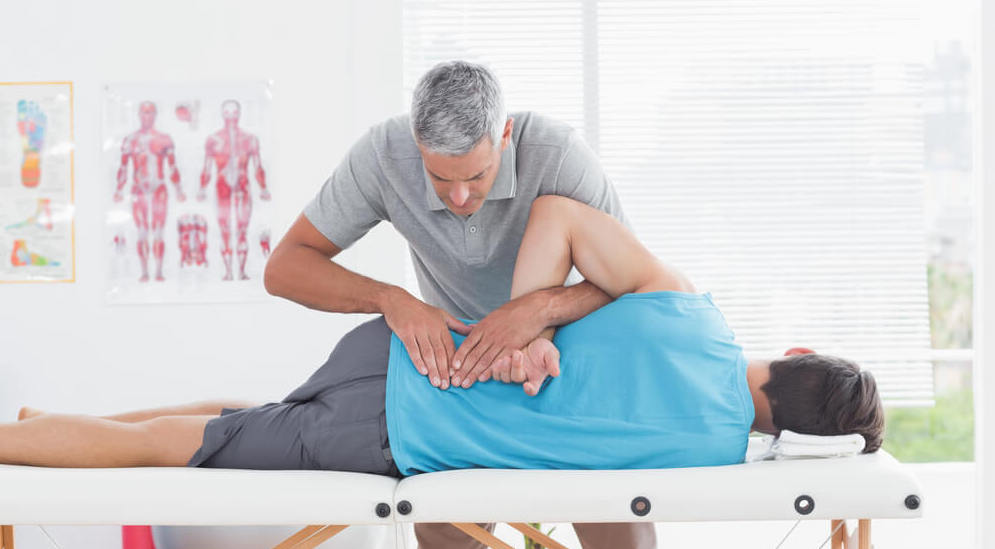
Tension Headaches: How Osteopathy Delivers Lasting Relief from Chronic Head Pain
Recurring tension headaches? Osteopathy at Réhabital in Côte Saint-Luc targets the real cause — neck, jaw, diaphragm and stress — for lasting relief.
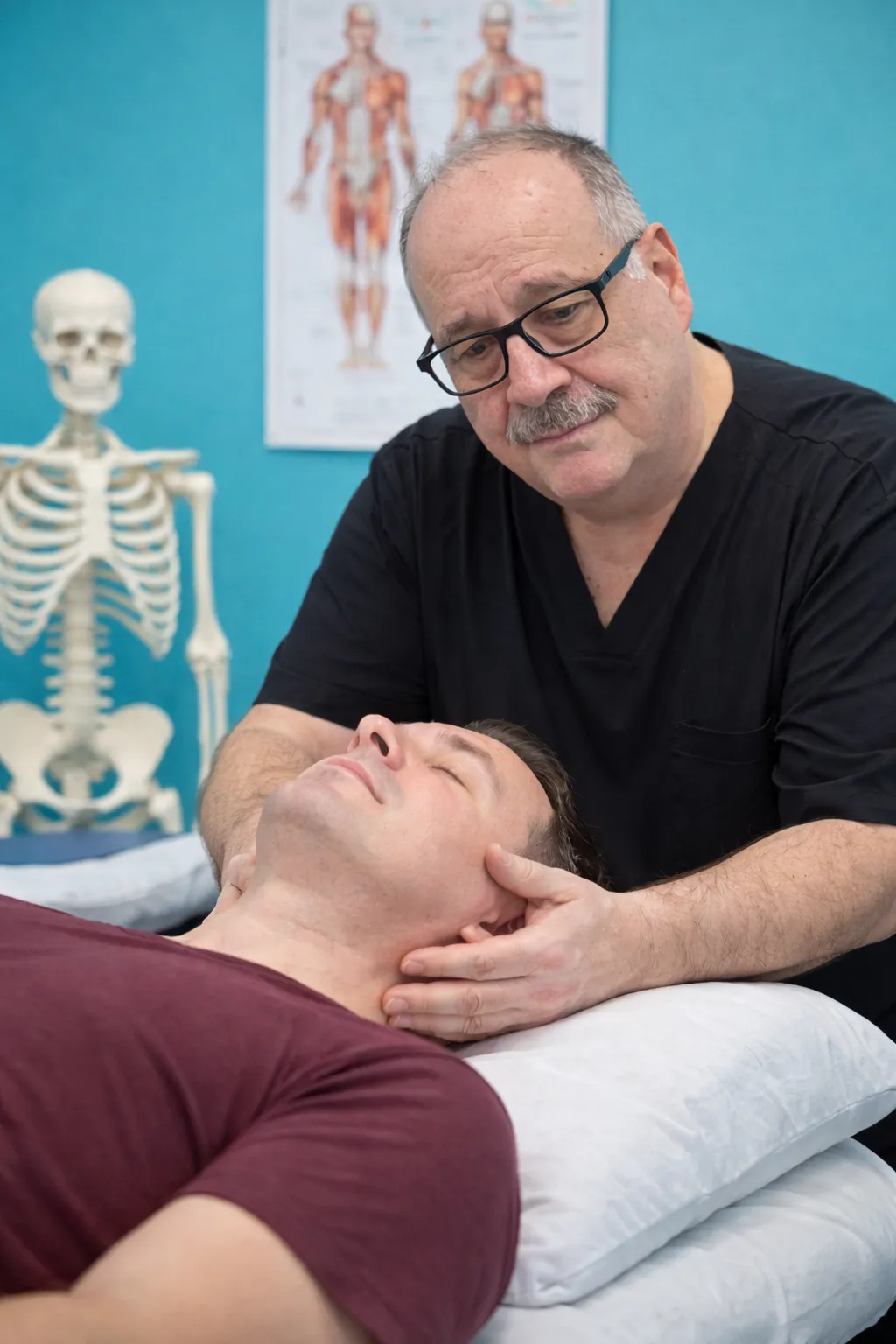
Does Osteopathy Help with Back Pain? (Montreal Guide)
Learn how osteopathy effectively treats back pain in Côte Saint-Luc. Causes, techniques, number of sessions and expected results.
Hip Pain: How Osteopathy Treats the Pelvis, Hip and Lower Back as One System
A painful hip is rarely an isolated problem. The pelvis, sacroiliac joints, psoas, diaphragm and foot all participate in hip mechanics. Here is the complete osteopathic approach, explained step by step.
Osteopathy and sciatica: how to durably relieve sciatic nerve pain
How osteopathy identifies the mechanical cause of sciatica — disc, sacroiliac or piriformis — and relieves pain in a few sessions at Réhabital in Côte Saint-Luc.
Treating Sciatica with Osteopathy: Shahram Ghasemi's Approach in Côte Saint-Luc
Pain shooting down the leg, tingling, trouble sitting? Discover how osteopath Shahram Ghasemi approaches sciatica at Réhabital in Côte Saint-Luc — assessment, manual techniques and a realistic recovery plan.