
Osteopathy: 4 Conditions Where a Whole-Body Assessment May Help
SI joint dysfunction, infant torticollis, plagiocephaly and colic: understand the careful, complementary role of osteopathy in Côte Saint-Luc.
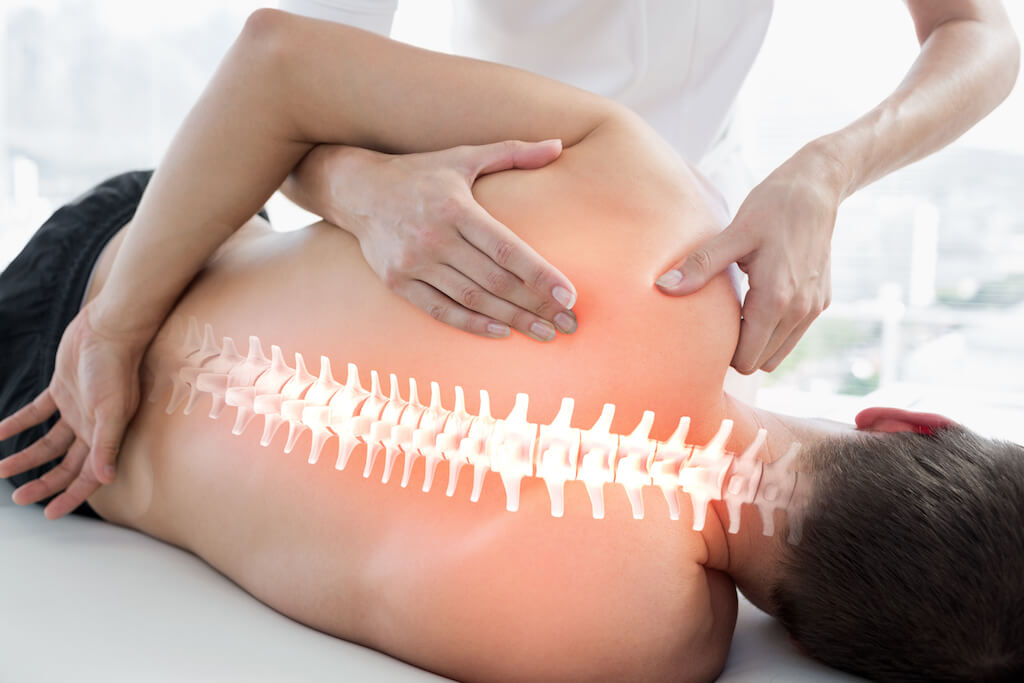
Direct answer: what can osteopathy contribute?
Osteopathy is a hands-on approach that assesses body mobility, areas of tension and compensation between regions. It may be relevant when a symptom appears connected to how several structures move together, but it does not replace a medical diagnosis or urgent care. At Réhabital in Côte Saint-Luc, on the island of Montreal, the goal is to understand the full picture, use age-appropriate techniques and refer when a concern falls outside osteopathic care.
Four examples show this reasoning clearly: adult sacroiliac joint dysfunction, followed by infant torticollis, positional plagiocephaly and infant colic. These conditions are very different. They do not share one cause or one treatment. What they have in common is that a careful assessment of movement, comfort and associated factors may help determine what is appropriate—and what instead requires a physician, pediatrician or physiotherapist.
A whole-body approach does not mean “treating everything”
The phrase “whole-body approach” can be misunderstood. It does not mean an osteopath claims every symptom comes from misalignment or that hands-on treatment suits everyone. It means the symptomatic area is examined in context. For pelvic pain, the hip, lumbar spine, gait and loading habits also matter. For a baby who consistently turns one way, the neck, shoulders, positioning, feeding, sleep and pediatric observations all contribute useful information.
The process begins with precise questions: when did the problem begin, what aggravates it, what assessments have already been completed, and are there signs that require referral? An age-appropriate examination follows, then a clear explanation of options. Before booking, read what an osteopath does and when to see one and our guide to your first osteopathy consultation.
1. Sacroiliac joint dysfunction: when the pelvis becomes painful
The sacroiliac joints connect the sacrum to the two sides of the pelvis. They move only slightly but transfer substantial force between the trunk and legs. Irritation can cause pain on one side of the lower back or buttock, often near the small depression at the back of the pelvis. Climbing stairs, rolling in bed, rising from a chair, standing on one leg or getting into a car may become uncomfortable.
This pain can resemble sciatica, lumbar irritation, hip trouble or muscle pain. That is why the label “joint out of place” is too simplistic. An osteopathic assessment compares motion in the pelvis, hips and spine, observes loading through each leg and looks for the tissues actually contributing to symptoms. Gentle joint techniques, myofascial work and movement advice may be proposed without claiming to “put” the pelvis back into place.
The home plan is often as important as hands-on care: temporarily reducing irritating movements, alternating positions, resuming walking as tolerated and gradually rebuilding lumbopelvic stability. Pain after a significant fall, or pain accompanied by weakness, saddle numbness, loss of bladder or bowel control, fever or unexplained weight loss needs prompt medical assessment. For more detail on this connection, read our article on osteopathy for hip, pelvic and lower-back pain.
2. Infant torticollis: choose early, gentle assessment
An infant with torticollis often holds the head tilted toward one side and rotated toward the other. Parents may notice a persistent preference to look in one direction, difficulty feeding from one breast or bottle position, discomfort in certain holds or gradual flattening of the head. A shortened sternocleidomastoid muscle may contribute, but the cause and severity need proper assessment.
The pediatrician or family physician remains a central partner. Pediatric physiotherapy is frequently recommended to teach positioning, active exercises and progress tracking. Osteopathy, when appropriate, is complementary. It uses light contact to assess mobility in the neck, upper back and shoulders. There is no forced manipulation or sudden movement. If the baby becomes uncomfortable, the technique or position is changed immediately.
At home, parents can encourage looking toward the less-used side by changing the position of toys, light or their own face. Supervised tummy time, spread across short periods, develops neck and trunk control. Safe-sleep recommendations always apply: baby sleeps on the back on a firm, clear surface. Sudden onset, marked pain, fever, weakness, unusual movements or developmental regression requires medical care without delay.
3. Positional plagiocephaly: address habits and mobility
Positional plagiocephaly is an asymmetric flattening of the skull related to repeated pressure on the same area. It can develop when a baby prefers one head direction, spends extensive time in one position or has torticollis. It must be distinguished from craniosynostosis, a premature closure of a skull suture that requires specialist medical assessment.
Osteopathy does not directly “reshape” a baby’s skull and does not replace physician assessment. Its possible role is to examine whether a neck or trunk restriction maintains the positional preference. Manual contact remains gentle and aims to improve comfortable movement. The most important measures are generally awake repositioning, supervised tummy time, reducing unnecessary time in seats and swings, and treating torticollis when present.
Parents can alternate the baby’s orientation in the crib while maintaining back sleeping, change the arm used for feeding and place interesting sights on the less-preferred side. Progress should be monitored during the rapid-growth months. Severe asymmetry, progression or lack of improvement despite recommended measures deserves reassessment; the physician can decide whether specialist consultation or helmet therapy is indicated.
4. Infant colic: improve comfort without masking illness
Colic describes prolonged crying episodes in an otherwise healthy infant, often late in the day. The baby may draw up the legs, clench the fists, turn red and seem impossible to console. This period is exhausting for the whole family, but colic generally improves with maturation. Before assuming crying is colic, a health professional should confirm that feeding, growth and the medical examination are reassuring.
Scientific evidence for manual approaches to colic remains limited and variable. An osteopathy visit must never be presented as a cure. Care may aim to improve general comfort through calm positioning, very light contact and practical guidance for parents. It does not replace assessment for feeding difficulty, reflux, allergy, infection or another source of distress.
At home, a calm environment, carrying, burping breaks and a simple routine may help some babies. Avoid cycling through remedies or changing feeds without professional advice. Seek prompt care for fever, green or repeated vomiting, blood in stool, a swollen abdomen, breathing difficulty, lethargy, poor feeding or fewer wet diapers. If exhaustion becomes overwhelming, place the baby safely in the crib and seek support; never shake an infant.
How Shahram Ghasemi structures an assessment
At Réhabital, Shahram Ghasemi, MD (Iran), DOMP provides osteopathy consultations. His profile outlines his education, experience and approach. The first meeting begins with the history of the concern, relevant health background, previous examinations and the goals of the patient or parents. For an adult, assessment may include posture, mobility, functional movements and palpation. For a baby, observation and comfort take priority; parents remain present and participate in decisions.
A good consultation must also define the limits of care. If findings suggest fracture, neurological involvement, infection, a growth concern or a condition requiring diagnosis, referral is the next step. When osteopathy is reasonable, the plan explains what will be addressed, how change will be measured and when reassessment will occur. The number of visits is never identical for everyone: lack of measurable progress is a reason to reconsider the hypothesis, not continue indefinitely.
What does age-appropriate care look like?
For an adult with SI joint pain, a session may combine gentle mobilization, myofascial techniques, work around the hip or lumbar region and loading advice. Treatment is adjusted to sensitivity on that day; a technique does not need to be forceful to be useful. The patient should understand what is being done and may ask to stop or modify a technique at any time.
For an infant, the appointment is shorter, flexible and guided by the baby’s cues. The baby may remain in a parent’s arms or be repositioned for comfort. Breaks for feeding, soothing or a diaper change are normal. The objective is not to create a “crack,” but to observe movement and support a calm experience. Recommendations afterward remain simple and realistic so parents are not overloaded.
Osteopathy, physiotherapy or medicine: how do you choose?
The best starting point depends on the problem. Stable mechanical pain in an adult may be assessed in osteopathy, while an injury requiring strength rebuilding and graded return to activity may benefit from physiotherapy. For an infant, a physician or pediatrician checks general health and excludes causes requiring medical treatment; pediatric physiotherapy may then guide motor development and exercises.
These professions are not competitors. They answer different questions and can collaborate. Our article on osteopathy versus physiotherapy for back pain explains the distinction. If you remain unsure, which therapy should you start with? offers a symptom-and-goal-based guide.
Realistic, measurable expectations
Success is not measured only by immediate symptom disappearance. For SI joint dysfunction, progress may mean walking farther, rolling in bed or climbing stairs more easily. For torticollis, it may be improved active rotation and a less obvious preference. For plagiocephaly, monitoring focuses on spontaneous positioning, time away from the flattened area and the medical professional’s assessment. For colic, comfort, feeding and crying periods are observed without automatically attributing every change to treatment.
It helps to record one or two indicators before the first visit. This reduces vague impressions and supports an honest decision: continue, space visits, modify the plan or refer. Responsible osteopathy does not promise a specific outcome or require a large prepaid package before observing an individual response.
Visiting Réhabital in Côte Saint-Luc, Montreal
Réhabital is located at D4-5800 Cavendish Boulevard in Cavendish Mall, Côte Saint-Luc, with on-site parking. The clinic serves nearby Hampstead, NDG, Montreal West, Snowdon, Côte-des-Neiges, Westmount and Saint-Laurent. Private-insurance receipts are provided for eligible sessions; coverage depends on each policy. We do not accept CNESST or SAAQ treatment files.
To learn more, visit our Côte Saint-Luc osteopathy page, the profile of Shahram Ghasemi and our article on osteopathy as a whole-body approach. A consultation does not replace medical care, but it can offer a structured assessment, understandable explanations and a plan matched to the real context.
Frequently asked questions
Go deeper with our dedicated osteopathy pages
Osteopathy pages with Shahram Ghasemi, MD (Iran), DOMP in Côte Saint-Luc:
Related articles
Hamstrings and Osteopathy: Strain, Proximal Tendinopathy and a Complete Rehabilitation Guide
Strain, proximal tendinopathy or referred pain? Our osteopath Shahram Ghasemi explains how to tell the four hamstring problems apart and the full rehabilitation progression we use in Côte Saint-Luc.
Treating Sciatica with Osteopathy: Shahram Ghasemi's Approach in Côte Saint-Luc
Pain shooting down the leg, tingling, trouble sitting? Discover how osteopath Shahram Ghasemi approaches sciatica at Réhabital in Côte Saint-Luc — assessment, manual techniques and a realistic recovery plan.
Osteopathy: A Whole-Body Approach to Restoring Your Body's Balance
Discover how osteopathy treats the root cause of your pain by restoring your body's structural, visceral and cranial balance.
Stiff Neck and Torticollis: What to Do and Where Osteopathy Fits
Woke up with a stiff neck? Safe first steps, warning signs and realistic expectations for osteopathy in Côte Saint-Luc, Montréal.
Is It Really Sciatica? Sacroiliac Joint Pain and Other Causes of Leg Pain That Mimic It
Many people with buttock or leg pain are told they have sciatica when something else is behind it. We explain the look-alikes, how they differ and why the right diagnosis changes the treatment.
Does Osteopathy Help with Back Pain? (Montreal Guide)
Learn how osteopathy effectively treats back pain in Côte Saint-Luc. Causes, techniques, number of sessions and expected results.