
Facial Rejuvenation: How the Réhabital Facial Protocol Works
Dermalogica facials, SharpLight photofacial, microneedling, mesotherapy and peels: how we build a realistic facial rejuvenation plan in Côte Saint-Luc, with transparent pricing.
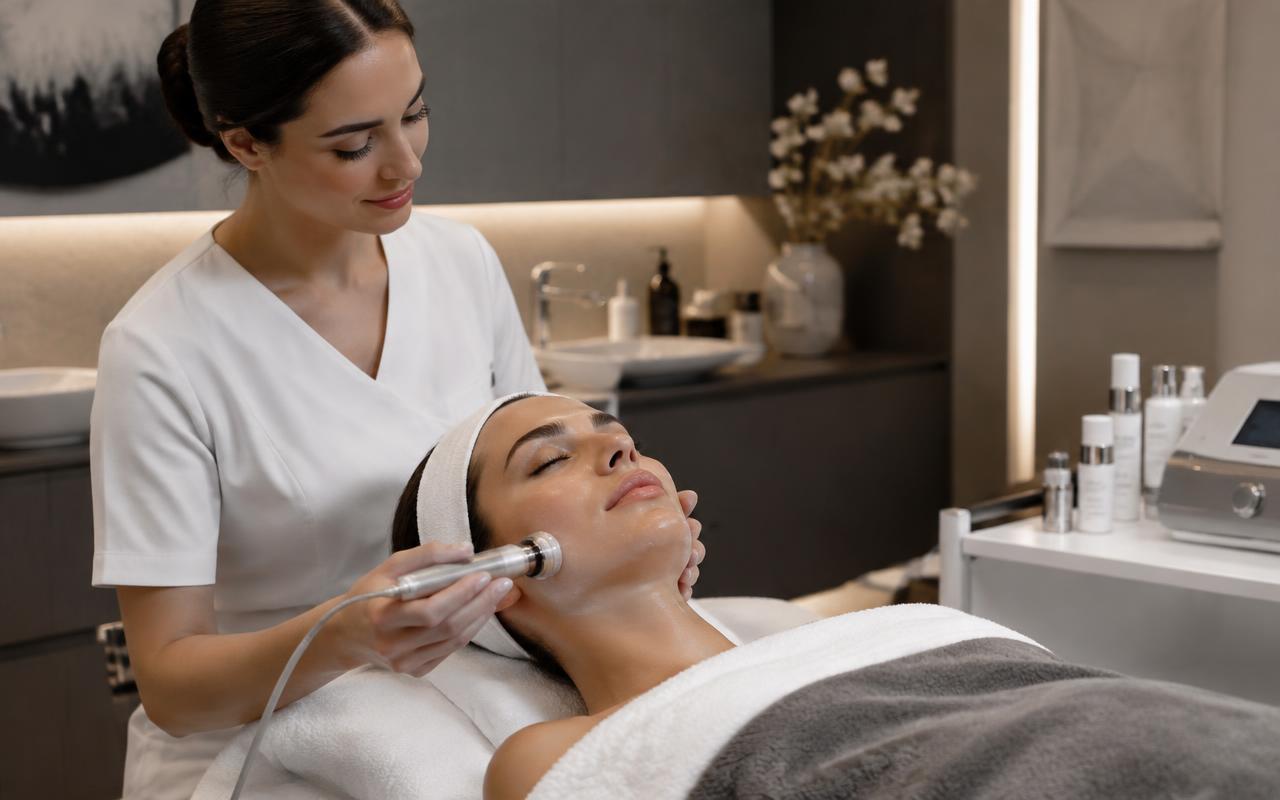
Direct answer: what is a facial rejuvenation treatment?
A facial rejuvenation treatment is not a single product but a process: a skin assessment followed by a combination of professional treatments — deep cleansing, exfoliation, targeted actives, light-based therapy or micro-needling — selected according to the actual condition of your skin. At Réhabital in Côte Saint-Luc, on the island of Montreal, it is never an automatic formula: every plan starts from your goals, your history and your schedule. Realistic facial rejuvenation rests on three pillars: protect what you already have, stimulate the skin’s natural renewal mechanisms, and correct specific targets such as pigmentation, texture or diffuse redness.
If you are looking for a facial treatment in Montreal or more specifically aesthetic care in Côte Saint-Luc, this article explains our protocols, our technologies, our transparent prices and, above all, the role of the practitioners who perform them. It also covers what a serious clinic does not promise: no treatment “lifts” the skin overnight, and no aesthetic procedure replaces a dermatological diagnosis for an unexplained lesion.
Where do the visible signs of aging come from?
Over the years, collagen and elastin production slows, cell turnover lengthens and cumulative exposure to ultraviolet light — known as photoaging — deepens lines, reduces firmness and adds pigmentation spots. Smoking, chronic stress, poor sleep, significant weight fluctuations and overly aggressive skincare habits accelerate the process. Pregnancy, hormonal contraceptives and certain medications can also alter pigmentation.
That is why our approach always begins with daily protection (sunscreen), continues with regular care adapted to your skin type, and only then adds more targeted technologies when they are genuinely justified. To go deeper into this mechanism, read our article on anti-aging skincare in your 30s, 40s and 50s and our guide on wrinkle and fine-line treatment. Understanding the cause helps you choose the right treatment — and skip the ones that will do nothing for your case.
The starting point: a skin assessment
Every plan begins with an assessment. The practitioner will ask about your skin history, the products you already use, sensitivities, allergies, current or past pregnancies, sun exposure and any recent aesthetic treatments. A careful examination under proper light looks at texture, pores, pigmentation, redness, under-eye area and dry or oily zones. Reference photos may be taken with your consent so progress can be measured objectively.
This step prevents classic mistakes: booking a photofacial while the skin has a recent sunburn, treating redness that first deserves a medical opinion, or layering actives that cancel each other out. It also sets honest expectations. Some goals — fading superficial spots, smoothing texture, deep hydration — respond well to clinic care. Others — structurally changing facial shape, erasing deep lines — require a frank conversation about what is realistic.
Dermalogica facials: four levels, one foundation
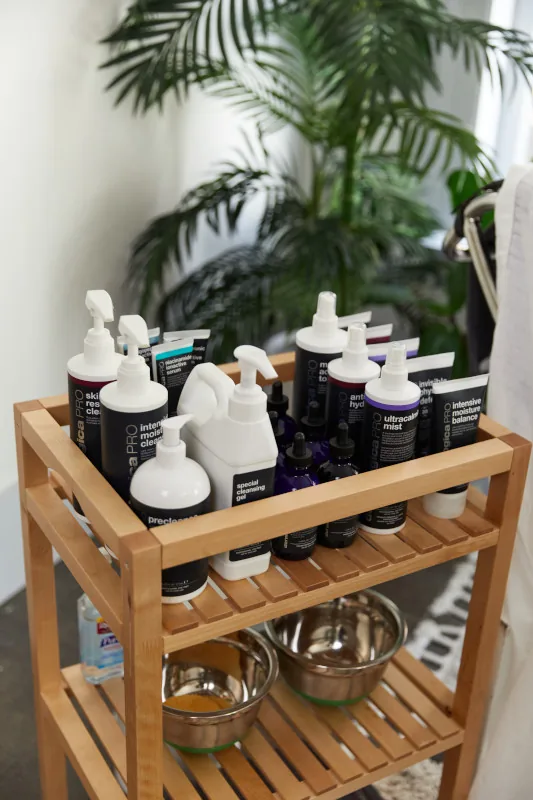
Our facials follow Dermalogica protocols and use Dermalogica products, a professional brand known for formulations built around skin health. Four levels are offered so that budget never sacrifices quality:
Express Facial — $119. About 45 minutes. Cleansing, gentle exfoliation, targeted extractions if needed, a mask matched to your skin and hydration. Ideal between appointments, on a lunch break or before an event.
Essential Facial — $139. The classic format: visual analysis, double cleanse, exfoliation, extractions, facial massage, a customized mask, serum and protection. This is the entry point most chosen by our new patients from Côte Saint-Luc, Hampstead and NDG.
Signature Facial — $159. The same foundation extended with advanced techniques depending on your skin: gentle lymphatic massage, a mask layering step and concentrated actives. An hour and a quarter of full reset.
Hydr-O2 Elite Facial — $199. Our most complete facial, with deep-hydration technology: cleansing, exfoliation, active infusion, a hydrating serum and a soothing finish. Recommended for dehydrated or dull skin, or before a major event.
Every facial ends with written recommendations: what to use at home, what to avoid for the next 24 to 48 hours (heavy makeup, sauna, intense workouts) and when to return. To understand what a professional treatment genuinely adds over a home routine, read our article on the benefits of a professional facial.
SharpLight photofacial: light in the service of evenness
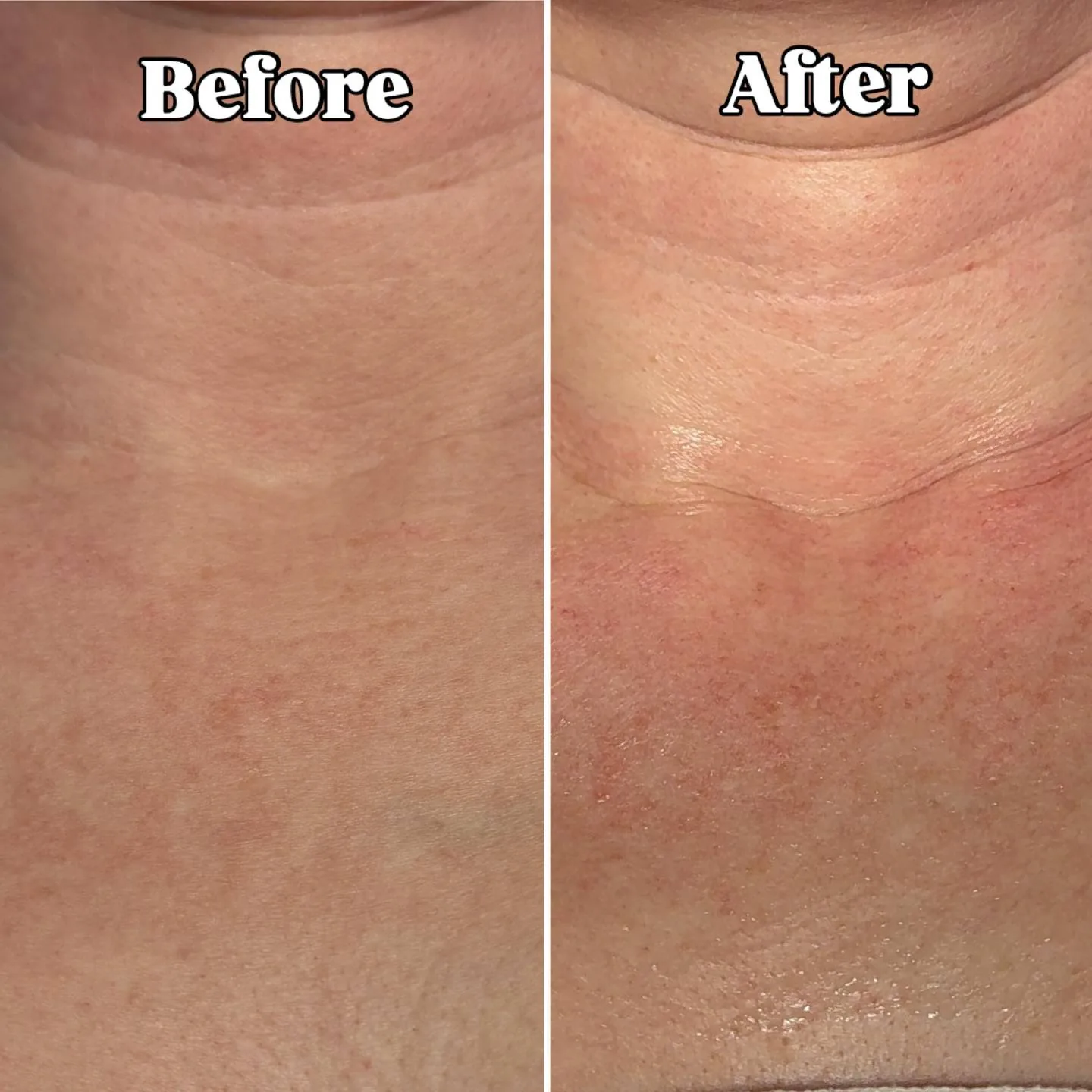
The photofacial uses the pulsed-light platform of our SharpLight system to target pigment and diffuse redness. By filtering light to precise wavelengths, the device selectively heats melanin and superficial vessels, which can gradually fade sun spots and a mottled complexion. A full-face session lasts about 40 minutes and is offered at $199.
Concretely, the skin is cleansed and prepared, a conductive gel is applied, and the handpiece glides over the treatment areas. The sensation feels like small flicks of heat, tolerable for most people. Mild redness may appear and settle within a few hours; spots can darken slightly before fading over one to three weeks. Most plans include a series of three to six sessions spaced about four weeks apart, because results accumulate.
This treatment is not for everyone: it is not performed during pregnancy, with a recent tan, on an active skin lesion, or with certain photosensitizing medications. A screening form is completed before any first session. To learn more about the technology, read our article on SharpLight SR skin rejuvenation in Montreal and the one on the DPC Pro handpiece.
Microneedling: reawakening collagen production
Clinical microneedling creates controlled micro-channels in the skin to trigger the natural repair response — the one that mobilizes collagen. At Réhabital, the clinical session is offered at $289. It begins with a thorough topical anesthetic, because comfort is part of the treatment. The pen, set to an appropriate depth, then covers the face, concentrating on areas of uneven texture, acne scarring or fine lines.
After the session, the skin looks red, like a mild sunburn, for 24 to 72 hours. We ask for no makeup for 24 hours, with a gentle cleanser and rigorous sun protection. Visible effects — smoother skin, tighter-looking pores, softened scars — develop gradually over four to twelve weeks as collagen rebuilds. Most patients choose a series of three sessions spaced four to six weeks apart. For more detail, see our page on microneedling and skin texture.
Microneedling is not performed with active inflammatory acne, an active skin infection, recent isotretinoin use or uncontrolled bleeding disorders. Our screening form checks for these before booking.
Micro-mesotherapy: infusing actives where cream stops
Micro-mesotherapy combines superficial micro-needling with the application of active cocktails — hyaluronic acid, peptides, vitamins — that penetrate through the micro-channels. The goal is to deliver hydration and nutrition at a depth a cream alone cannot reach. Sessions are offered from $319 to $389 depending on the area and the actives selected. They suit dehydrated, dull skin or the early stages of fine lines, and pair well with a regular facial. As with microneedling, a 48-hour home protocol shapes the result: no makeup, no intense workouts, generous hydration and sunscreen.
Pro Peels and FreezPen: two tools for precise targets
Pro Peels ($149) use calibrated exfoliating acids — depth chosen per case — to renew the surface: more even tone, refined texture, less visible pores. The protocol includes preparation, neutralization and strict sun-protection instructions, because freshly renewed skin is more vulnerable to UV.
The FreezPen is our precision cryotherapy tool for benign lesions such as skin tags and certain superficial vascular lesions, starting at $89 depending on size and number. It never replaces a diagnosis: any lesion that changes, bleeds or evolves must first be assessed by a physician. To understand how the FreezPen compares with other approaches, read our comparison on FreezPen and cryotherapy in Montreal and our dedicated page on skin tag removal in Montreal.
Who performs these treatments at Réhabital?
Three practitioners share the aesthetic side of the clinic, and their expertise is regularly mentioned in the many Google reviews our patients leave.
Liliana Ciocoi has more than ten years of aesthetic experience. She is proficient with SharpLight technologies, including the photofacial and FreezPen cryotherapy, as well as Dermalogica protocols. Her patients praise her technical precision and attention to detail.
Elena Caliniuc is a member of AQTN and ANHQ. An aesthetician, naturopath and massage therapist, she treats the skin as a reflection of lifestyle: sleep, diet, stress and hydration. Her patients come as much for a facial as for whole-person wellness guidance.
Farzaneh Badakhshan holds a doctorate in dental medicine with more than thirty years of clinical experience. She brings that diagnostic rigor to facial protocols and aesthetic guidance, with particular attention to safety and coherence of the plan.
This division of labor is not decorative: the person who assesses your skin is the one who performs your treatment, and each practitioner knows when to refer to medical consultation if the situation warrants it.
How many sessions do you need? Realistic expectations
No facial rejuvenation treatment works in a single visit. Dermalogica facials show a visible effect from the first session — cleaner, better-hydrated skin — but their real value appears with consistency: one facial every four to six weeks is the most effective rhythm for most skin. The photofacial and microneedling require series of three to six sessions, because their effects rely on biological processes that take time. Results are not permanent: aging continues, and maintenance sessions preserve what you have gained.
We refuse the vocabulary of absolute promises. A facial does not “lift” the face, a photofacial does not erase every spot, and microneedling does not replace a dermatological consultation for a suspicious lesion. What we do guarantee is an honest plan, careful execution and regular reassessment: if the response is not there after a few sessions, the plan changes rather than stacking on.
Home care completes the clinic work
A clinic treatment opens a window; what you do afterward decides how long it stays open. Three principles appear in almost every plan: gentle cleansing morning and night, actives chosen for your skin (vitamin C in the morning, retinol or acids in the evening depending on tolerance) and daily sunscreen, winter and summer alike. The Dermalogica products recommended after each facial are noted on the advice sheet given at the end of the session. To go further, read our Dermalogica routine guide by skin type and our article on the Phyto Nature E2 serum. One simple habit — applying sunscreen every morning — does more to prevent aging than any clinic treatment.
Precautions, contraindications and warning signs
Before any first session, a screening form is completed. The main contraindications to light-based treatments and microneedling are: pregnancy and breastfeeding (as a precaution for technologies), a recent tan, an active cold-sore or inflammatory acne flare, a skin infection, isotretinoin use within the past six months, certain photosensitizing medications and uncontrolled bleeding disorders. Very dark skin and melasma require a particularly cautious approach, because some light treatments can worsen pigmentation; the plan is then adjusted or redirected.
See a physician without delay if a skin lesion changes shape or color, bleeds, if redness comes with fever or unusual pain, or if you are diabetic and have a wound that will not heal. Our role is to treat healthy skin and refer quickly when the situation exceeds the aesthetic scope.
Prices, booking and access in Côte Saint-Luc
Here is a summary of our current aesthetic rates: Express Facial $119, Essential Facial $139, Signature Facial $159, Hydr-O2 Elite Facial $199, Pro Peels $149, full-face photofacial (40 minutes) $199, clinical microneedling $289, micro-mesotherapy $319 to $389, FreezPen starting at $89 per lesion. Prices are in Canadian dollars, before taxes, with no mandatory package purchase. The full list is on our pricing page.
Appointments can be booked online or by phone at (438) 842-3550. The clinic is open weekday evenings and Sundays from 10 a.m. to 4 p.m., for those who work during the day. We are located at D4-5800 Cavendish Boulevard in Cavendish Mall, Côte Saint-Luc, with free on-site parking. The clinic serves Hampstead, NDG, Montreal West, Westmount, Snowdon and Côte-des-Neiges. Note that most private insurance plans do not cover aesthetic treatments; check your policy if in doubt.
Final word: consistency beats intensity
The most effective facial rejuvenation is neither the most expensive nor the most dramatic: it is the one you keep up. An honest assessment, regular facials, disciplined sun protection and, where justified, targeted technologies such as the SharpLight photofacial or microneedling form a progression you can see over months — not in a retouched before-and-after photo. If you would like to discuss a plan for your skin, book a first assessment; the practitioner you meet will tell you what is realistic, what is not, and at what pace. That clarity is where lasting results begin.
Frequently asked questions
Related conditions we treat
Related articles
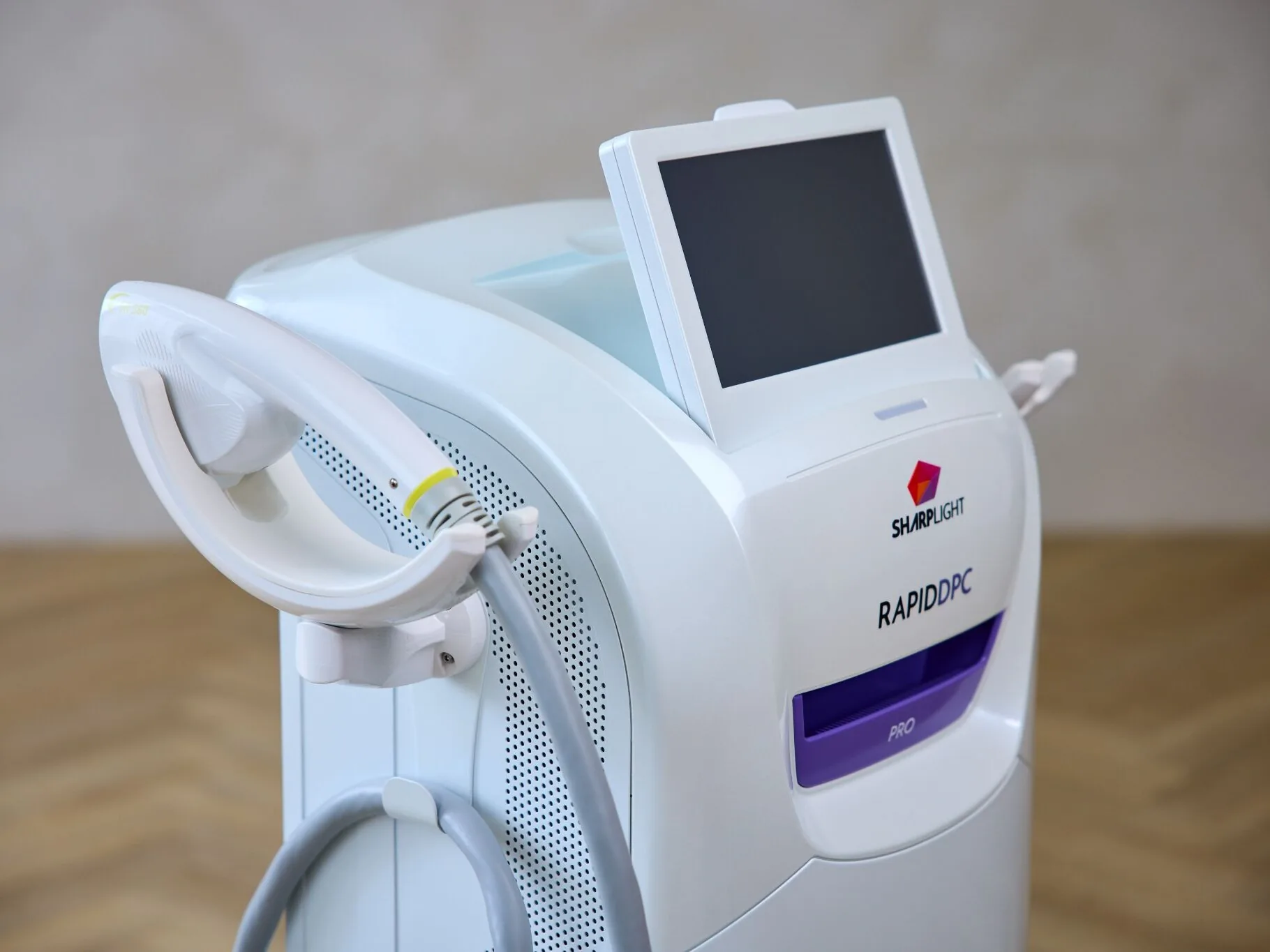
SharpLight Rapid DPC Pro: The Skin Rejuvenation Handpiece for Younger-Looking Skin
Discover the Skin Rejuvenation handpiece of the SharpLight Rapid DPC Pro: advanced DPC technology to treat wrinkles, pigmentation and skin laxity.
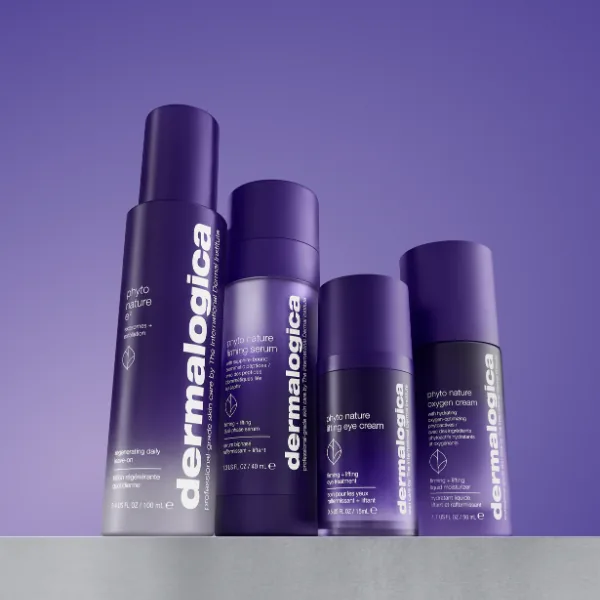
Dermalogica Phyto Nature E2: The Exosome Revolution for Cellular Renewal
Discover Phyto Nature E2, the regenerative exosome and enzyme formula that accelerates cellular renewal for brighter, smoother skin.
Melasma: Causes, Prevention & How Deep Dermalogica Facials Also Reduce Acne in Côte Saint-Luc
Symmetrical brown patches on the cheeks, forehead or upper lip? A complete clinical guide to melasma — hormonal, UV and heat triggers, realistic prevention — and how our deep Dermalogica facials also reduce acne at Réhabital in Côte Saint-Luc.
Pro Peels: Advanced Skin Renewal for a Radiant Complexion
Discover our personalized professional peels that refine skin texture, target imperfections and reveal lasting natural radiance.
The complete guide to professional facials and daily skincare in Côte Saint-Luc
From Dermalogica Face Mapping to the in-cabin protocol, home routine, and advanced treatments — everything you need to know for healthy, radiant, long-lasting skin in Montreal.
SharpLight Laser Skin Rejuvenation: Restore Radiant, Youthful Skin
Laser skin rejuvenation with the SharpLight SR handpiece stimulates collagen, reduces pigmentation and restores luminosity and firmness. Available at Réhabital Côte Saint-Luc.