
Sports Massage Before Ski Season: Preparing Your Thighs, Knees and Back
The first ski days put heavy demand on thighs, knees and the lower back. How to fit a sports massage before and during the season, with Cedik Elaiba in Côte Saint-Luc.
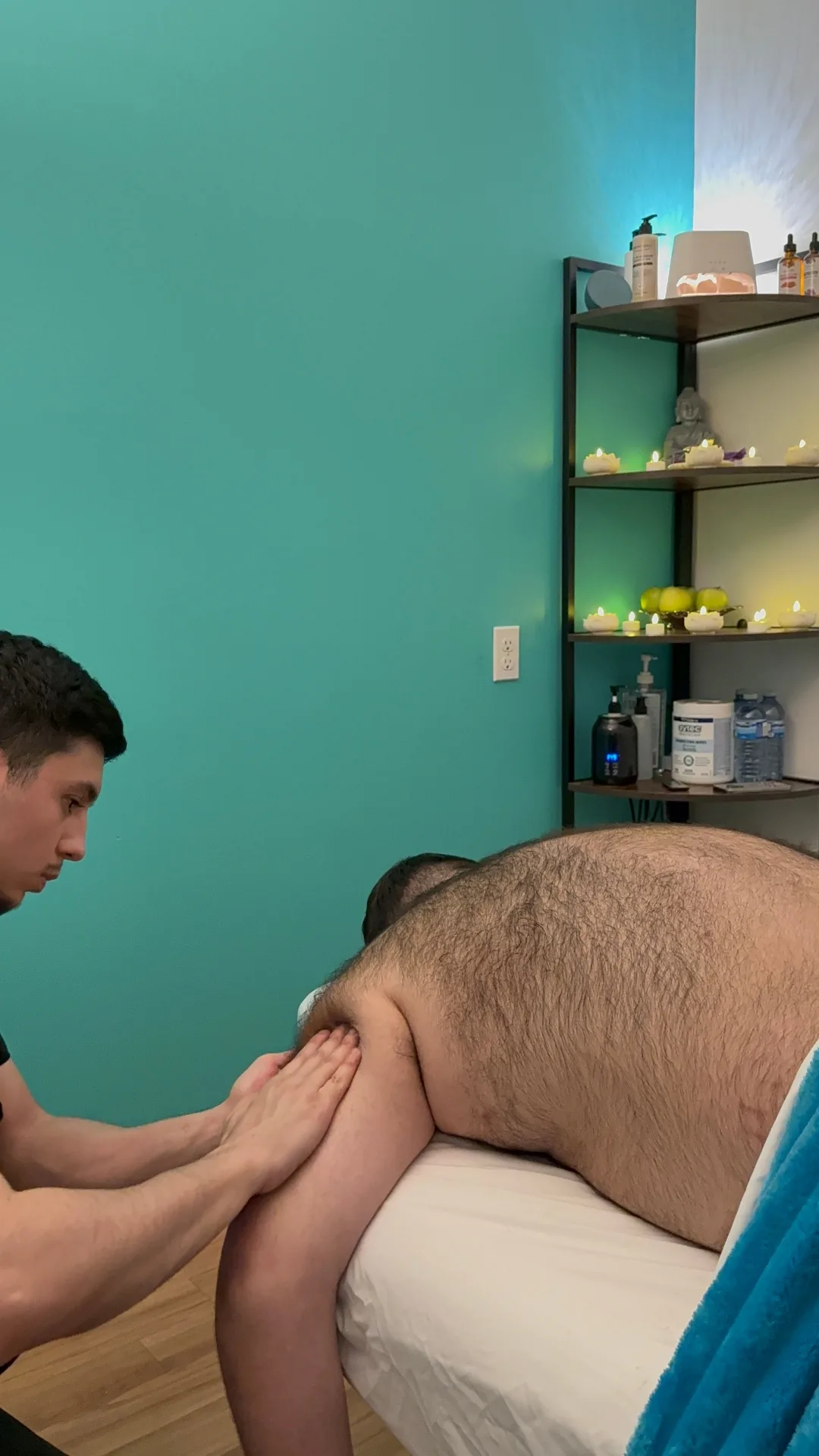
Direct answer: what is a sports massage for before ski season?
Alpine skiing, snowboarding and cross-country skiing demand an effort the body often hasn’t made since spring. The thighs work for long stretches in a bent position, the hips stabilize every turn and the lower back absorbs vibration and lift rides. A sports massage placed before and during the season mainly helps identify stiff areas, make the first weeks more comfortable and help you tolerate the return to the slopes. It replaces neither physical preparation nor an assessment after a fall.
At Réhabital, in Côte Saint-Luc on the Island of Montréal, sports massage is offered by therapists including Cedik Elaiba, a massage therapist and member of the FQM. Cedik sees many athletes looking for firmer work on the back, glutes and legs. You can book a session with Cedik online.
What skiing actually asks of your body
In alpine skiing, the quadriceps work largely eccentrically: they brake and control the descent rather than push. This type of contraction is known to cause more soreness in the following days, especially after a long break. The glutes and hip muscles keep the knee stable through turns, while the calves and feet stay under tension inside the boot.
Snowboarding adds trunk rotation and, early on, more frequent falls onto the wrists and buttocks. Cross-country skiing places more demand on the upper body, shoulders and endurance. Each sport leaves a different signature, which is what Cedik tries to understand at the start of the session: your sport, your level and how many days you plan to ski.
Before the season: a check-in session
One to three weeks before your first outing, a 60- or 75-minute session can address the thighs, glutes, calves and lower back while noting areas that remain stiff or tender. It is also a good time to mention an old knee or ankle sprain, or low back pain that returns every winter. If something seems like more than simple tension, Cedik may suggest an assessment in physiotherapy or osteopathy before the season starts.
Avoid, however, a very deep massage the day before your first ski day. Some people feel heavy or a little tender the day after intense work; those sessions are better kept for rest days.
During the season: recovering between weekends
For skiers who head to the Laurentians or the Eastern Townships every weekend, one session every two to four weeks is a common rhythm. The best time is often one to two days after your outings, when the worst soreness starts to ease. Pressure stays moderate: the goal is to make the return to the work week more comfortable, not to force an already tired muscle.
Commonly treated areas include the quadriceps, the outer thighs, glutes, calves and lower back, plus the shoulders and forearms for snowboarders and cross-country skiers. Cedik adjusts pressure from light to deep according to your tolerance and checks in regularly on your comfort.
What the research says
Research reviews on sports massage show no direct improvement in strength, speed or endurance. They report small benefits for flexibility, muscle soreness and perceived fatigue instead. For a skier, that is not trivial: feeling less stiff on the second day of the weekend can make skiing more enjoyable. Expectations should simply stay realistic: massage alone does not prevent knee injuries.
Signs that call for an assessment, not a massage
After a fall, some situations need to be assessed before any session: a knee that swells quickly, a feeling of instability or the knee giving way, inability to bear weight, sharp pain on a specific spot of bone, or a blow to the head followed by headache, nausea or confusion. Our when to see a doctor page summarizes the warning signs. For an injury that has already been assessed, massage can later support rehabilitation alongside progressive exercise. See also our sports injury page.
Preparing your body outside the clinic
Massage works best on top of simple preparation: squats and lunges to get the thighs used to eccentric work, single-leg balance exercises for the knees and ankles, and core work for the trunk. On your first days, shorten the outing, take breaks and stop before extreme fatigue, when falls become more frequent. Our article on knee pain offers further guidance.
Booking with Cedik Elaiba
Cedik Elaiba speaks French, English and Arabic. For a preparation or recovery session, book directly with Cedik on Jane App or call 438-842-3550. Current fees are listed on our fees page. Insurance receipts are issued; reimbursement depends on your private plan. CNESST and SAAQ claims are not accepted. The clinic is in the Cavendish Mall, D4-5800 Cavendish Boulevard, Côte Saint-Luc, with free parking.
For an overview of the service, also read our guide to the uses of sports massage and our introduction to sports massage with Cedik.
More in our sports massage series
- Sports massage: what it’s used for and who it’s for
- Runners: preparing for a fall race
- Hockey: hips, groin and lower back
- Strength training: soreness and recovery
- Sports massage with Cedik Elaiba
Sources and limitations
These sources describe the general effects of massage and their limits. They do not validate clinic-specific outcomes. This article is informational and does not replace an individual assessment.
Frequently asked questions
Related articles
Sports Massage for Runners: Preparing for a Fall Race
August is the heart of training for September and October races. How sports massage fits into a runner’s training plan, with Cedik Elaiba in Côte Saint-Luc.
Sports Massage for Hockey Players: Hips, Groin and Lower Back
The skating stride, the bent-over stance and contact load the hips, groin and back. What sports massage can offer hockey players, and how to book with Cedik Elaiba.
Sports Massage and Strength Training: Soreness, Recovery and Frequency
Soreness, stiff shoulders, a loaded lower back: how sports massage fits into a strength training program, and how to book with Cedik Elaiba in Côte Saint-Luc.
Deep Tissue Massage: Your Comprehensive Guide to Unlocking Relief at Réhabital in Côte Saint-Luc
Explore the world of Deep Tissue Massage. Learn what it is, its benefits, who can benefit and what to expect from a session at Réhabital, your trusted clinic in Côte Saint-Luc, Montreal.
Sports Massage in Côte Saint-Luc: a specialized treatment for athletes with Cedik Elaiba starting in July
Starting in July, Cedik Elaiba joins the Réhabital team to deliver a specialized sports massage: recovery, injury prevention and performance for athletes of every level.
Sports Massage: What It’s Used For and Who It’s For
Preparation, recovery, maintenance: the real uses of sports massage, what research says, who benefits and when to avoid it. A Réhabital guide from Côte Saint-Luc, Montréal.