
LED Light Therapy: unlock your skin's potential with the power of light in Côte Saint-Luc
How LED light therapy — red, blue and near-infrared — boosts collagen, calms acne and brightens the skin, integrated into every clinical facial at Réhabital.
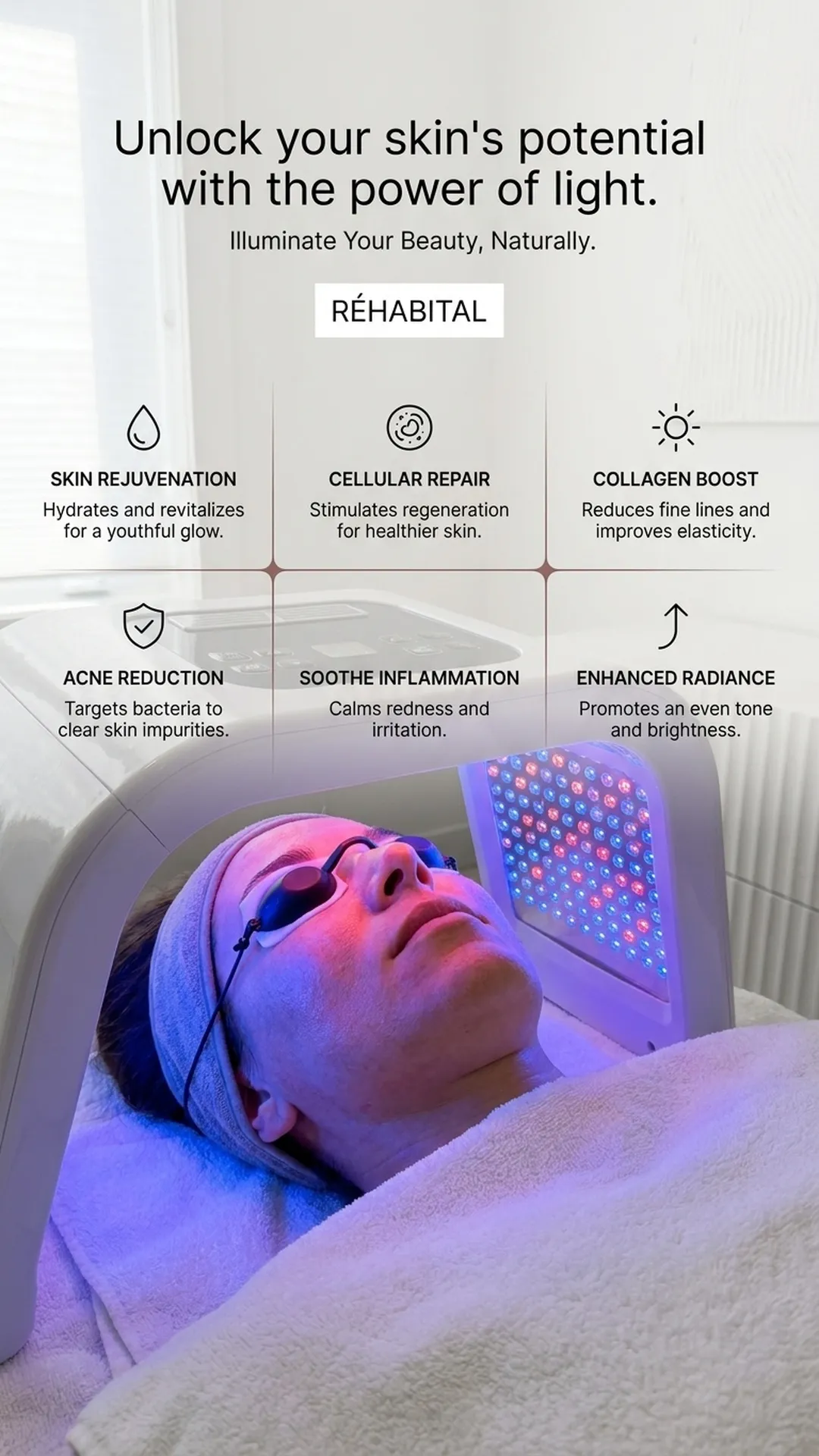
Illuminate Your Beauty, Naturally
Light is one of the oldest healing tools we have and one of the most underestimated in modern skincare. LED light therapy — also called photomodulation — uses calibrated wavelengths of red, blue and near-infrared light to trigger specific biological responses inside the skin. No heat, no needles, no downtime. At Réhabital in Côte Saint-Luc, we integrate professional LED into nearly every clinical facial because it is one of the rare modalities that quietly improves almost any skin condition we treat.
What makes LED so compelling is that it does not do something to the skin from the outside — it asks the skin to do more of what it already knows how to do, from within. Collagen synthesis, cellular repair, sebum regulation and inflammation control are all natural processes that LED accelerates by feeding cells the precise wavelength they respond to.
How LED Light Therapy Actually Works
Each colour of light penetrates the skin to a different depth and is absorbed by a different chromophore — a molecule inside your cells that converts that light into a biochemical signal. Think of it as charging the cell's battery: the light is absorbed by mitochondria, ATP production rises and the cell suddenly has more energy to repair, divide and produce structural proteins like collagen and elastin.
This is why LED is non-thermal and completely non-invasive. There is no burn, no peel, no recovery. Yet the cumulative effect over a series of sessions is visible: firmer skin, fewer breakouts, calmer redness, more even tone.
The Six Benefits We See Most at Réhabital
Our LED protocol at the Côte Saint-Luc clinic targets six measurable outcomes:
- Skin Rejuvenation — hydrates and revitalizes for a youthful glow.
- Cellular Repair — stimulates regeneration for healthier skin.
- Collagen Boost — reduces fine lines and improves elasticity.
- Acne Reduction — targets bacteria to clear skin impurities.
- Soothes Inflammation — calms redness and irritation.
- Enhanced Radiance — promotes an even tone and brightness.
The reason a single device can deliver such a wide range of outcomes is wavelength selection. Each session is tuned to the skin condition we are treating that day.
Red Light: Collagen, Repair and Anti-Aging
Red light (around 630–660 nm) penetrates roughly 1 to 2 millimetres into the dermis, where fibroblasts live. Fibroblasts are the cells responsible for producing collagen and elastin — the two proteins that keep skin firm, smooth and elastic. Red light increases their activity, which over four to six weekly sessions translates into visibly tighter skin, softened fine lines, improved tone and a healthier overall glow.
This is the wavelength we use after exfoliation, peels or microneedling-style protocols, because it accelerates the repair phase and shortens the window of post-treatment redness. Clients in their thirties, forties and fifties tend to see the most dramatic difference, especially in the cheek and forehead zones.
Blue Light: The Quiet Acne Solution
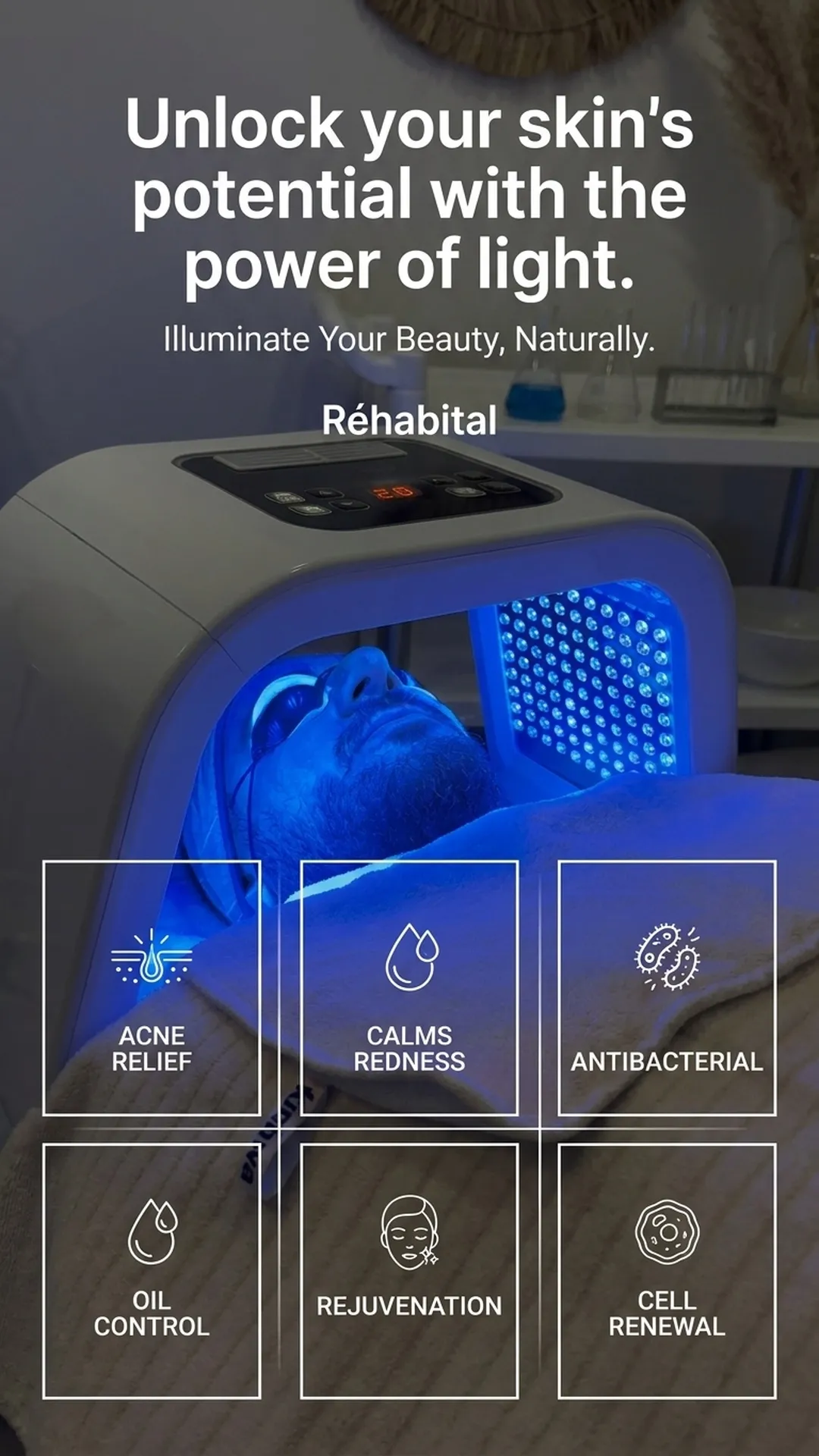
Blue light (around 415 nm) works differently. It is absorbed by porphyrins — molecules naturally produced by Cutibacterium acnes, the bacterium responsible for inflammatory acne. When blue light hits these porphyrins, they release reactive oxygen species that destroy the bacteria from the inside, without harming surrounding skin tissue. The result is fewer active breakouts, less inflammation around existing lesions and reduced sebum production over time.
Blue light is the wavelength we recommend for:
- Active hormonal acne along the jawline and chin.
- Maskne and chest or back breakouts.
- Oily, congested skin with frequent comedones.
- Adolescents and young adults whose skin cannot tolerate aggressive topical actives.
Unlike oral medications, blue LED has no systemic side effects and unlike topical antibiotics, it does not contribute to bacterial resistance.
Near-Infrared Light: Deep Healing and Inflammation Control
Near-infrared light (around 830 nm) goes deeper than red — up to 5 millimetres — reaching the deeper dermis and even superficial muscle. It is the most anti-inflammatory wavelength in the LED toolbox. We use it for rosacea-prone skin, post-procedure recovery, sensitized barriers and clients who present with chronic redness or diffuse irritation. It also pairs beautifully with osteopathic facial work for clients dealing with TMJ tension or jawline puffiness.
How LED Fits Into a Réhabital Clinical Facial
LED is rarely a standalone treatment in our clinic. It is the finishing layer that locks in everything that came before. A typical Dermalogica Pro facial at Côte Saint-Luc with LED looks like this:
1. Face Mapping® consultation with Elena Caliniuc, Liliana or Farzaneh.
2. Double cleanse with Special Cleansing Gel.
3. Professional exfoliation tailored to your skin condition.
4. Manual extractions when indicated, followed immediately by Post Extraction Solution.
5. Targeted serum and treatment mask.
6. LED light therapy session — wavelength chosen for your skin: red for anti-aging, blue for breakouts, near-infrared for sensitivity.
7. Moisturizer and SPF to seal the treatment.
The LED step typically lasts 10 to 20 minutes. You wear protective eye shields, the light is comfortably warm and silent and most clients describe it as the most relaxing part of the entire facial.
What a Course of LED Sessions Actually Delivers
One LED session feels good and delivers a temporary glow. The real, measurable change happens with a series. We typically recommend:
- Anti-aging and collagen goals: one session weekly for 6 weeks, then once a month for maintenance.
- Active acne: two sessions per week for 4 weeks, then weekly until the skin clears.
- Rosacea and sensitivity: weekly near-infrared sessions for 8 weeks.
- Post-procedure recovery: a single LED session within 24 hours after a peel, microneedling or laser to shorten redness.
Results compound. By the third or fourth session most clients notice the change themselves and by the sixth session it is visible to others.
Is LED Safe? Who Should Avoid It?
LED is one of the safest aesthetic modalities available. There is no UV component, no heat damage, no risk of burns and no downtime. It is safe for all Fitzpatrick skin tones — which matters in our diverse Côte Saint-Luc clientele — and safe during pregnancy when used without active ingredients underneath.
That said, we screen every client. LED is generally avoided in cases of active photosensitive conditions (lupus, porphyria), recent use of photosensitizing medications such as isotretinoin within the last six months, or active skin cancer in the treatment area. Your aesthetician will review your medical intake before the first session.
Why Réhabital Uses Professional LED Instead of Home Masks
Home LED masks have improved dramatically in the last few years and can be a useful complement to clinical care. But they remain limited by safety regulations on irradiance — the strength of the light. Professional LED panels deliver three to five times the irradiance of consumer devices, which means each clinical session does in 15 minutes what a home mask might take weeks of daily use to approximate. We often recommend a home mask as maintenance between clinical sessions, not as a replacement.
Booking Your LED Light Therapy Session in Côte Saint-Luc
Réhabital is located in Côte Saint-Luc, near Cavendish Mall and serves clients across Hampstead, NDG, Snowdon, Montreal West, Westmount and the wider West End of Montreal. Our aesthetic team — Elena Caliniuc, Liliana and Farzaneh — will assess your skin and recommend whether LED should be added to a facial, included in a peel recovery, or scheduled as a focused stand-alone series.
Book your LED light therapy facial →
Frequently Asked Questions
1. Does LED light therapy hurt?
Not at all. The light is gently warm and silent. Most clients find LED the most relaxing part of their facial — many fall asleep.
2. How long until I see results?
You may notice a glow after the first session. Visible improvements in fine lines, breakouts or redness usually appear after the third to fourth session, with cumulative results across a six-session series.
3. Can LED replace Botox or fillers?
No. LED stimulates your skin's own collagen, which improves quality and firmness over time, but it does not relax muscles or restore lost volume. It pairs beautifully with these treatments by improving overall skin health.
4. Is LED safe for darker skin tones?
Yes. LED has no UV component and does not affect melanocyte activity, making it safe for all Fitzpatrick skin types — a significant advantage over many laser treatments.
5. Can I do LED while pregnant?
LED itself is considered safe during pregnancy. Your aesthetician will adjust the rest of the facial to remove retinoids and certain acids during this period.
6. Do you serve clients outside Côte Saint-Luc?
Yes — clients regularly travel to Réhabital from Hampstead, NDG, Snowdon, Montreal West, Westmount and Saint-Laurent for LED facials and full Dermalogica Pro protocols.
Frequently asked questions
Related articles
LED Light Therapy: Benefits & Colors Explained (Add-On Guide) — Côte Saint-Luc, Montreal
A complete guide to LED light therapy as a facial add-on at Réhabital — how red, blue, near-infrared, yellow and green light wavelengths heal acne, boost collagen, calm redness and accelerate post-treatment recovery.
LED Light Therapy: A Complete Guide to Colors and Their Benefits
Discover how LED light therapy — red, blue, yellow, green and infrared — works on your skin to treat acne, wrinkles, rosacea and stimulate cellular regeneration.
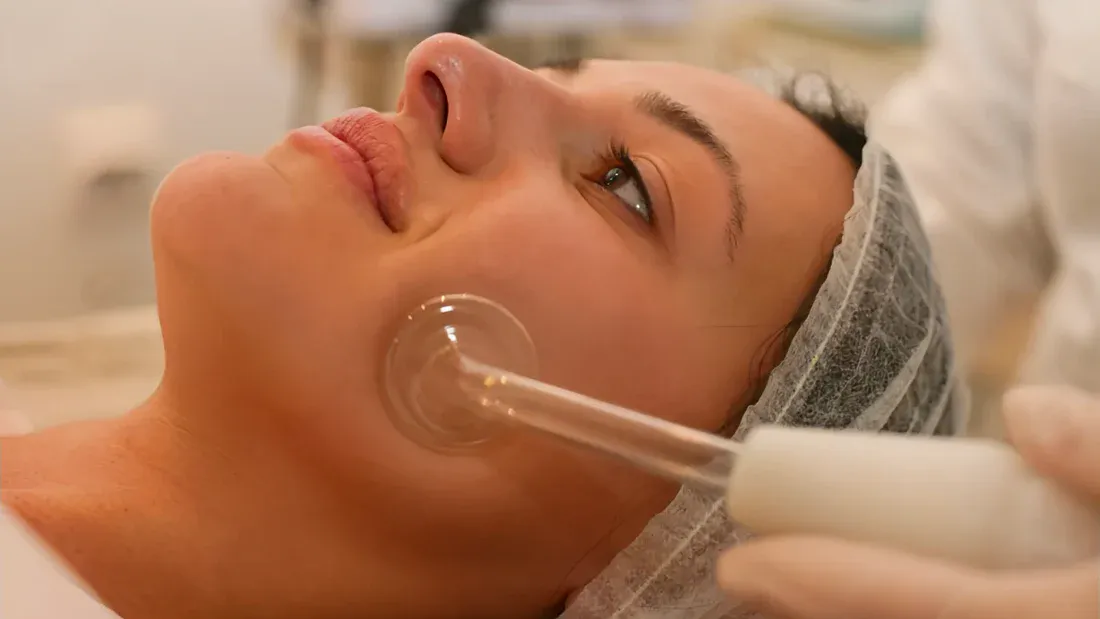
High Frequency Wand for Acne Treatment in Côte Saint-Luc (CSL), Montreal
Discover how high frequency wand therapy fights acne, reduces inflammation and promotes clearer skin. Available at Réhabital in Côte Saint-Luc, Montreal.
Can Cryotherapy Improve Your Skin Health? A Complete Guide in Côte Saint-Luc
Can controlled cold truly transform the skin? A clinical guide to facial and targeted cryotherapy at Réhabital in Côte Saint-Luc: benefits, protocols, results and safety.
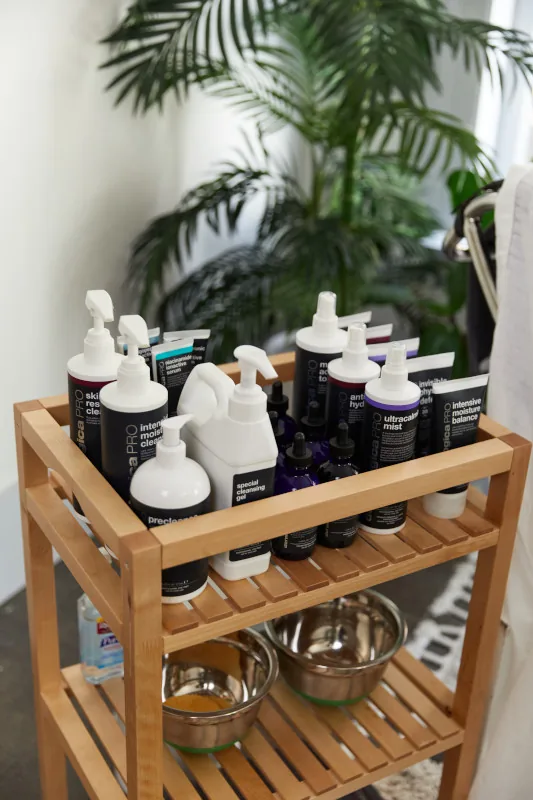
Teen Acne: How Our Dermalogica Essential Facial Helps Teenagers Care for Their Skin
Teen acne isn't just a cosmetic issue — it affects confidence and long-term skin health. Learn how the Dermalogica Essential Facial at Réhabital in Côte Saint-Luc helps teenagers understand their skin, control acne and build lifelong healthy habits.
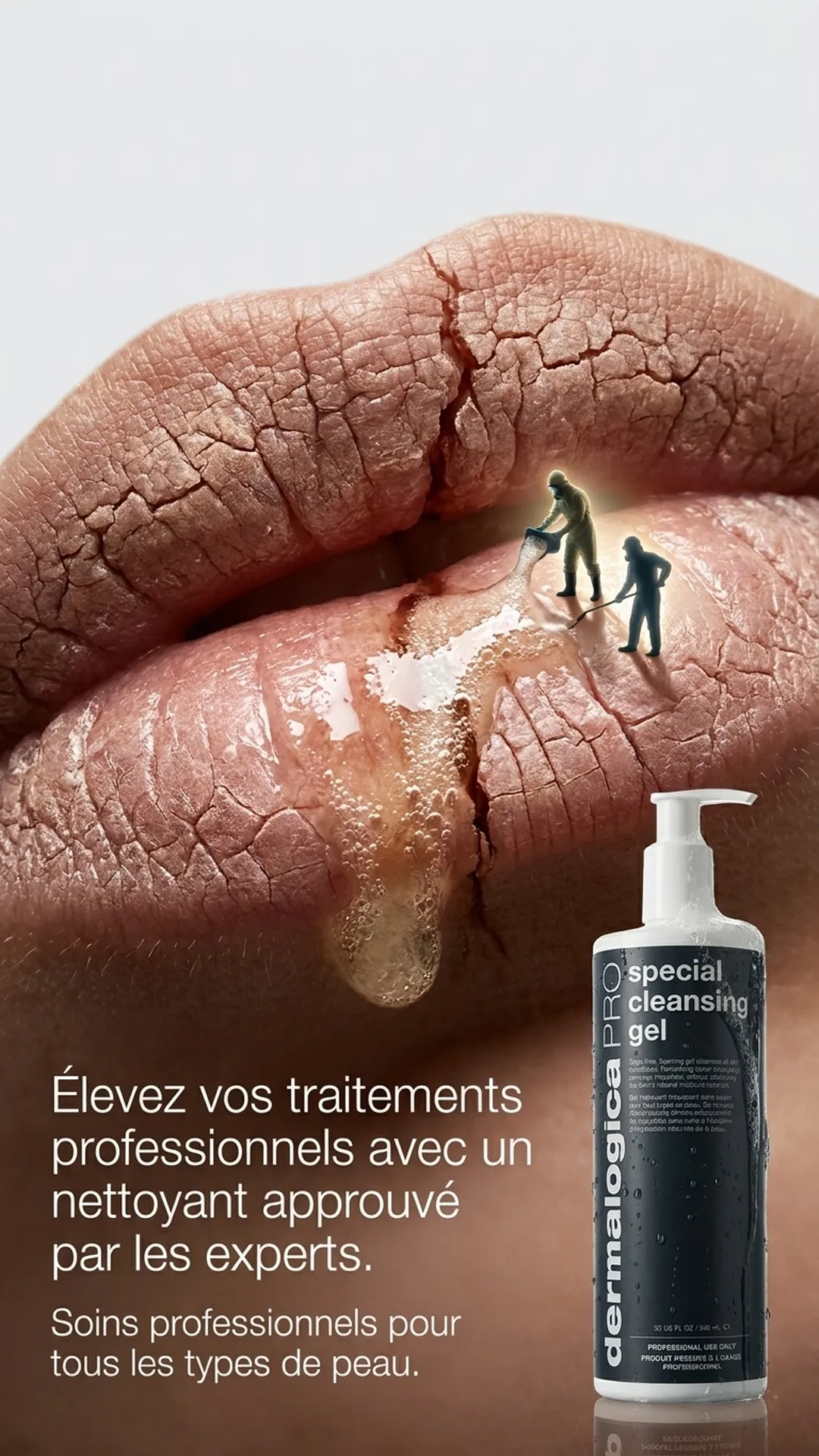
Special Cleansing Gel and Post Extraction Solution: the Dermalogica Pro duo that transforms a facial in Côte Saint-Luc
Why Dermalogica Pro Special Cleansing Gel and Post Extraction Solution are at the heart of every clinical facial at Réhabital — for clear, calm, glowing skin.